


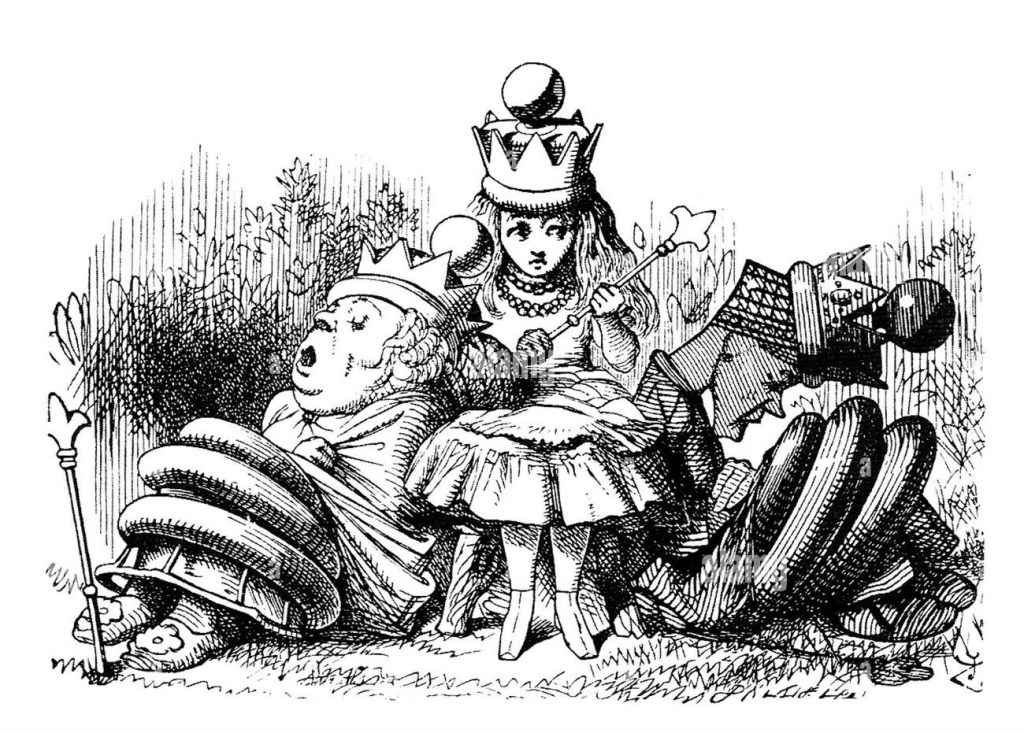
“…and what is the use of a book,” thought Alice, “ without pictures or conversations?” (Lewis Carroll, Alice’s Adventures in Wonderland, Page 9).
If you’re like me, you have probably seen or heard of Alice’s Adventures in Wonderland without necessarily having read it. Ever since its publication in 1865, it has become a global phenomenon and a staple in pop culture. It is synonymous with madness and the unknown, having inspired generations to create their own works based in some way or another about it. Over the summer, I decided to go down the rabbit hole. Here’s what I discovered while there:
Alice’s Adventures in Wonderland and its sequel Through the Looking-Glass are stories exploring the limits of logic in an illogical world. It is very clever writing that artfully explores the world from the imaginative mind of a little girl. They are one of the first times in literature that children’s independence and defiance are focused on. This was a vast departure from the Victorian standard that children should be seen and not heard. In Alice we get both and it’s a brilliant experience.
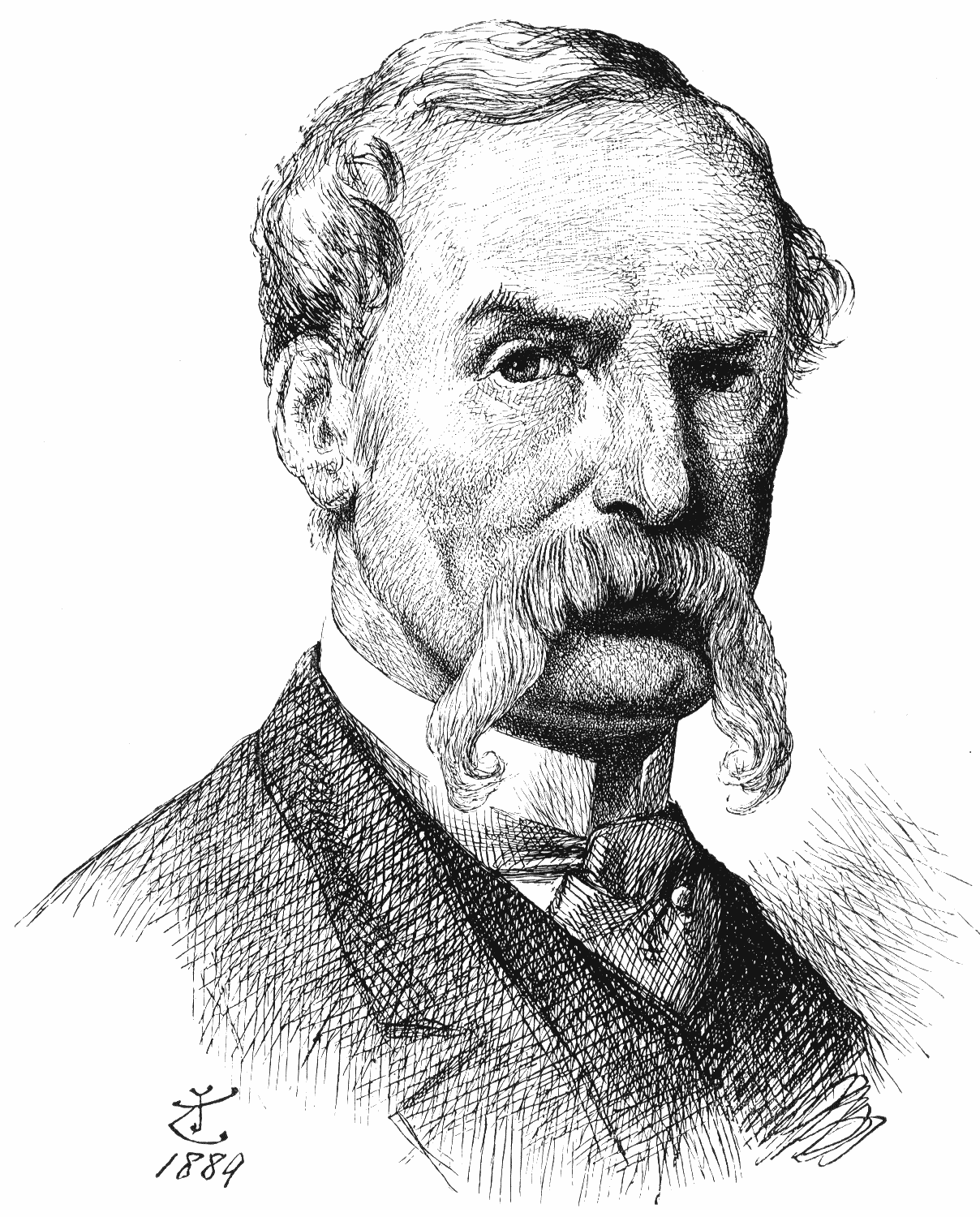
The illustrations in the original story were produced by John Tenniel, a largely self-taught and prolific artist of the Victorian Age who worked tirelessly until his death on February 25th, 1914. According to the Norman Rockwell Museum, Tenniel was actually hard of sight in his right eye after a fencing accident with his father at age twenty. Even so, he continued to work well into his early 90s, until eventually his left eye failed from overwork and he went completely blind. Fascinating further was that he largely drew from memory and never from life. This could explain some of the inventiveness of his designs when creating such characters as Humpty Dumpty or the Jabberwock in his Alice in Wonderland illustrations. How else can you create a flying scaled monster sporting a vest with buttons running charmingly down the front?
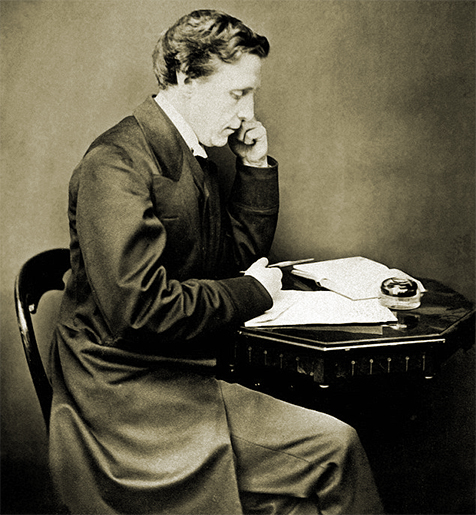
The relationship between Tenniel and Lewis Carroll, the author of Alice in Wonderland, was quite strained. Both had perfectionist tendencies in regard towards their respective crafts. Carroll was very particular about his story and his own artistic accomplishments, to the point that when Tenniel presented him with forty-two drafts for Alice, he only liked one and that ended up being Humpty Dumpty. Tenniel, understandably, felt restricted in terms of his creative freedom. Even so, the two created a work that brought immense fame to both and had a lasting impact on the arts around the world. Of great interest to me is that though Carroll and Tenniel quarreled greatly on the project, the effect of the two is a beautiful dialogue between art and word, one for me as an illustration student that has set a shining example to work towards in my own creative endeavors.
Through the Looking Glass is where we see far more interaction between the text and the illustration, showing that in this instance one cannot survive without the other. Both are needed to properly tell the story of Alice and her strange adventures. Through the Looking-Glass is my favorite of the two because it embodies the themes of changing identity through the actual physical flipping of the page. The two pages that strike me most are pages 126 and 127 (based upon my copy of the Signature Classics edition, your page number might differ).

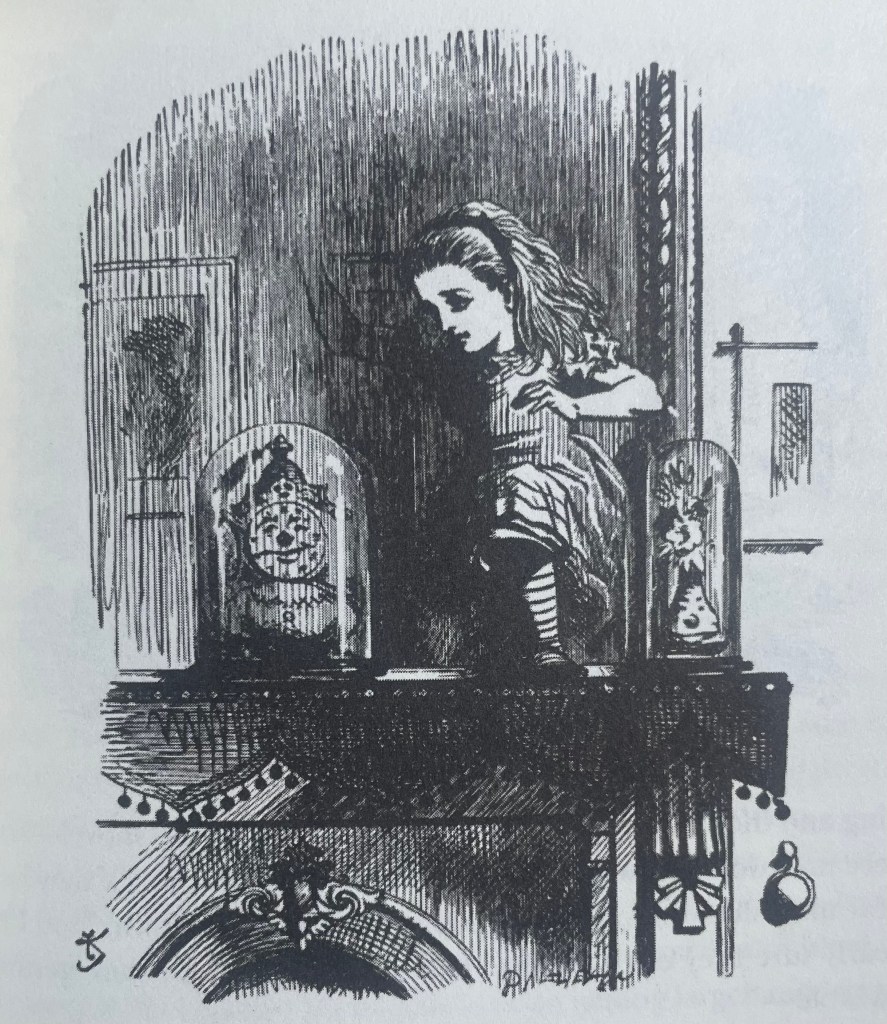
Alice is pictured entering the looking glass over the mantlepiece. Images of the home are present, most notable being bell jars— a distinctly Victorian invention. In them are housed a flower in one and a clock in the other, both becoming anthropomorphized on the reverse. The intricate moulding of the fireplace and mirror, as well as the placement of the framed artworks on walls we cannot see but are implied via the reflection of the glass give incredible atmosphere to the scene. Tenniel’s use of line is masterful— I am impressed with how he depicts Alice’s clothing, his understanding of form beneath the cloth as well as his intense contrasts to give the impression that she is projecting outward into our space. My favorite element used in Tenniel’s illustrations are the squiggly lines we see here and there, adding energy to what would ordinarily be very boring straight lines.
The metaphor of puberty throughout Alice’s stories becomes more clear in Through the Looking-Glass. By use of the mirror and the repeated conversation over Alice’s identity or her changing size, we are presented the view of girlhood that is often experienced but never talked about. The use of the mirror or looking-glass is a clever writing tool to build a fantastical world but it also is a symbol oft associated with women in art to represent vanity. Alice herself is not characterized as vain, but she is still around the age, 7 and 6 months she says, that girls are otherwise taught that they should be worrying about their appearance. Alice in her case worries that her changing appearance means she is not herself anymore.
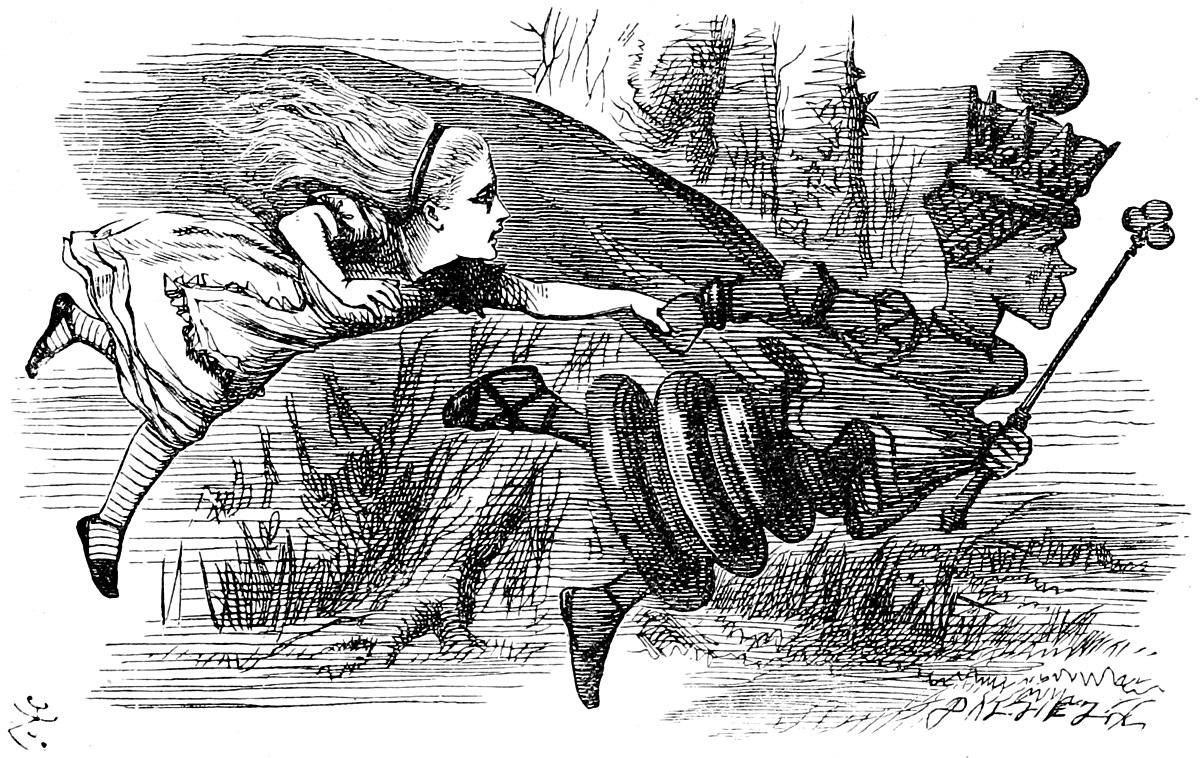
”Alice laughed. ‘There’s no use trying,’ she said. ‘One can’t believe impossible things.’
‘I daresay you haven’t had much practice,’ said the Queen. ‘Why, sometimes I’ve believed as many as six impossible things before breakfast.’”
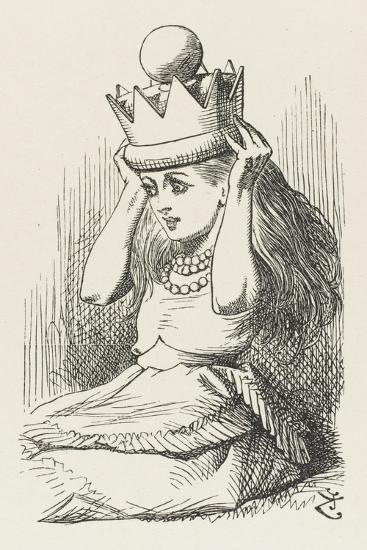
Issues with identity, especially the discomfort of growing and changing, are pinnacle experiences of everyone, but I would push that is much more the case with women. Societal and biological pressures make it so women’s identities are always in flux. Compounding these pressures is the stigma that surrounds even discussing such matters, making those that do not have access to information to help them understand what is happening to them all that much harder.
In Alice, we experience a radical departure from the norm. The story showcases a girl who is alone at first and invents these great characters in her mind. They are called the Red Queen and the White Queen and they become these influential figures in her development, helping her to ultimately become a Queen herself. This is revolutionary, even today when still the majority of stories follow the narratives of men. It makes growing out of girlhood a lonely prospect, which is why Alice and her adventures are so beloved— they like the looking glass that reflects the reality of the world yet through charm and wit, reality is made not to be so damned dire.
Sources and Readings:
nhistory.org/artists/sir-john-tenniel

