


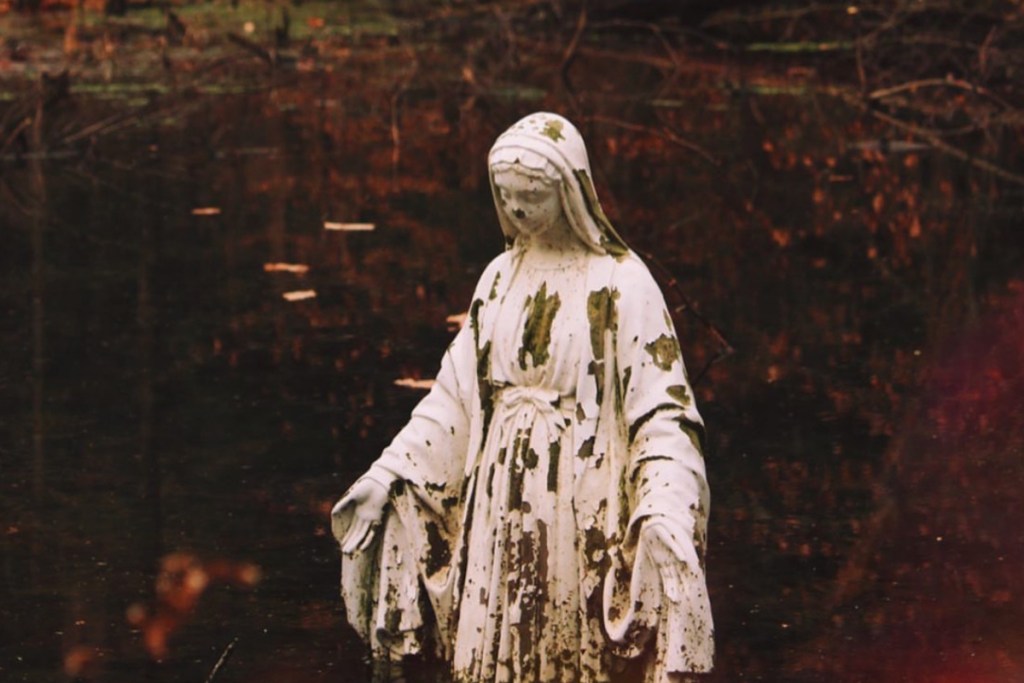
(Sorry, but it is.)
An interview with artist and professor at Marywood University, Cathy Noto:
Ana Fiedler: “What got you into making art, or just art in general?”
Professor Cathy Noto: “Boredom.”
What sits at the core of many artist’s souls, what invades the minds of every seventh grader taking a test, and what infiltrates your surroundings on a very long car ride: Boredom. We’ve all felt it at some point or another, we’ve all taken a test and, for fear of being the first to hand it in, sat there, bored. Pretending to look over our answers just one more time, or so we tell ourselves, as we wait for the first brave soul to hand their work in. Or drove a ten hour car ride without any AUX input because your tires are barely hanging on to the road and you really don’t want to find out if your car can handle a music input. Leaving you alone with your very boring thoughts, in your very boring car, on a very boring road. But did you know? You don’t have to be bored.
Sitting down with Professor Cathy Noto, Artist and Art History professor at Marywood University, it’s clear we both, as many artists, do something about our boredom. We don’t let it ruminate. We create. Whether that’s incredibly detailed watercolor paintings or wood carvings or simply ideas; she creates.
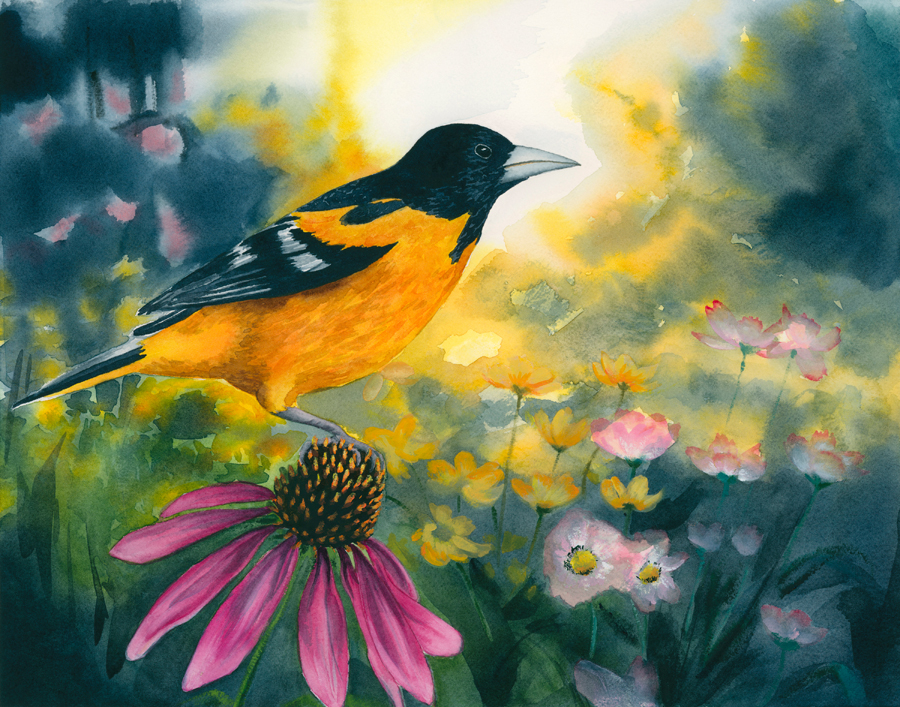
Having attended Marywood University as both an undergraduate and graduate student, Professor Cathy Noto is very familiar with the ins and outs of the art department, both as a student, and faculty member. Interestingly enough, art history was not her major at any point in her education. She started her college career as an art education major before switching to painting. Then took a year off in between getting her undergraduate and graduate degree living in Sweden. Coming back for her graduate degree, she remained in painting before switching to ceramics.
AF: “What made you switch from art education to painting to ceramics?”
CN: “A lot of boredom. [haha]”
I promise the rest of these questions have answers beyond “boredom” but it’s a concept I’m going to explore for a while, so stay bored and continue reading anyways. Pretend this is a test you’re too scared to hand in first.
Boredom is a motivator–to change your situation, to change your outcome, to change how you do something. Perhaps I should say, it can be. Maybe you’re content to sit in your 1999 Toyota Corolla in dead silence on a ten hour car trip or you’re the first person handing in tests. Maybe you’re not bored and are thoroughly enjoying reading this right now. But that isn’t the case for many people.
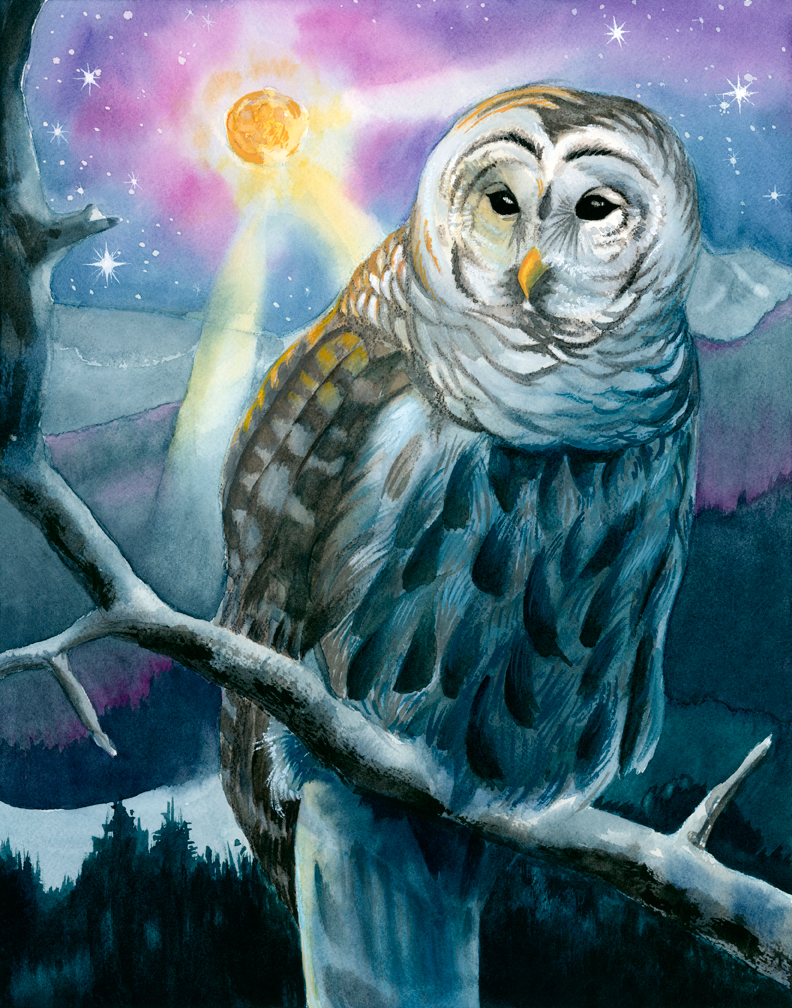
A constant theme among artists, among Professor Noto, is a want. A want to create, a want to stop the boredom, a want to experiment. Why stick with painting just one painting when you can work on two, or three. Or work on two paintings while simultaneously carving wood (simultaneous in the sense you’re constantly moving between the three, not blindly carving wood as you drag a paintbrush between two canvases.) Unless, that is how you cure the constant ailment of boredom, I won’t stop you. Working on more than one artwork at a time is one of the ways Professor Noto fends off the boredom. And what wonderfully, intricate watercolor paintings come out of that. That motivation to stop the boredom and make something with it.
Professor Noto, again feeling bored, wasn’t too immersed in the art world until college, until beginning her painting courses. “I think when I started painting here, I looked up to a lot of my Professors and I saw how they painted, and it was just inspiring!” I would like to be the first of many to thank her professors for inspiring her so her artwork can go on to inspire many others. I know I’m now itching to pick up a paintbrush after having looked at her work.
AF: “What got you into art history then?”
CN: “I’m a practicing artist, I started delving into art history for a class I was teaching: Mysticism in Modern Art- about artists in the 18-1900’s and how spiritual movements affected them. Then Dr. Christa Irwin invited me to teach Art History I & II at Marywood and I found an entirely new world of global artists to explore.”
Professor Noto teaches with such enthusiasm and passion it’s borderline impossible to walk away from her class without an in-depth understanding of the subject. With the amount of knowledge she recites in class, and the manner in which she does it (entertainingly) I had automatically assumed she had gotten her undergraduate and graduate in art history. Always ready to answer any question her students may have, even if she doesn’t know the answer on the spot, the question gets written down and researched. In her, almost too short- hour and a half class period, she separates the class time into lecture segments and hands-on activity segments. Not only ensuring the class stays engaged throughout, but offering more than one learning style and method to students. Art may be boring but her art history classes never are.
AF: “What would you say to someone hesitant to enter the professional art world?”
CN: “Resistance is a fair point. It’s good to be aware of the challenges, especially trying to make a living as an artist.”
I think Professor Noto made a really good point here, “Resistance is a fair point.” There’s a reason (albeit not really a good one) as to why some parents will not let their children pursue art in college. Success. It’s not static; you’re not going to have it and then always have it. You can make a living as an artist, but you could lose that living easier than you got it. “Being an artist is a lifelong journey, you might reach success sometimes, and then it goes away.” Part of being an artist is finding that balance, that feeling of being okay with not reaching success, that feeling of going to a day job as you pursue art on the side; the feeling of boredom.
So, one last time, I’ll reiterate: art is boring. Art is the solution to boredom. Art is making your own music on your ten hour car ride and doodling on the sides of your test. Why be content making one thing when you can get bored and make many things simultaneously?
Get bored with your art, get inspired by other people’s art, get attached. “Art is so attached to who you are as a person, when you make art you’re kind of giving out a piece of yourself. Everyone is going to make art differently and for different reasons.” Be as wise as Professor Noto and make not one or two paintings, but three- while simultaneously carving wood. Fend off that boredom.
AF: “Any last words?”
CN: “I would just say to artists, maybe to you, don’t listen to anyone about your art. One of my regrets about my art, I let a lot of people tell me there were certain rules to art. And it still impacts me now, even when I try to break those rules.”