


Its been crazy to think that another year has passed us by here at Marywood University! I’m so happy with all of the work I’ve done in my classes, and I’m glad to have gotten to grown more as an artist.
For this post, I’d like to work through my progress learning to use oil paint in Painting 1 with Professor Collier Parker. In particular, this week’s post will be talking about the first three still lifes that we completed. Next week, I will go through the last two paintings we did.
For some background, I’ve never touched oil paints in my life, I’ve experimented with acrylic, gouache and watercolor. But oil has always been kind of daunting to approach I hadn’t known how to start. So I was really glad to get the opportunity to take Professor Parkers painting class.
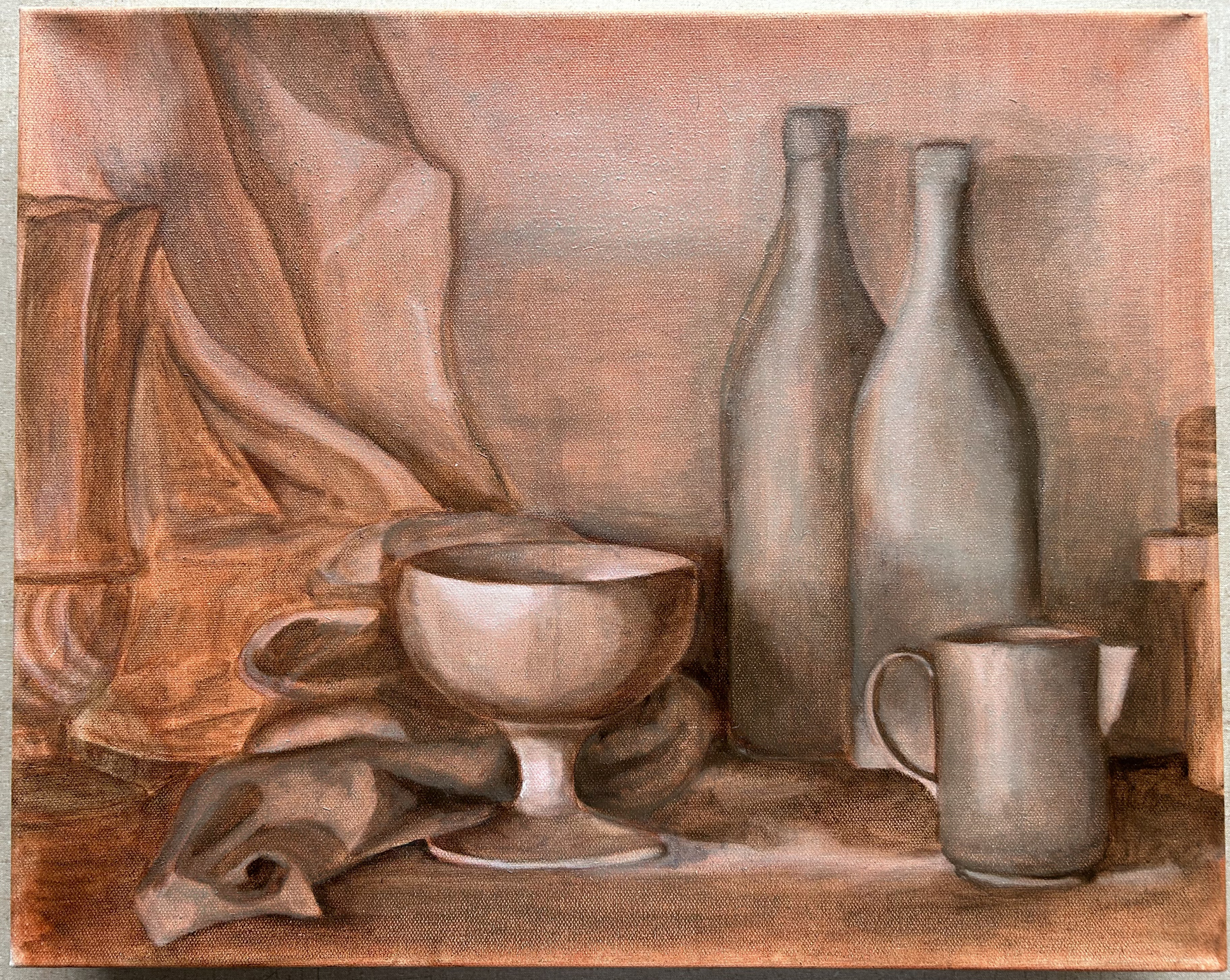
Our first painting was a still life using only white and burnt umber. I had successes and misses throughout this whole painting, but I definitely learned a lot through it. It really taught me the value of steadily building up layers of painting instead of starting with thick, overpowering layers. You could see the differences in the results along the different objects I painted. The goblet near the center was my strongest aspect of the painting. And to be totally honest, I’m not quite sure how it turned out like that. I think that by that point in the painting, I had calmed down and had gotten into a bit of a zone. But the important part was that I knew that I could paint with oil successfully. And though this painting was filled with a lot of trial and error, it also built up my confidence, which carried me through the rest of the class.
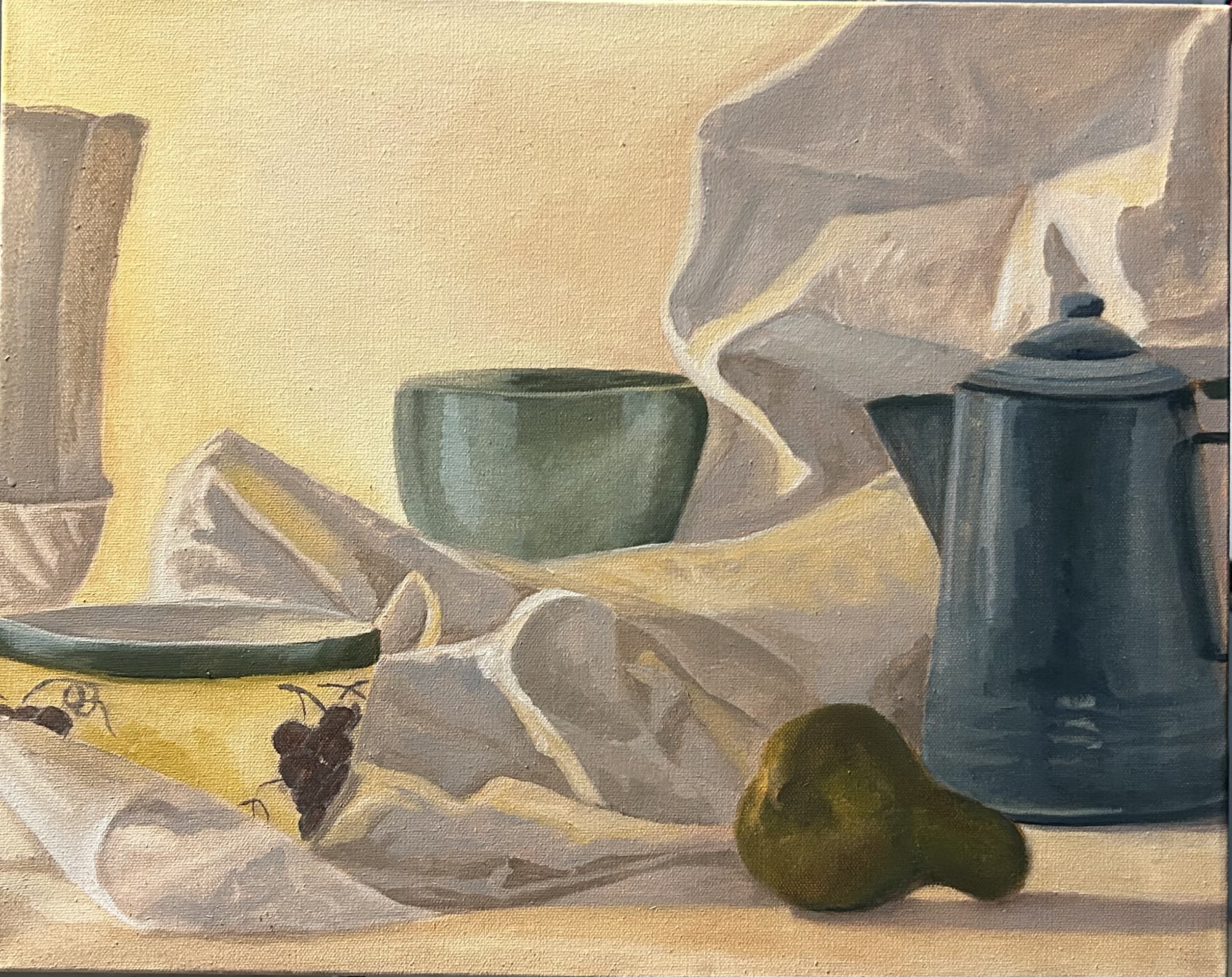
This next painting is probably the one I’m the least confident in out of all the ones I made. This was our class’s introduction to painting with color, and I struggled a lot. The biggest challenge for me was the fact that there were two different light sources on the still life. The warm light coming from a lamp shines on the setup. And a colder, brighter white light coming from the windows. Distinguishing between them and figuring out how to lay them along the folds of the fabric was quite challenging. In addition to that, I was thrown for a loop as I struggled with mixing up the colors I needed. I had to experiment a lot with color theory. I felt like a kid again, mixing colors randomly and experimenting with the results. Overall, though I wasn’t quite satisfied with the result, I enjoyed the challenge. I could have kept going at this painting for months till I got it perfect, but I think there’s value in understanding where to stop and start fresh.
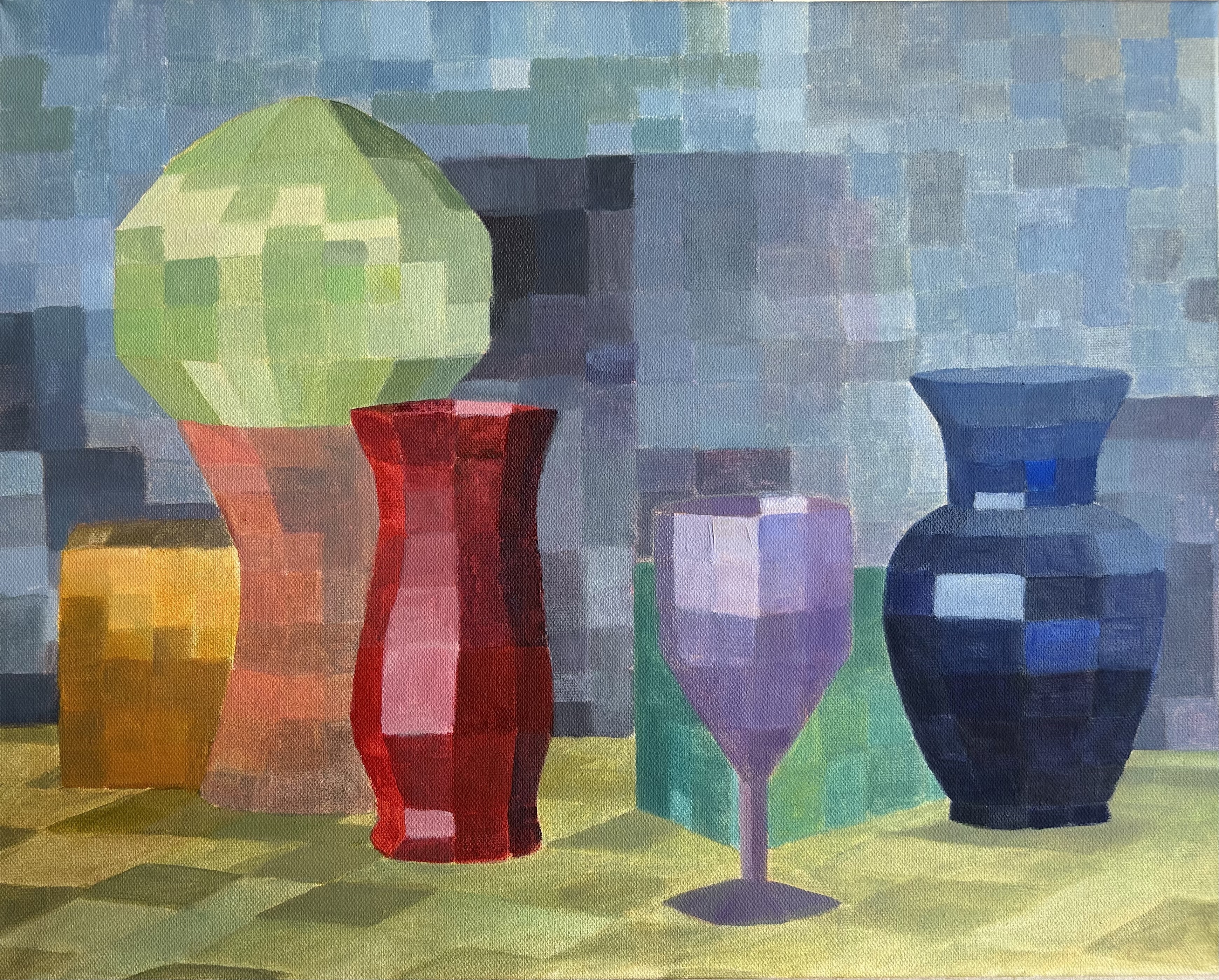
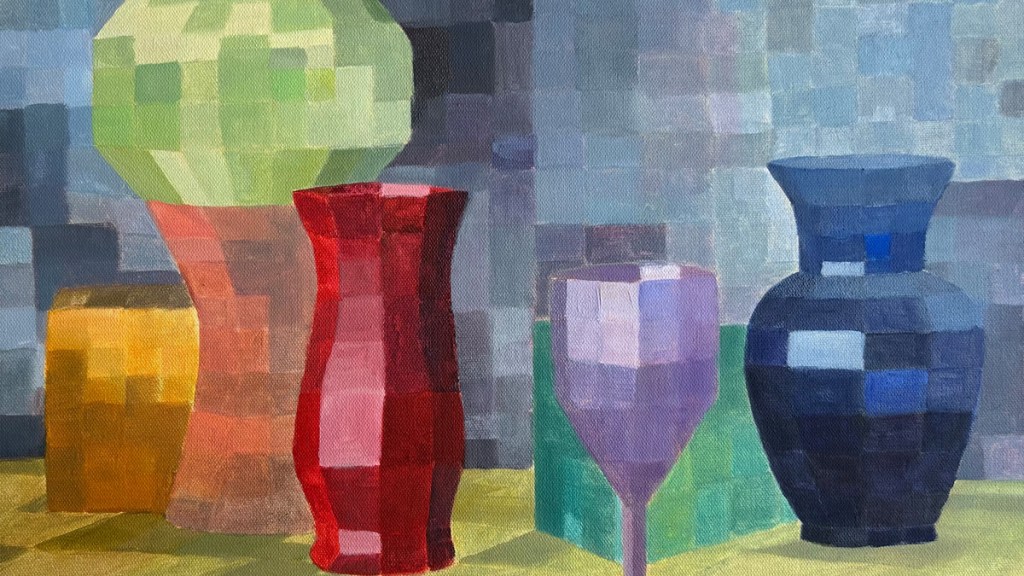
The last painting for this post is a color blocking painting that we did. This was an exercise designed to get us thinking about color on a deeper level. It really helped me understand the difference between local colors and perceived colors. This was actually a lot of fun for me, I liked the more abstracted aspect of this painting; it was refreshing after focusing on realism for the past paintings. A big realization for me was noticing that what I thought were going to be bright white highlights were actually tinted in the local color of the object. For instance, I thought the brightest area on the blue vase should be painted in white, but upon a closer study, it’s actually a light blue. And even though it’s tinted, it doesn’t take away from the brightness of the highlight. This painting definitely isn’t perfect, but I learned so much more about color and observation through this piece. It helped me understand what I should be looking for when I’m painting, and gave me a more solid foundation for approaching color.
A big realization for me was noticing that what I thought were going to be bright white highlights were actually tinted in the local color of the object.
Overall, these first three paintings taught me so much, not just about painting but about how we perceive things and introduced me to a different perspective on drawing. I was able to hone my understanding of space and composition. And I’ve already been seeing a difference in my approaches in my other works. I think the most important lesson I’ve learned is understanding the importance of considering how different objects relate to each other. When you’re trying to draw something from reference, the negative space of the composition is just as important as the positive and should be treated with care. When I started taking this approach, the forms of my shapes and spacing were so much more accurate and lifelike. I’m really glad to have gotten the opportunity to experiment with oil.
Be sure to come back next week to see my final two paintings for the class! A one-point perspective hallway piece, and a portrait of a live model!
Thank you for reading! Emma <3