The Egyptians weren’t the only ones to have sphinxes. In fact, it is due to the close relationship between the Greeks and the Egyptians that the Sphinx was added to the mythology, and even the goddess Isis.
However, I’m focusing more on the cool sphinxes. If you take a look between the two cultures you’ll see theres a key difference, one that is consistent in Greek Mythology. In the Egyptian versions of the sphinx, you’ll notice many similar attributes except gender. The human part is really just the head, as opposed to Greek sphinxes, which are always women. Most monsters in Greek Mythology are depicted as women, except of course the Minotaur and probably the chimera as it was really just animalistic (SUPER cool though). Anyway, Greeks had their clear view on women and it was well represented in myth. As far as myth goes, there is one that most people are familiar with for all the wrong reasons, poor Oedipus. There’s a gorgeous painting at The Met that depicts the moment when he gets the riddle correct, and when the sphinx realizes it’s all over for her.
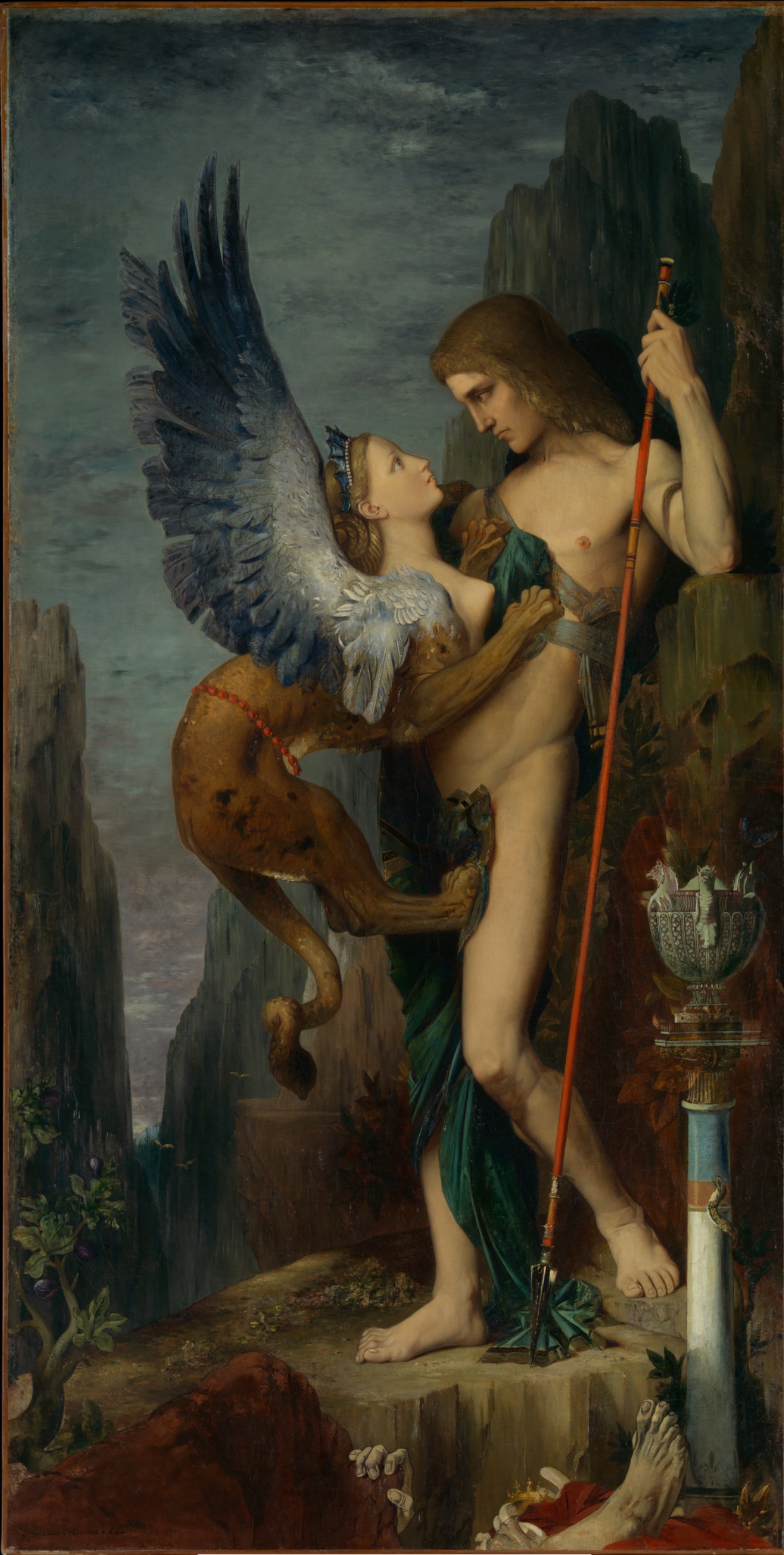
Oedipus and The Sphinx, Gustave Moreau, 1864
I would use the picture I took from at The Met but the lighting against oil paint was not my friend. This is a really good depiction as to what a Greek sphinx looked like. She was a monster with a lion’s body, the head and chest of a women, with eagles wings. Sometimes they were depicted with serpents as tails as well. Now, this is just a myth including a sphinx but they actually had other uses. In Archaic Greece, statues of sphinxes were often put up in cemeteries to protect the deceased. Usually they would be be used for men who died young, as shown in funeral processions painted on vases pottery.
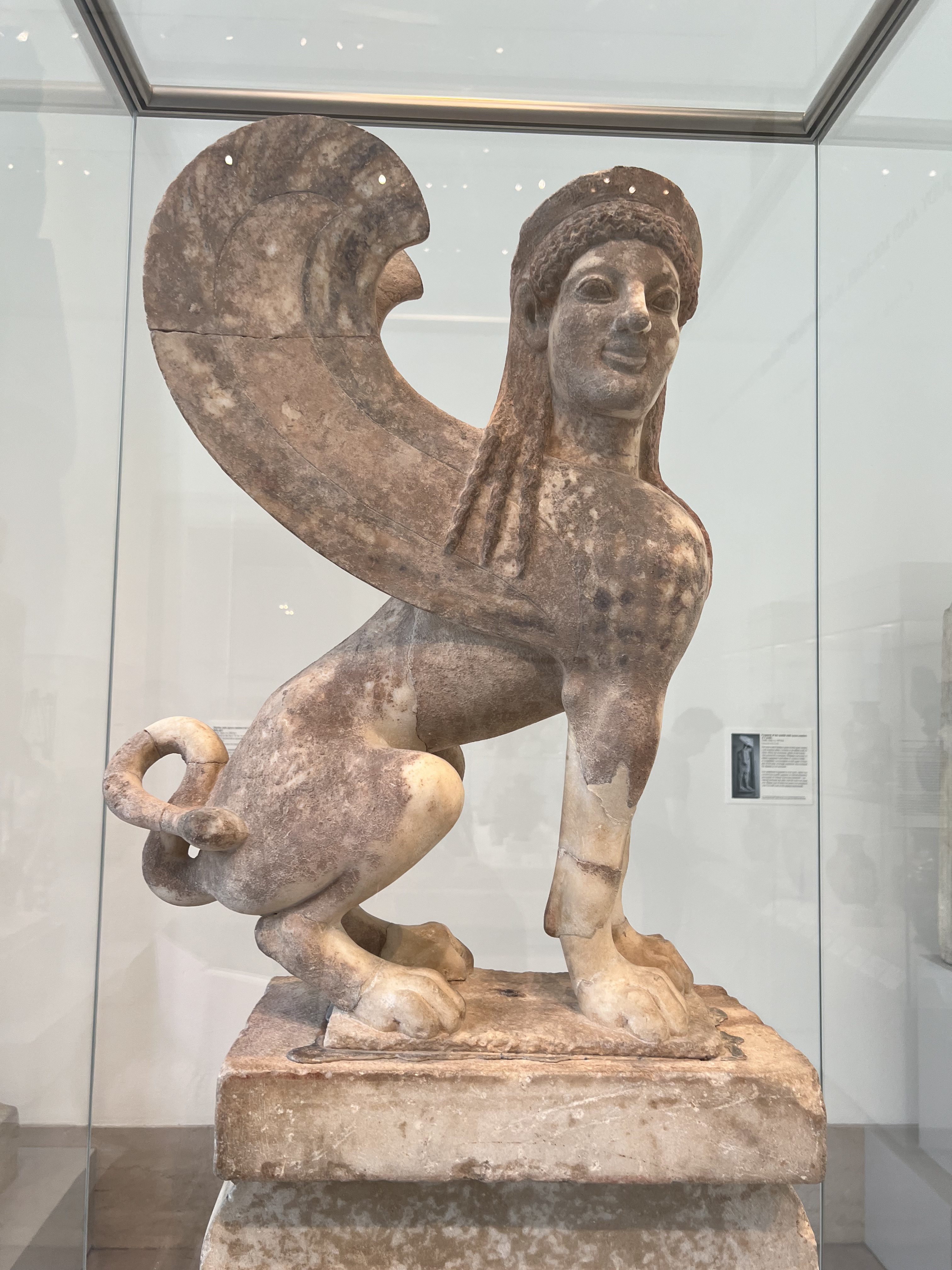
This is what the sculpture of a sphinx looked like in it’s time, as opposed to a modern take. They’re still similar, but these actually used to be painted as well. They were found on top of stelae, inscribed or relief sculptured slabs of rock or marble, usually tall. This allowed the sphinx to be seen from a far distance as well, creating a looming and intimidating effect. What’s super interesting about these sculptures, among other Greek sculpture is the paint that still is left in small areas that gives us an idea as to what they looked like originally.
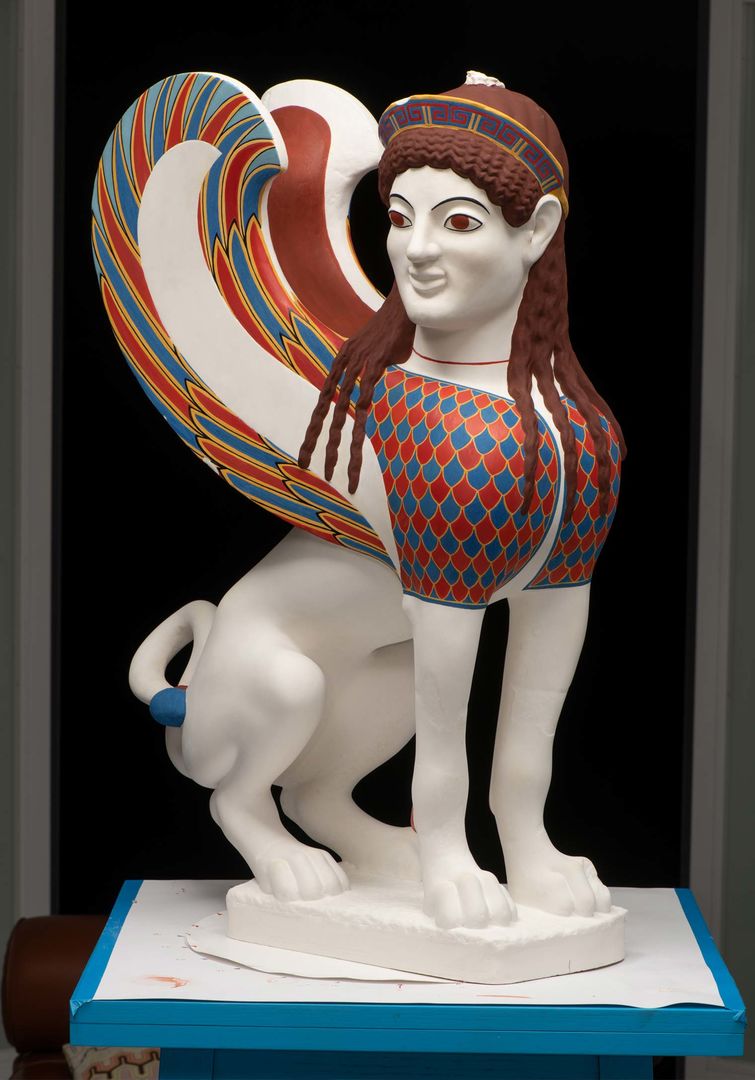
Thanks to The Met, we have an actual representation of what she would have looked like. This particular sphinx, in the previous picture and what this representative one is based on, was from Attica, the surrounding area of ancient Athens. It was 13 feet tall and one of the most well preserved sculptures both for paint and quality of carving. These traces of paint were able to give the sphinx life again. The paints used aren’t like the kind we are used to now, but usually crushed up substances mixed together with binding agents like silica. Egyptian blue, a synthetic color, was used on the wings possibly to imitate the sky, with azurite blue, also synthetic and made with copper, to alternate the feathers on the breast. This was also used on the diadem atop her head, and the tuft of hair on the tail. Another alternating color that was used was a red called cinnabar, an expensive pigment made from oxidized mercury. This was also used among the feathers and diadem. Though it isn’t shown on this model, it is believed that the body would have been painted with yellow ochre to imitate the body of a lion. This was made with iron oxide, clay, and silica. Other ochres were made the same way just with different ratios. Because there was still residual paint left, we are able to have a better look at what things would have looked like in the ancient world.
Riddle me this will you? What walks on 4 legs in the morning, 2 in the afternoon, and three in the evening?
Citations
Abramitis, D. H., Basso, E., Carò, F., Hemingway, S., Lepinski, S., & Leona, M. (2022, August 12). Ancient greek sculpture in color. The Metropolitan Museum of Art. https://www.metmuseum.org/perspectives/articles/2022/8/new-research-greek-sphinx
The Metropolitan Museum of Art. (1864, January 1). Gustave Moreau: Oedipus and the Sphinx. The Metropolitan Museum of Art. https://www.metmuseum.org/art/collection/search/437153
Theoi Project. (n.d.). Sphinx. SPHINX – Woman-Headed Lion of Greek Mythology. https://www.theoi.com/Ther/Sphinx.html