Guest Blogger: Chelsea Herron, with contributors Phaedra Erzar, Camila Castellari, & Abby Oxford
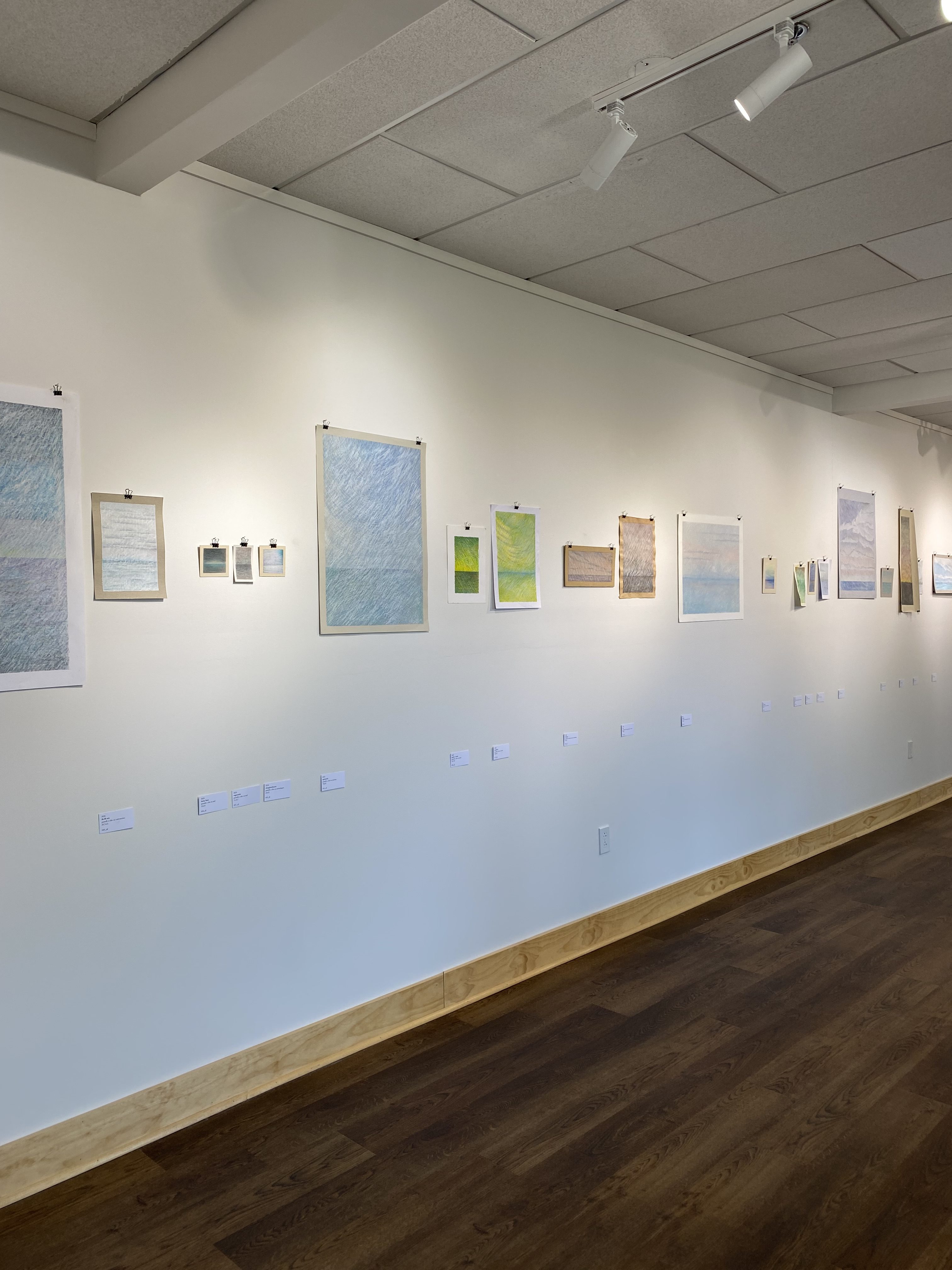
In our Intro to Art Therapy class we discussed museum-based art therapy and how art therapists can use galleries and artwork to engage with clients. Marywood Art Therapy Professor Abigail Oxford shared her use of museum-based art therapy over her career as an art therapist. Oxford discussed the use of vibrant gallery walls in memory care and hospital settings that served as a springboard for clients to reminisce, connect with self and others.
Oxford states, “You never know what a piece of art will allow a client to see and share. As an art therapist it’s important to hold space for a client to share and process their feelings whether it’s through the artwork viewed in a gallery to the physical art they’ve created”.
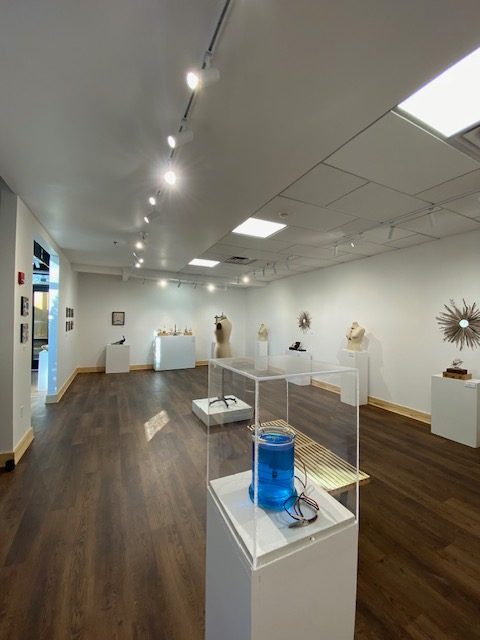
Allowing a nonjudgmental space for clients to observe art and converse through dialogue, stories and or reflective artmaking is one way for an art therapist to provide museum-based art therapy. To immerse students into this topic Professor Oxford brought her class to the first floor of the Insalaco studio arts building to view current exhibits.
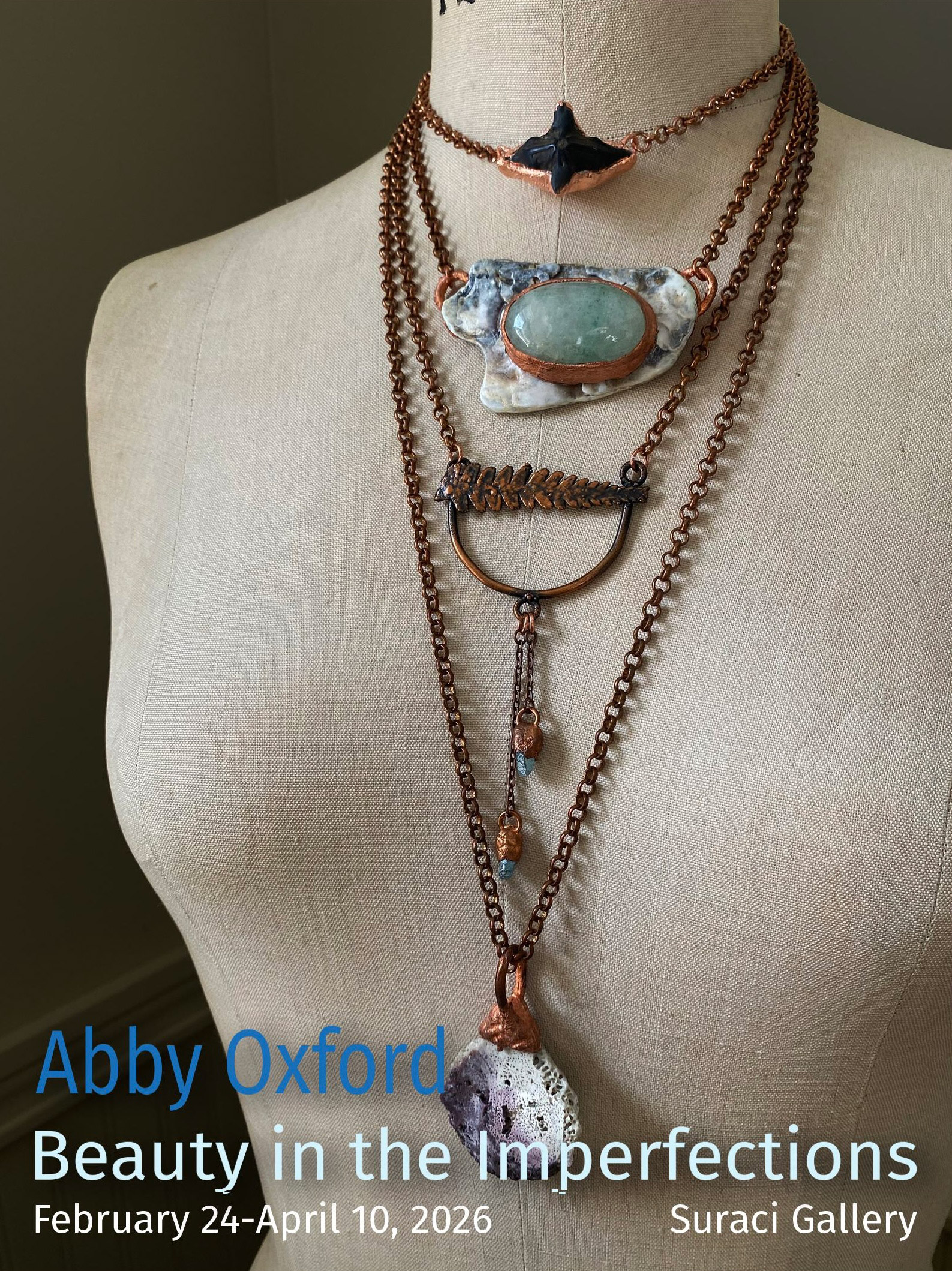
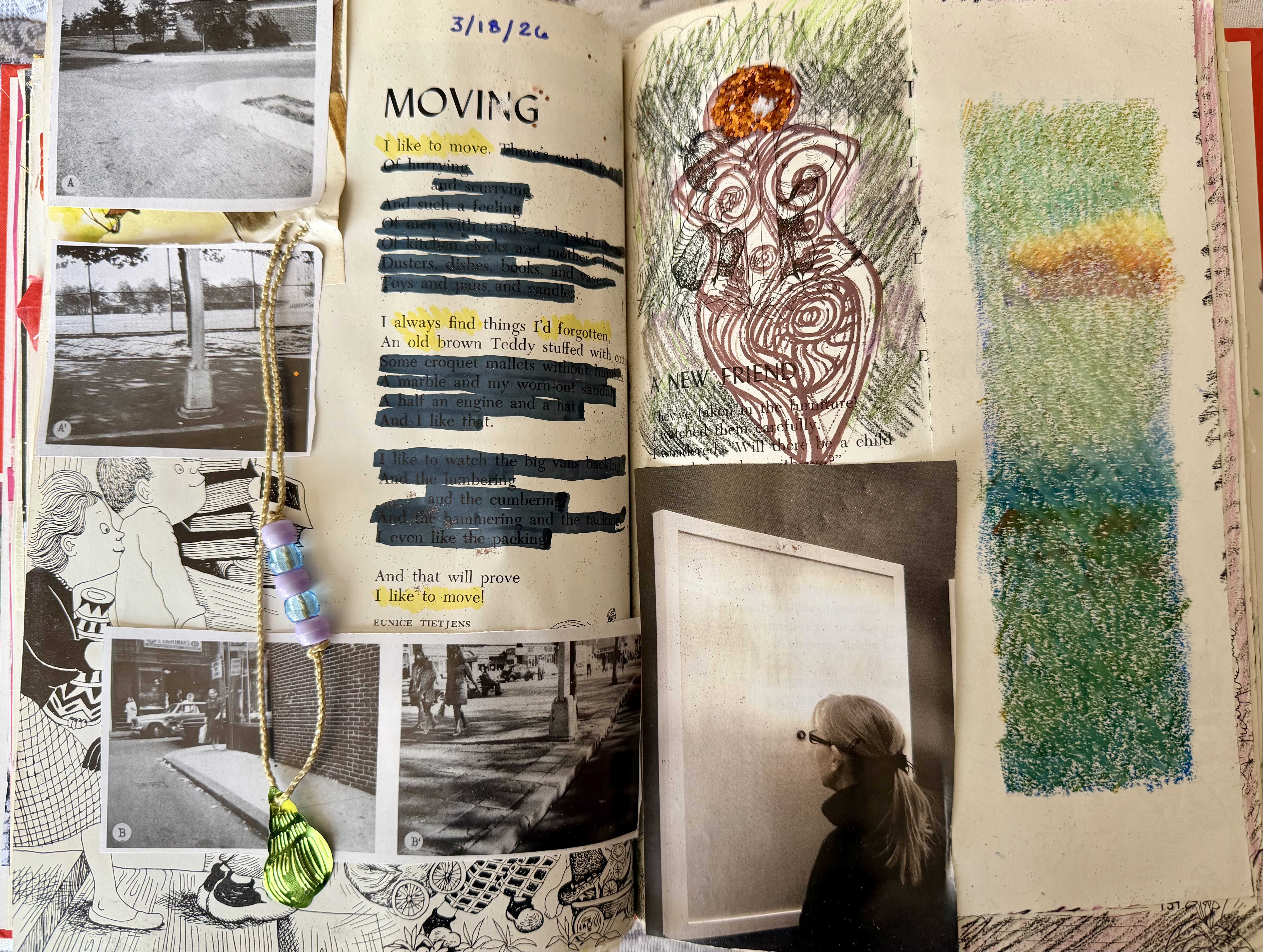
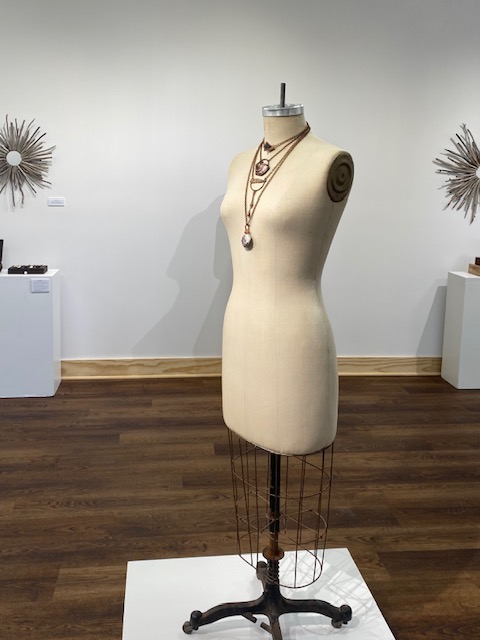
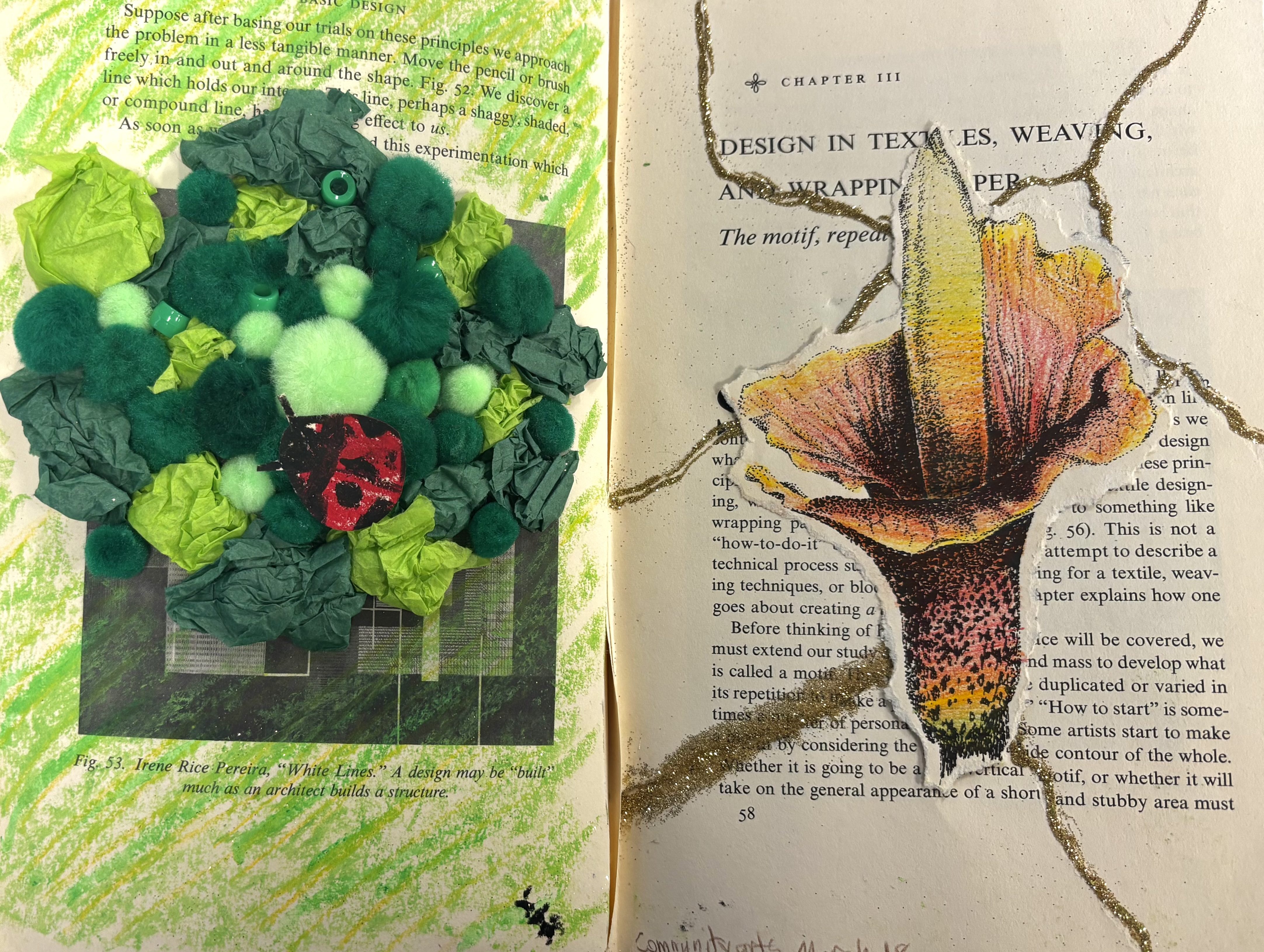
The current exhibits we toured within the Insalaco Building were, Franco Pisani: Beyond Infinite, Marywood’s Photography Club: Shutterbugs, and Abigail Oxford’s Beauty in the Imperfections. As we returned to the art therapy studio, I began creating my inspired piece within my altered book I’ve been working on this semester.
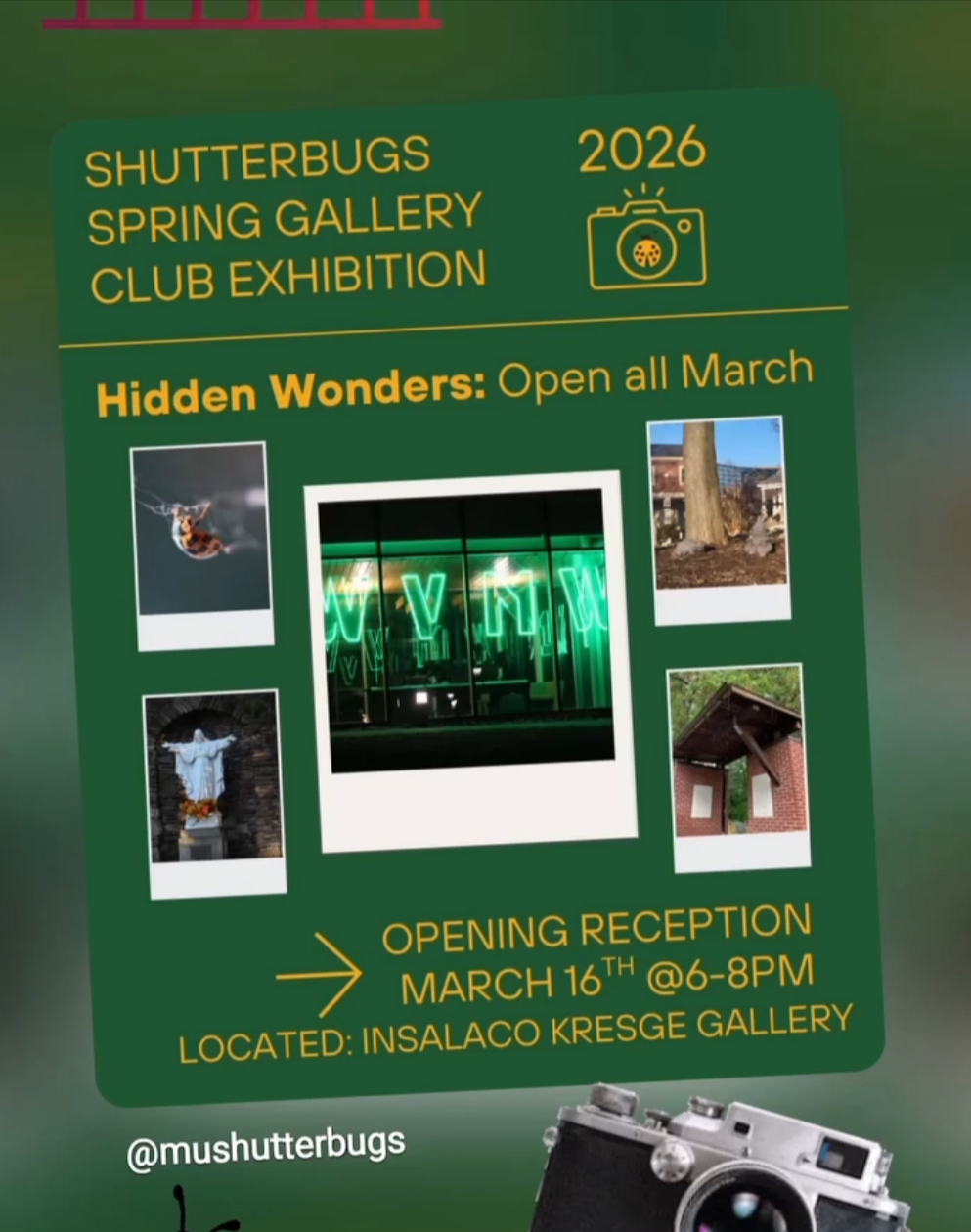
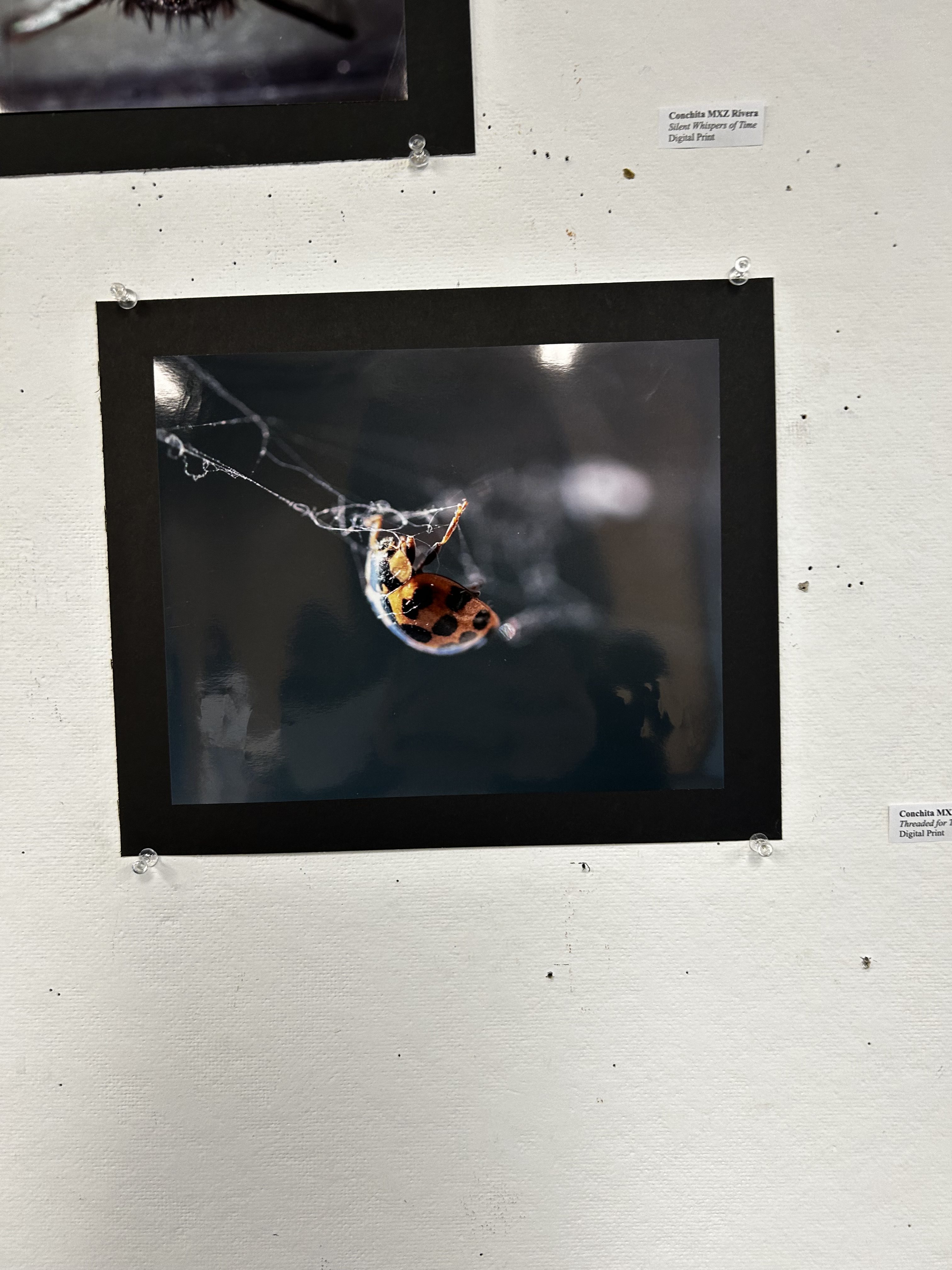
I found a poem in my book titled, Moving, which resonated with me because, on this day, my ability to move was hindered due to a sprained foot. I was excited to experiment with a color study using oil pastels, inspired by the works I saw in the Pisani collection. I collaged a picture of a woman in a gallery closely observing a piece of art. I also included black-and-white photographs of everyday scenes, which reminded me of the Shutterbugs exhibit, as I recognized several locations around Marywood in their photos.
When reflecting on Abby Oxford’s Beauty in the Imperfections exhibition, I chose a stamp that resembled her artistic style. I used copper ink and glitter to represent her copper process. I then incorporated a piece of hemp string into my two-dimensional work, arranging beads asymmetrically on one side to echo a distinctive element of her designs. Finally, I added a shiny shell bead dangling in the center as a representation of the natural treasures she incorporates into her jewelry.
On a day when I would have typically been discouraged and focused on resting my foot I found viewing the exhibitions to help shift my perspective. It improved my mood, fostered a sense of belonging with my classmates, and sparked creativity that I hope to carry into my own artwork. I could see the benefits of museum-based art therapy and would recommend that any student take time to reflect on the artworks that enrich our university.
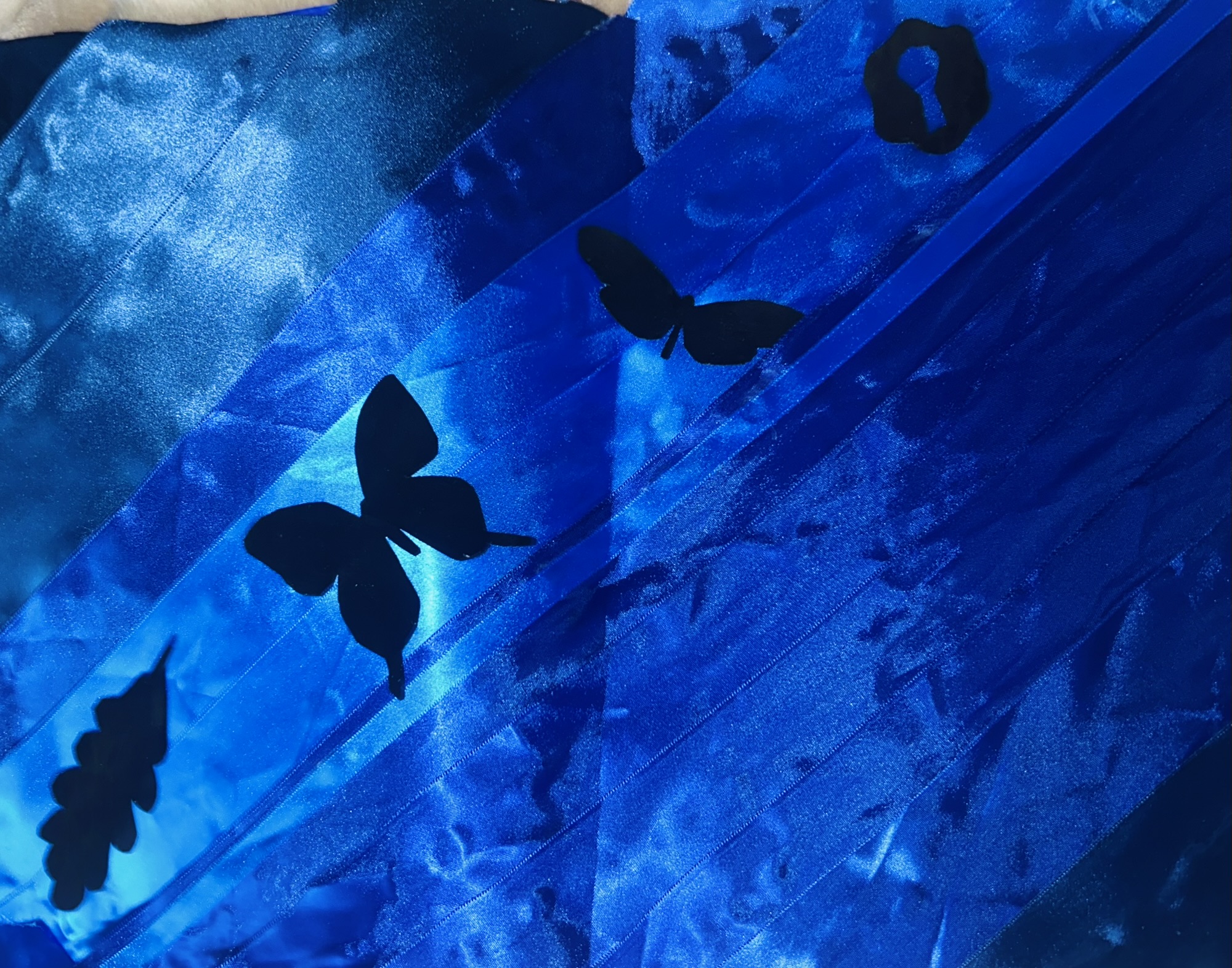
Phaedra Erzar – art exhibit reflection
Camila Castellari – art exhibit reflection