Very recently, the US Supreme Court declined to hear an ongoing dispute regarding copyright ownership of AI generated artworks.
Dr. Stephen Thaler has been seeking copyright ownership over an AI generated image by the name of “A Recent Entrance to Paradise.” This was created in May, 2019, by, if I’m understanding correctly, an AI system he created himself (DABUS).
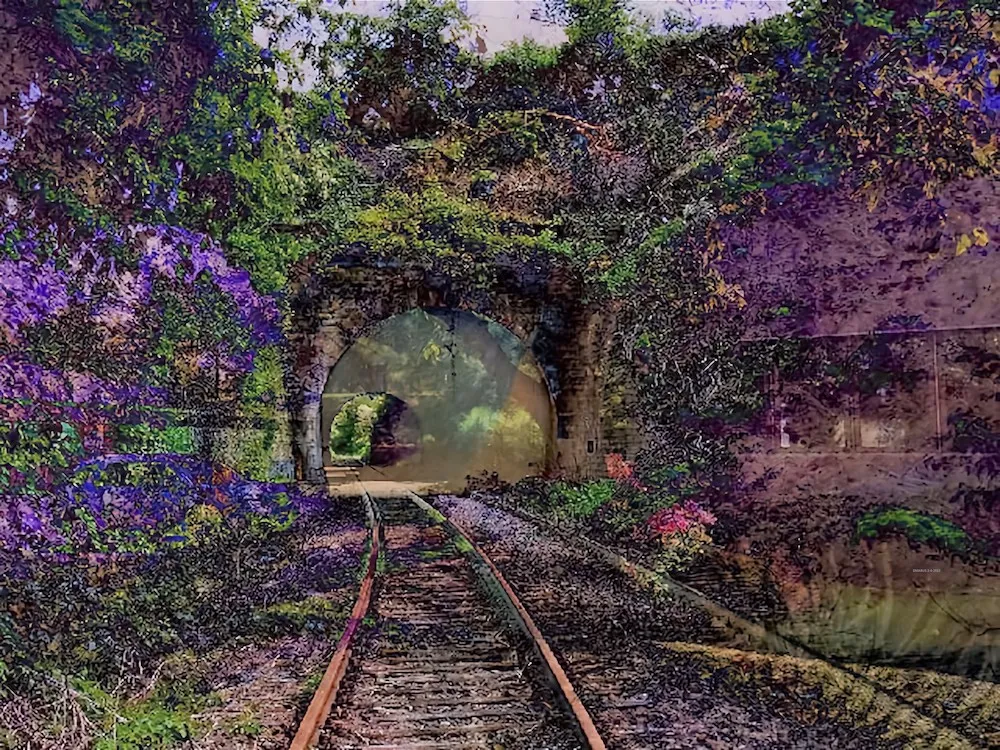
The US Copyright Office (in 2022) denied Thaler’s claim because the artwork itself does not have a human author. Thus, it is not protected by US copyright laws. He accelerated his case to the US Supreme Court, however, they rejected having a hearing about it.
Within the articles I viewed (linked in credits section at the bottom of this article), the same argument that humanity and the aspect of being human is integral to copyright prevailed. Copyright is based on one’s own ability to create and is reinforced by a human’s lifespan dictating when this copyright expires.
Another similar AI dispute (Allen v. Perlmutter) is also ongoing currently. A recent update that I found on Reddit showed this interesting stamp within court documents:
“Mr. Allen has consistently identified himself as the Work’s author. AR_002. The entire premise of his copyright application is that he authored the Work by using AI as a tool to express his creative vision. The Office attempts to blur this critical distinction by asserting that “the expression in the Midjourney Output was produced not by a human, but by AI.” Dkt. 57 at 2. But this assumes the conclusion to the very question at issue. The Office’s reasoning is therefore circular: AI produced the output, therefore AI is the author; AI is the author, therefore a human cannot be. As demonstrated below, that logic would disqualify every photograph ever taken, because in every case a machine, not the photographer, “generated” the image.” https://www.reddit.com/r/COPYRIGHT/comments/1rhzi03/latest_from_allen_v_perlmutter_ai_authorship/
AI use is currently a hot-topic at Marywood University due to the “horse controversy” in which an AI video was uploaded to the Marywood Instagram account to the dismay of many students.
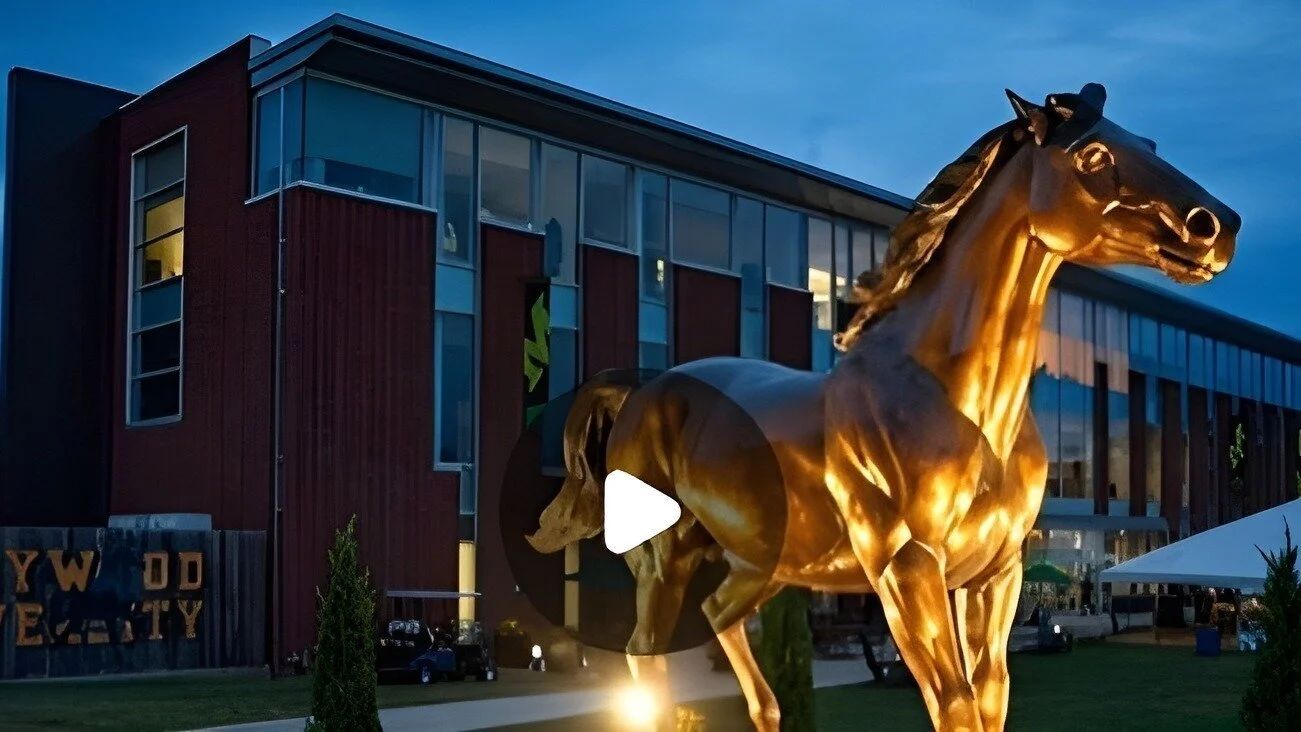
https://www.change.org/p/against-generative-ai-use-in-marywood-university
Generative AI artwork is an extremely deep and complex subject. Putting aside the issues of environmental, social, and financial impacts, the moral quandaries, especially regarding copyright and ownership, are interesting.
Say for example, someone uses a prompt to generate an image. The idea is human, but the actual output is not. The person who entered the prompt doesn’t know what image is going to appear. They could generate thousands of images with the same prompt and choose their favorite one but, each image generated is still something they didn’t intentionally choose. They went off of words. They could describe an entire picture inch by inch, but the actual creative execution isn’t done by human hands. Only the idea is – which is not something that can be copyrighted.
Some people who generate AI then go on to edit and improve upon the AI image. Which could constitute copyright coverage if it becomes transformative enough. However, that barrier can be hard to determine.
It’s also important to note that I personally do not see AI as a tool. Tools are something that assist a person in making something. For example, a hammer or a screwdriver. They don’t do all the work for them, they only help accelerate the process for efficiency.
(It can be argued that AI does the same thing: accelerate the process. But it does so in a way that completely erases the inherent work that goes into constituting AI as a tool.)
Even in something like Procreate or Clip Studio Art, the person using the program is selecting certain inputs and manually creating something. It’s a tool, not a replacement for work or creativity. AI does all the work with little to none advanced input from the user.
But then there’s the situation where someone creates a storyboard and the AI rendering is created based on that. Or AI touch ups/alterations. Or AI animation based on an already drawn image.
There are so many instances where generative AI can be used in art ALONE (not including writing, speech generation, data analysis, etc.) that the conversation becomes as vast as the ocean.
People try to compare AI to photography a lot because they both use machines to create/generate an image. At a fundamental bare-bone basis, there is little input in both. Click a button, and you have a photo. Whether it’s high quality or not, that is your copyright. For AI, input a prompt, and there you go, an image. However I think it’s important again to highlight the human aspect of intentionality in photography. Even if the photo is horrible, it was intentional, taken by a human, a human creation. Camera’s don’t generate the world based on previous creations, it captures the world through the lens that the human behind it chooses. They are completely different contexts that are important to note.
On an emotional scale, a photo of your family that you took is much more emotionally engaging than a photo generated by AI. There was intention, a memory, a feeling. AI doesn’t know you, nor recognizes emotions. It mimics. The machine isn’t doing anything intentional because it isn’t sentient. And if something isn’t sentient, then how can it create? There’s no purpose beside coding telling it to execute a function. How can it know what it’s making beyond doing what you told it to do? The AI doesn’t have any humanity, and thus it can’t be copyrighted. Maybe the human behind it can copyright it but, that’s something we’ll have to see in the future.
I think this should be an open discussion. AI is a feat of human engineering and progress. But its power only comes from what we feed it. From the victims whose artworks and copyright were stolen to power this machine. How can someone claim copyright on something that was generated using the copyright of others? Because it’s changed enough? To an unrecognizable amalgamation of thousands upon millions of different images? Does that erase all of those people’s copyright by becoming transformative? Or do they deserve credit for training this beast? I don’t know anymore. An answer may never become clear.
Featured Image: https://www.linkedin.com/pulse/record-dr-stephen-thaler-ryf7c
Thaler’s AI Generated Artwork: https://www.linkedin.com/pulse/record-dr-stephen-thaler-ryf7c
Sources:
- https://www.courthousenews.com/supreme-court-denies-appeal-in-ai-generated-art-case/
- https://www.reuters.com/legal/government/us-supreme-court-declines-hear-dispute-over-copyrights-ai-generated-material-2026-03-02/
- https://www.yahoo.com/news/articles/supreme-court-declines-ai-copyright-210345497.html?guccounter=1&guce_referrer=aHR0cHM6Ly93d3cuZ29vZ2xlLmNvbS8&guce_referrer_sig=AQAAANsvK6m5Zo8Wl95fQVE5gmW4YJzb6MNnd3Mkvj8ax_HJsQEhbpRlefQ8YstwV9jo1ptVyjNTTrz7rP5kOSDNWM5IYBL5kDi0LG4jdLwTBQyEUT0zxq5jYEulpy7F6XytEsEZpPnnAOwztQRlPFBIUMfLuy_lI5sxZc5P4ftxst24
Reddit Post: https://www.reddit.com/r/COPYRIGHT/comments/1rhzi03/latest_from_allen_v_perlmutter_ai_authorship/
Students Against AI at Marywood: https://www.change.org/p/against-generative-ai-use-in-marywood-university