Sometimes fashion can come to stay, sometimes it’s gone as fast as it came. In this case, it stayed. It may not have had the same use, but it was too good to not use.
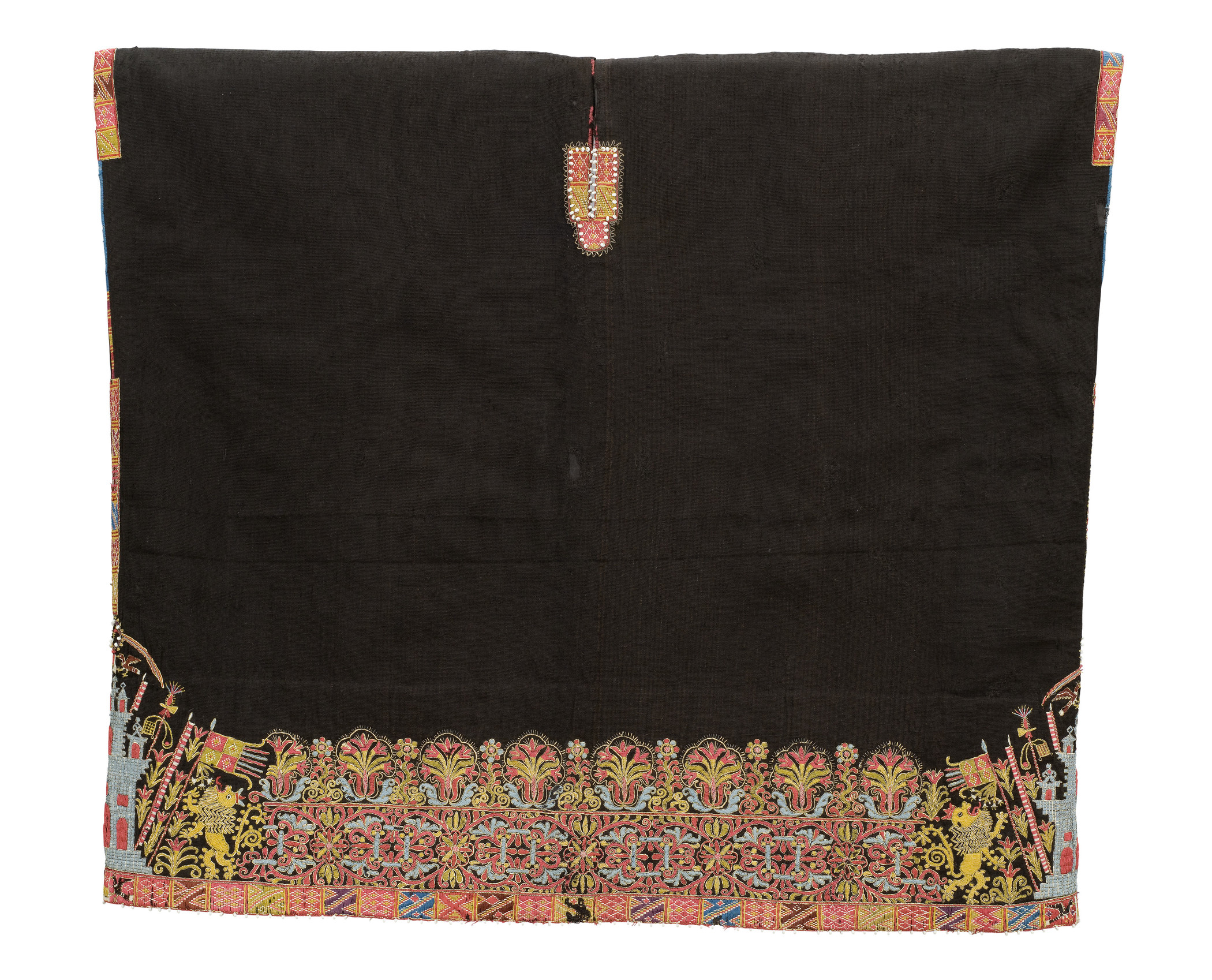
The picture above is of a, specifically black, Incan tunic (aka Uncus). To start from the beginning, black tunics were used in a ritual for young warriors. The ritual itself is pretty interesting, and it starts when the dyed wool is spun into yarn. As the yarn is spun into the tunic, the would-be warrior fasts. The fast isn’t broken until the tunic is finished. The ritual itself takes 5 days, and the would-be warrior wears the tunic for the events prior to the main event. The candidate would then have his hair cut off, his ears pierced, and swear an oath to the sun. The oath to the sun was to protect the city with his life. To clarify though, this tunic would not have the embroidery the one above has, that came later.
Once the colonizers generally took over this area, the black tunics became a problem. The Spanish didn’t like the black tunics, and felt that they were worn in protest to them, as if they were remembering a time when it was just the Incas. Since it’s the colonizers in control of course, the black tunics were prohibited in the 18th century.


Now let’s take a step back into the 17th century. Viceroyalty of Peru kept the black tunic, and expanded on it. Now, these tunics were worn for Christian celebrations, like Corpus Christi. They combined the Andean and Spanish traditions in the garment. This knee length tunic was able to make the people more identifiable through embroidery, and some even wore lace edged sleeves. This is something also from the Incans, the geometric designs also called tocapu, were originally used to signify Incan officials and status. Their purpose remained the same, and in the black tunic above, the hem, arm openings, and head opening are all lined with tocapu.


Using the tunic to represent a person was taken a step forward. The tunics now can have symbols and objects embroidered that match the wearer’s heritage and social standing. In this case, there is a castle with the Spanish Heraldic flag, crowned lions and floral motifs, but also the Inca Kings’s ceremonial ax as well as a pendent coca bag tied to a staff. The castle along with the ax and the staff are indicative of Inca, with the flag and lions indicative of the Spanish. This further shows the combining of the two cultures as it was happening.
So, was it a fad? Was it a trend? I wear similar clothing, also in black (always in black). It makes me wonder if somehow, someway, these styles changed with the time, and it never actually left at all.
Citations
“Fashioning Identity.” Archive Of The World Art and Imagination in Spanish America, 1500-1800 Highlights from LACMA’s Collection, Los Angelos County Museum, Los Angelos, CA, 2022, pp. 171–174.
Phipps, Elena. “Man’s Processional Tunic (UNCU) (Túnica Procesional Masculina [Uncu]).” Man’s Processional Tunic (Uncu) (Túnica Procesional Masculina [Uncu]) | LACMA Collections, Los Angeles County Museum of Art, collections.lacma.org/node/212441. Accessed 11 Feb. 2024.