This semester, I spent time working in both painting and printmaking, and the more I moved between the two, the more I saw how closely they connect. They overlap in surprising ways, especially when it comes to layering, planning, and how materials interact.
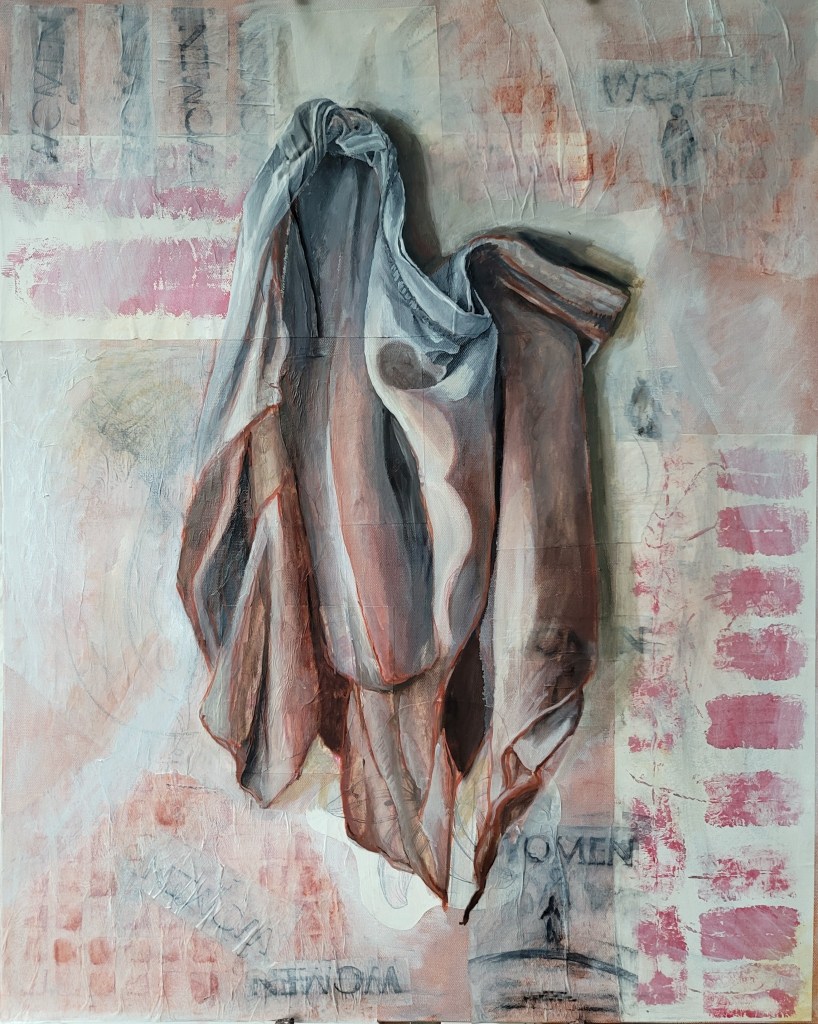
In my reduction linocut of a snapdragon, I carved and printed five layers, each one building on the last. It took a lot of patience and planning—if I cut too early, there was no way to fix it. Some of the layers didn’t align perfectly, but that gave the piece more life. That same layered approach showed up in my Crimson Inequality painting, where I combined rubbings, drawings, paint, and even some print elements. Both works depended on layering and trust in the process, even when things didn’t align perfectly (which made them more interesting).

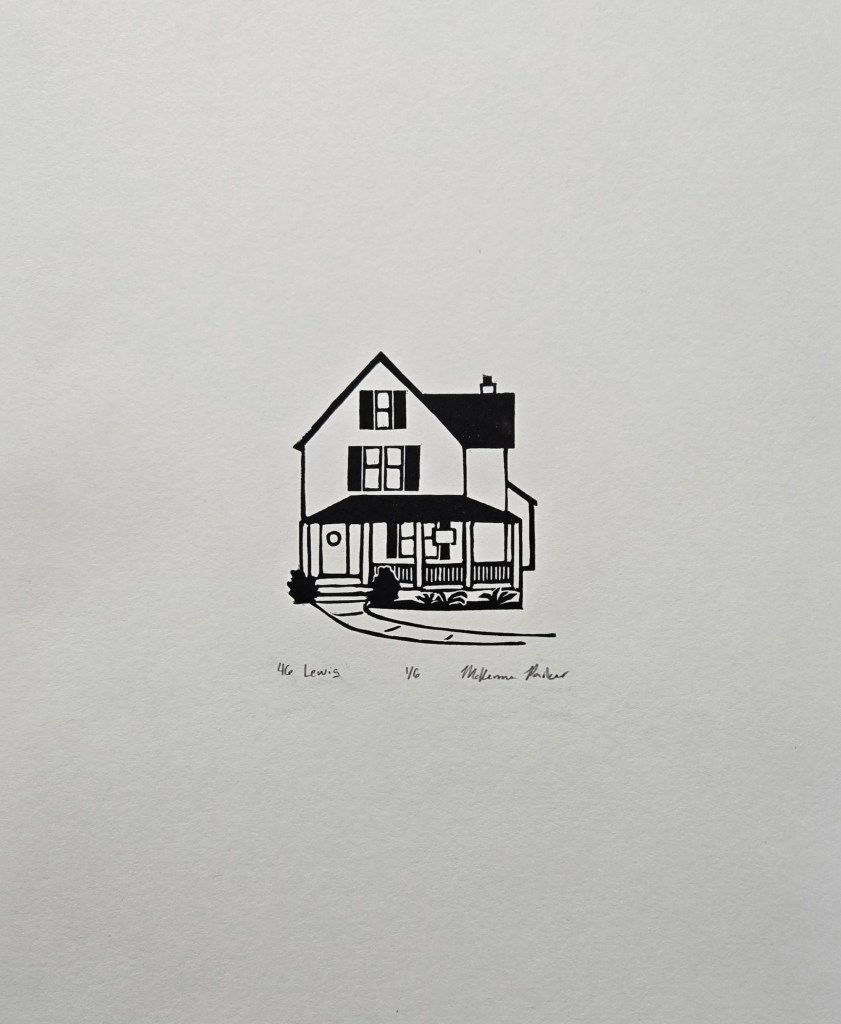
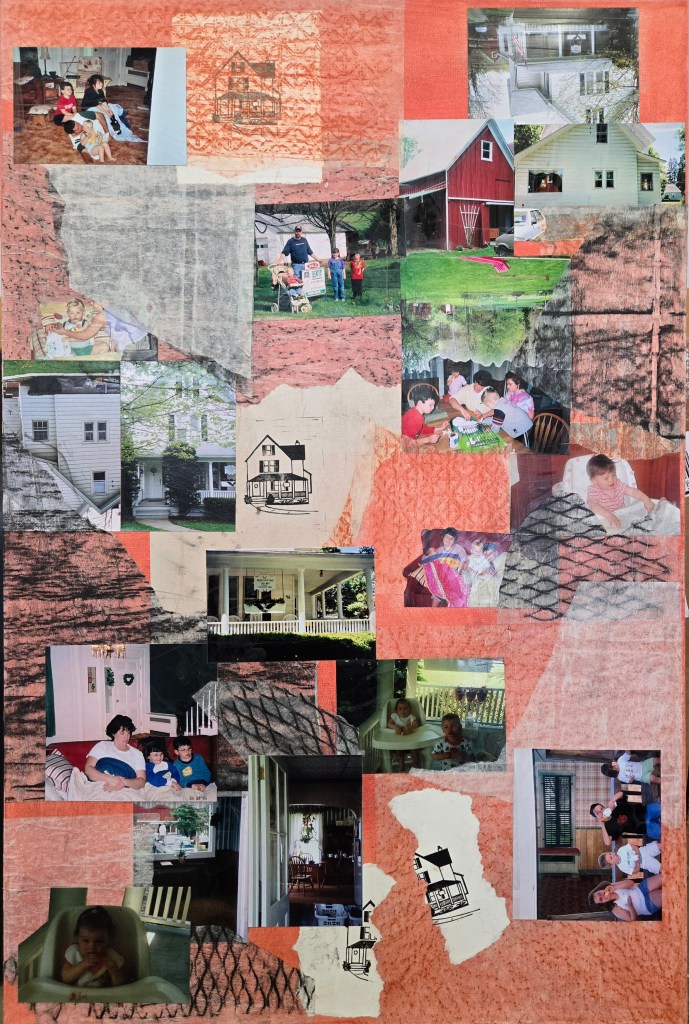
For the linocut of my childhood home, I focused on fine detail and careful edges. I wanted the image to feel accurate, even though I had to simplify things at such a small scale. I even made a template to block the edges of the plate so only the house would print. This mirrors how I planned out my collage, which includes the print, where the quiet linework echoed the early, simple years lived in that home. Both are tied to memory and place, and both were built with quiet intention.
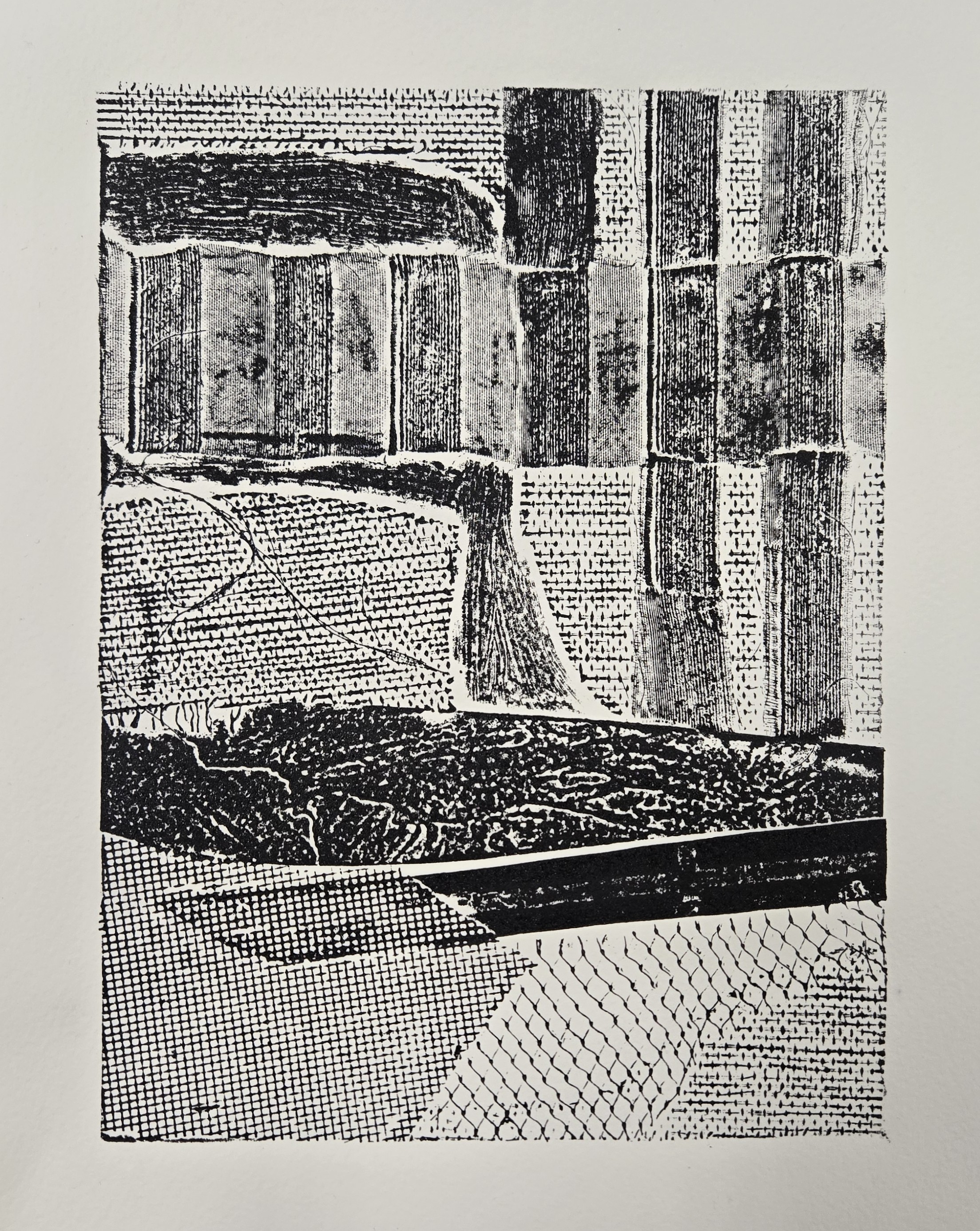
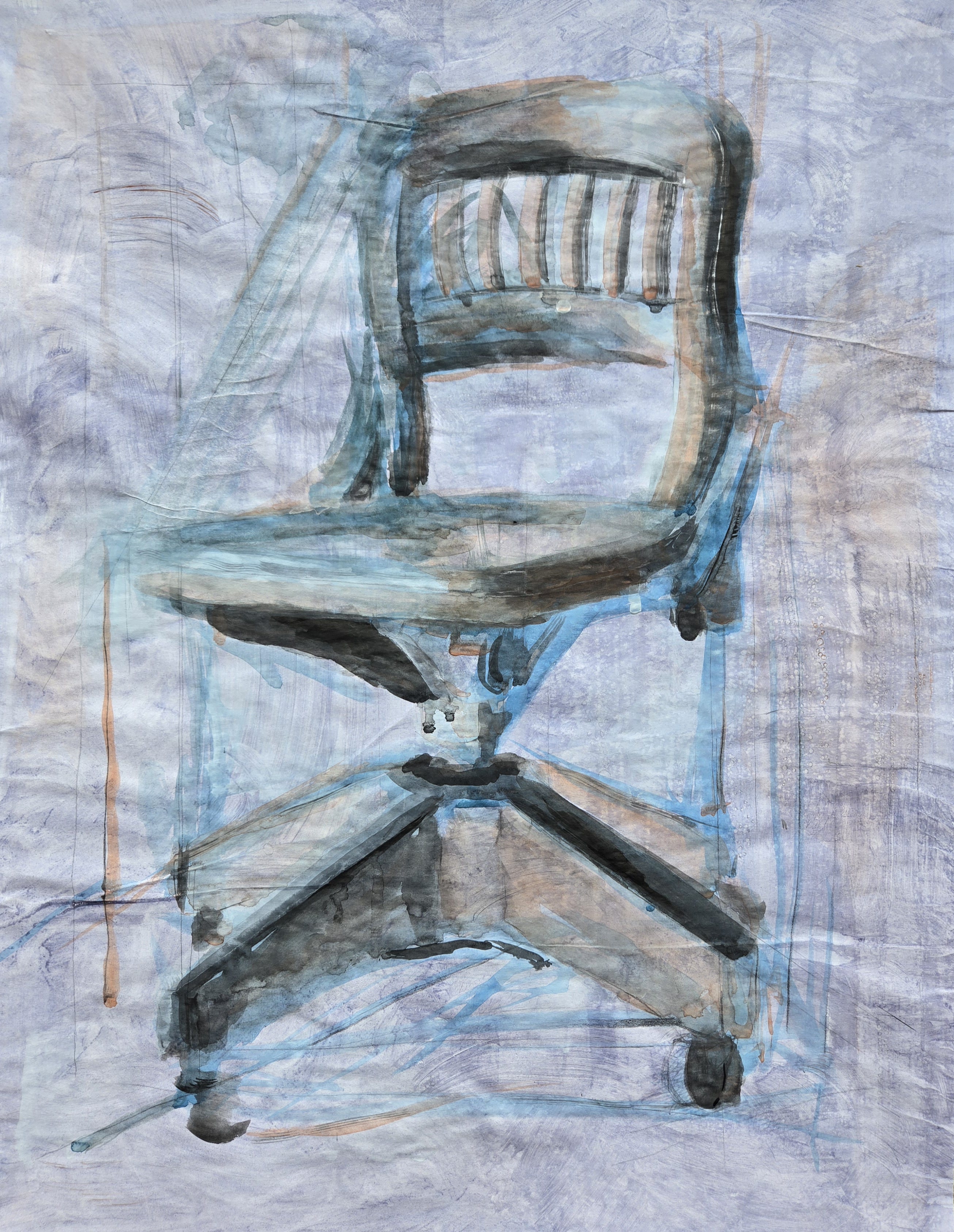
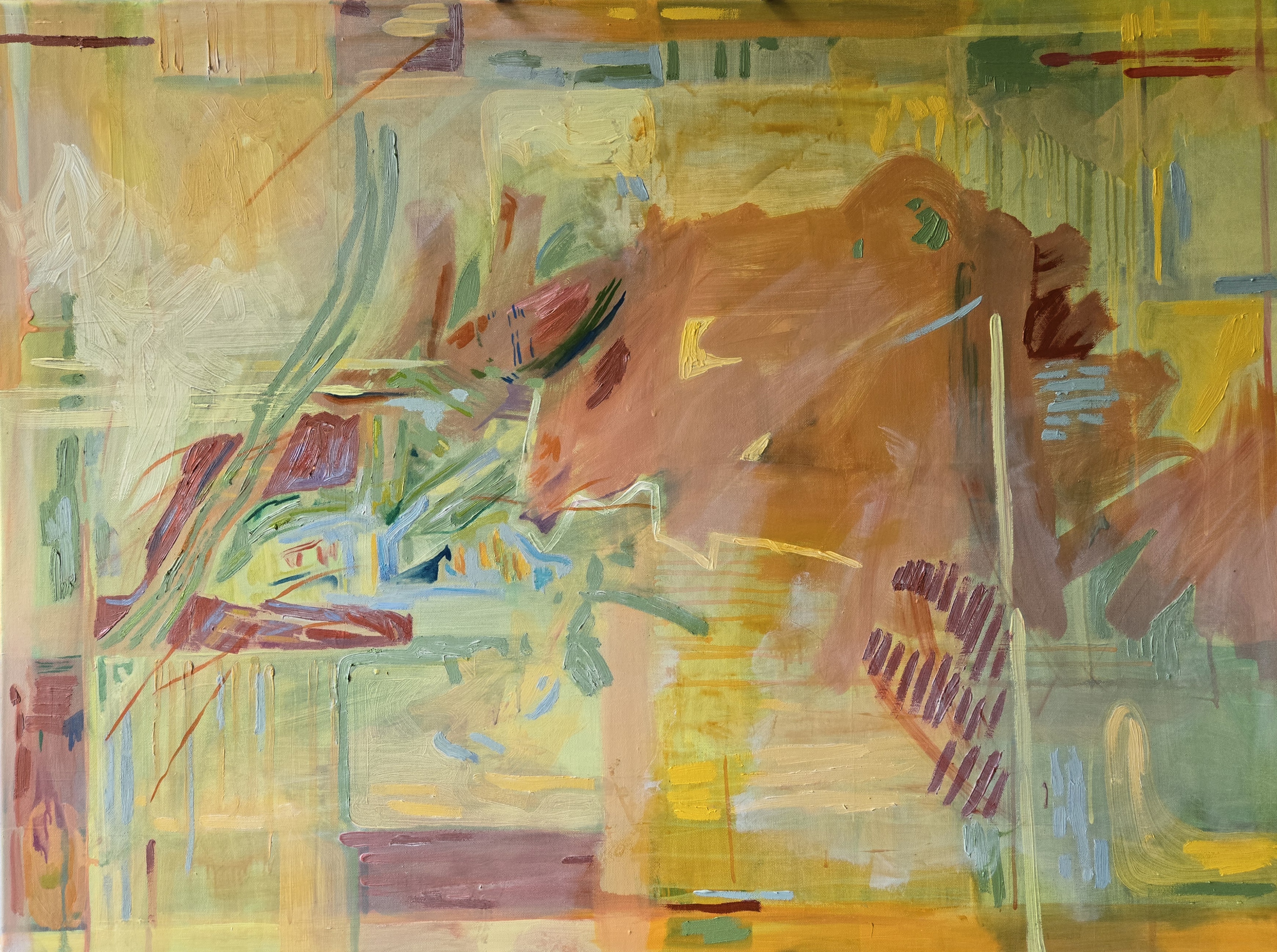
With my collagraph of a chair, the textures I chose created values and forms that leaned into abstraction. I paid close attention to how different surfaces would print—whether they’d come out light or dark, dense or soft. That process made me more aware of surface texture, which has directly influenced both my drawing and painting. In the drawing, I leaned into the textures already present, emphasizing certain areas, and now I’m exploring that same idea in painting—this time through color and shape, letting surface and form guide the image.
In the end, painting and printmaking aren’t opposites. They’re just two ways of building meaning through layers, decisions, and touch.