It’s been cold these past few days, but despite the cool weather, the bugs have been emerging and hanging out. If you know me, you know I’m a big fan of creatures in general and especially bugs 🙂 Today, I’d like to share a few ladybug based projects I made for Sue Jenkins’ Digital Design class a year ago. I’m mostly talking about these as an excuse to spread the word about ladybugs, which I think a lot of people are misinformed on.
When I started thinking about what I wanted to do for Sue’s gift tag assignment, I thought of making Valentine’s Day themed “love bugs” with hearts on different types of real bugs. As I was looking up bugs with incidental heart patterns, I found an image of a gray ladybug with a heart shaped spot. Before this happened, my knowledge of ladybugs was the same as the average reader of this blog. I knew that there were the “normal” red ladybugs, and the “evil” sometimes-more-orangeish asian lady beetle. So I was intrigued by this gray ladybug. I figured he was some other invasive “fake” ladybug. Seeing this made me go down a long rabbit hole that shifted the purpose of my project, so I’ll summarize what I found out that day.
When many of you imagine a “true” ladybug, you likely imagine something like in these images here:
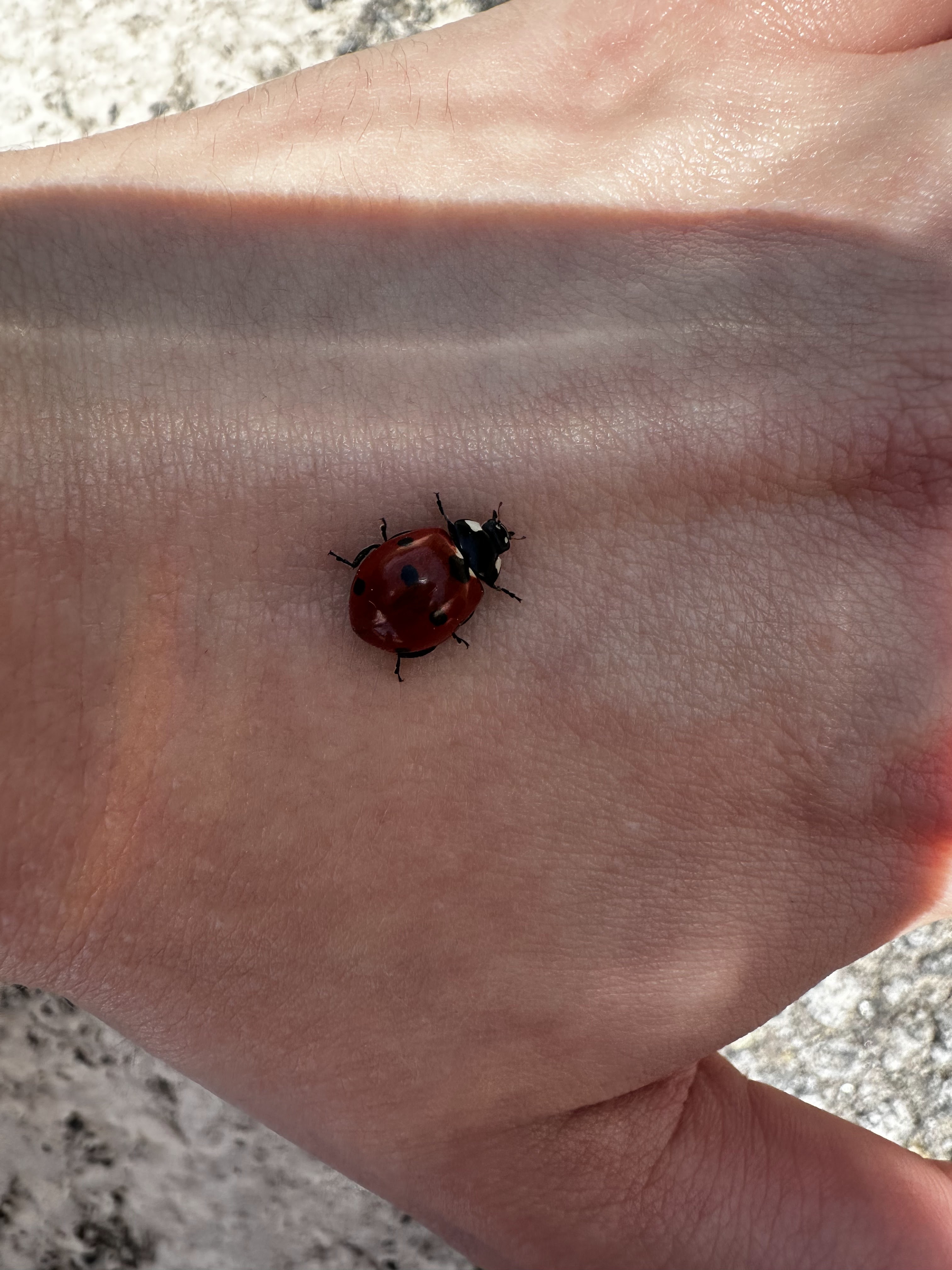
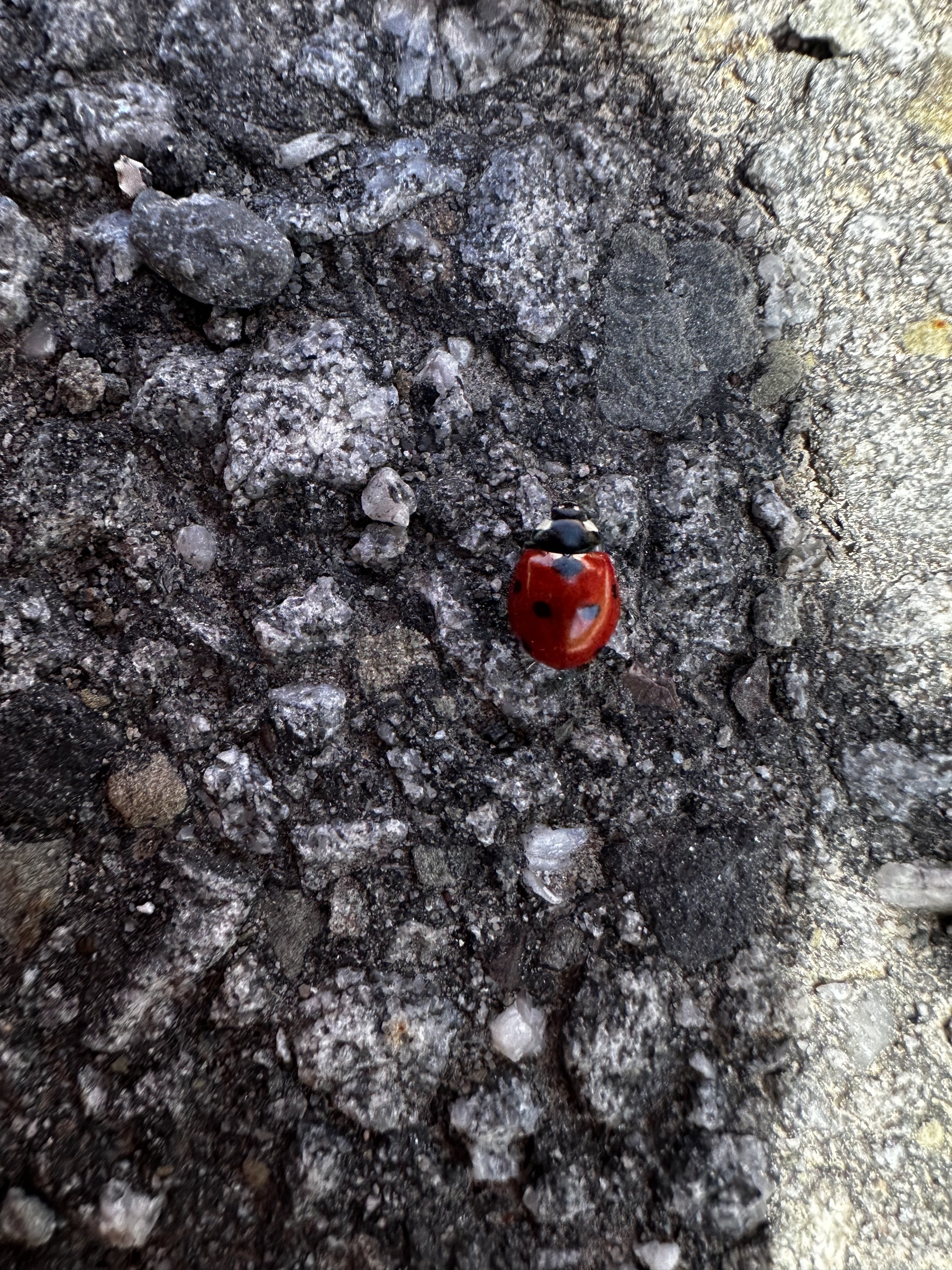
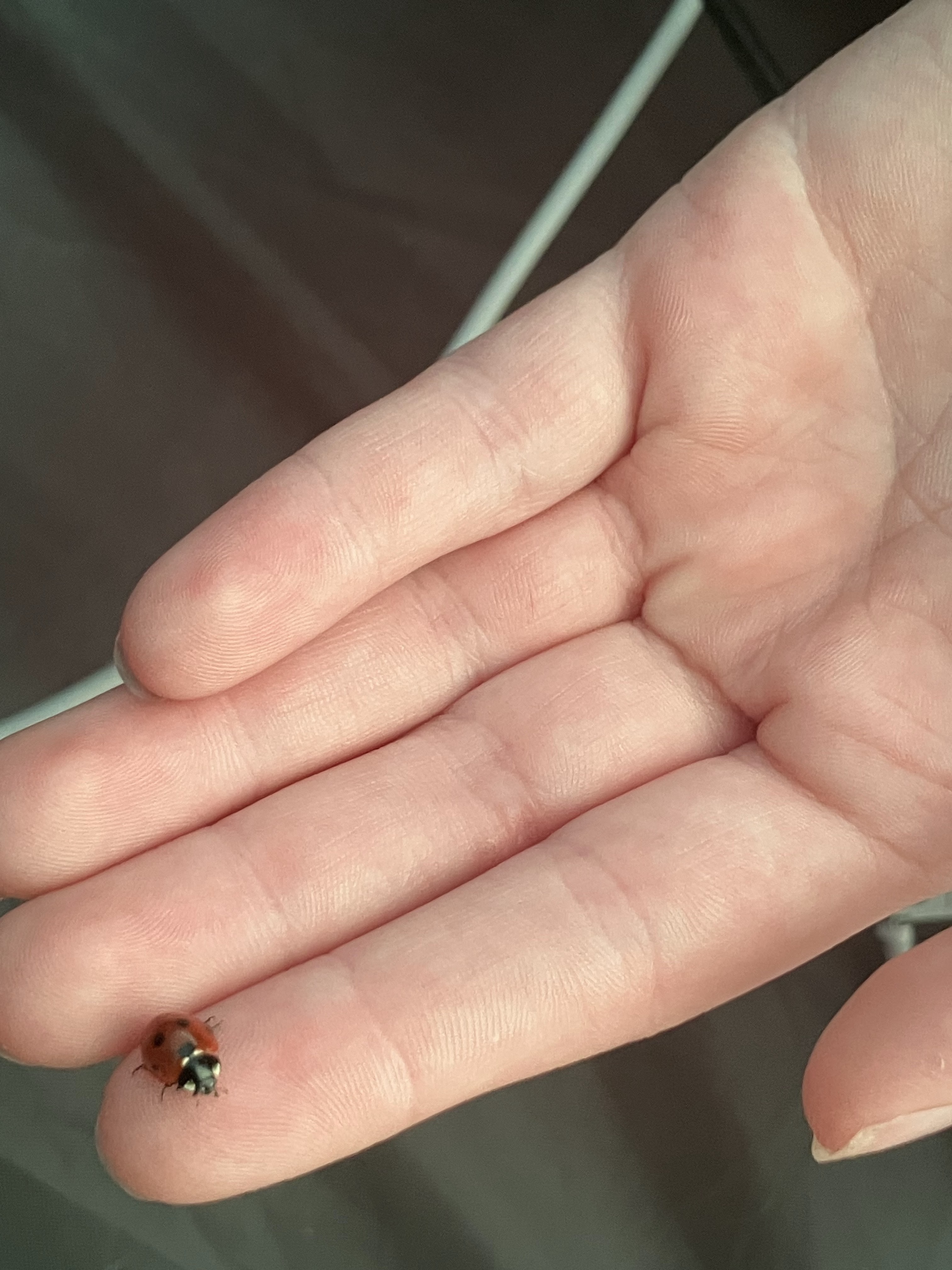
The ladybugs in these images are the 7 spot ladybird (captured using my stunning photography skills as they’re all in such heavy shadow). Ladybug and ladybird are interchangeable, with “ladybird” being the British name for ladybug. I like to call the 7 spot a “ladybird” because, shockingly, it is from Europe! If this is the ladybug we consider “real,” are there any ladybugs native to the US?
Yes! Relievingly, there are more ladybugs than just the seven spot and asian lady beetle. This became the basis for my gift tag assignment. I made three tags showcasing real native ladybugs, each with a description of the ladybug on the back. I was very happy with them because I made the wings swivel out to reveal the “to: from:” on the inside. Unfortunately, I never got nice pictures of the finished tags, but I will show images of the files that somewhat show how their mechanism worked. I want to streamline my process of making them to hopefully sell a few at some point!

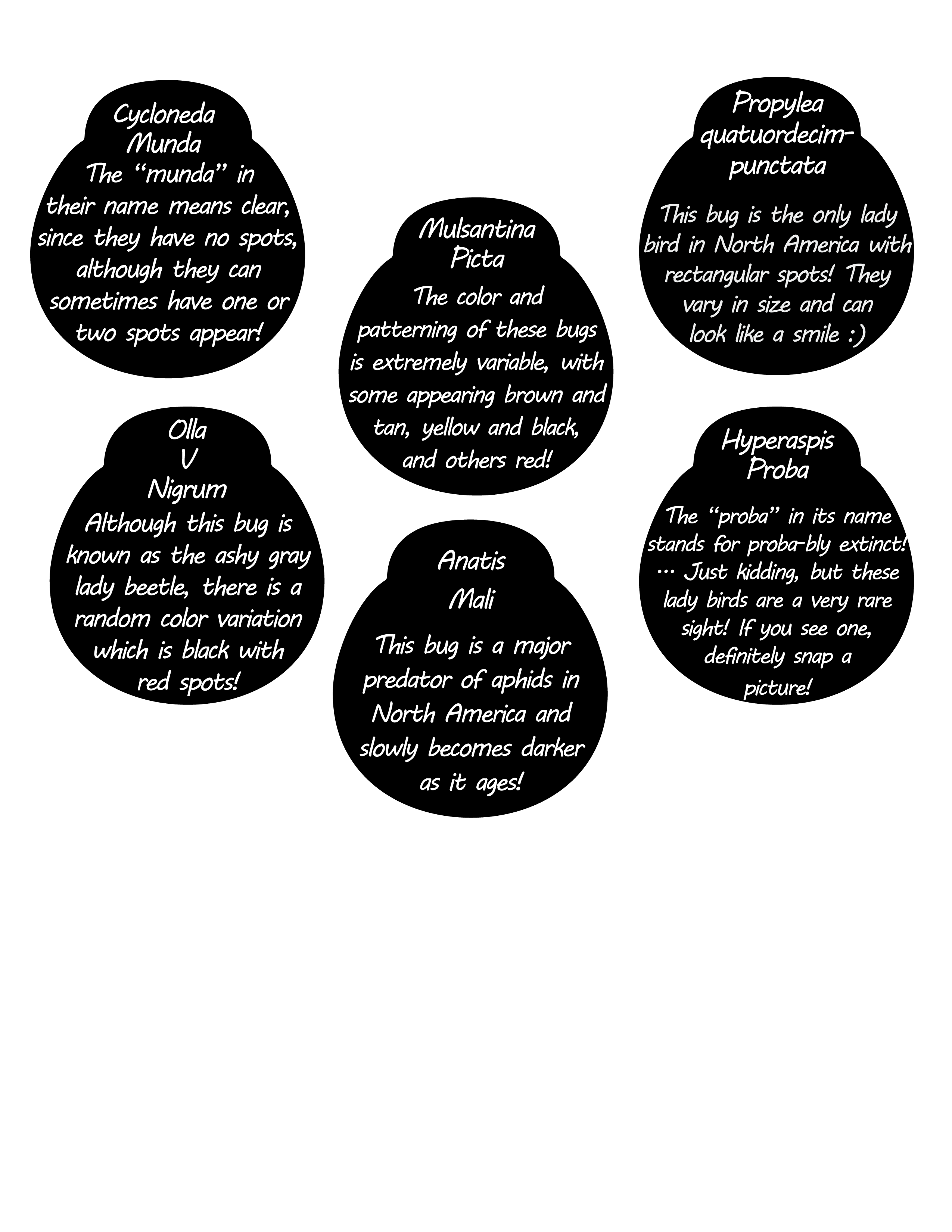
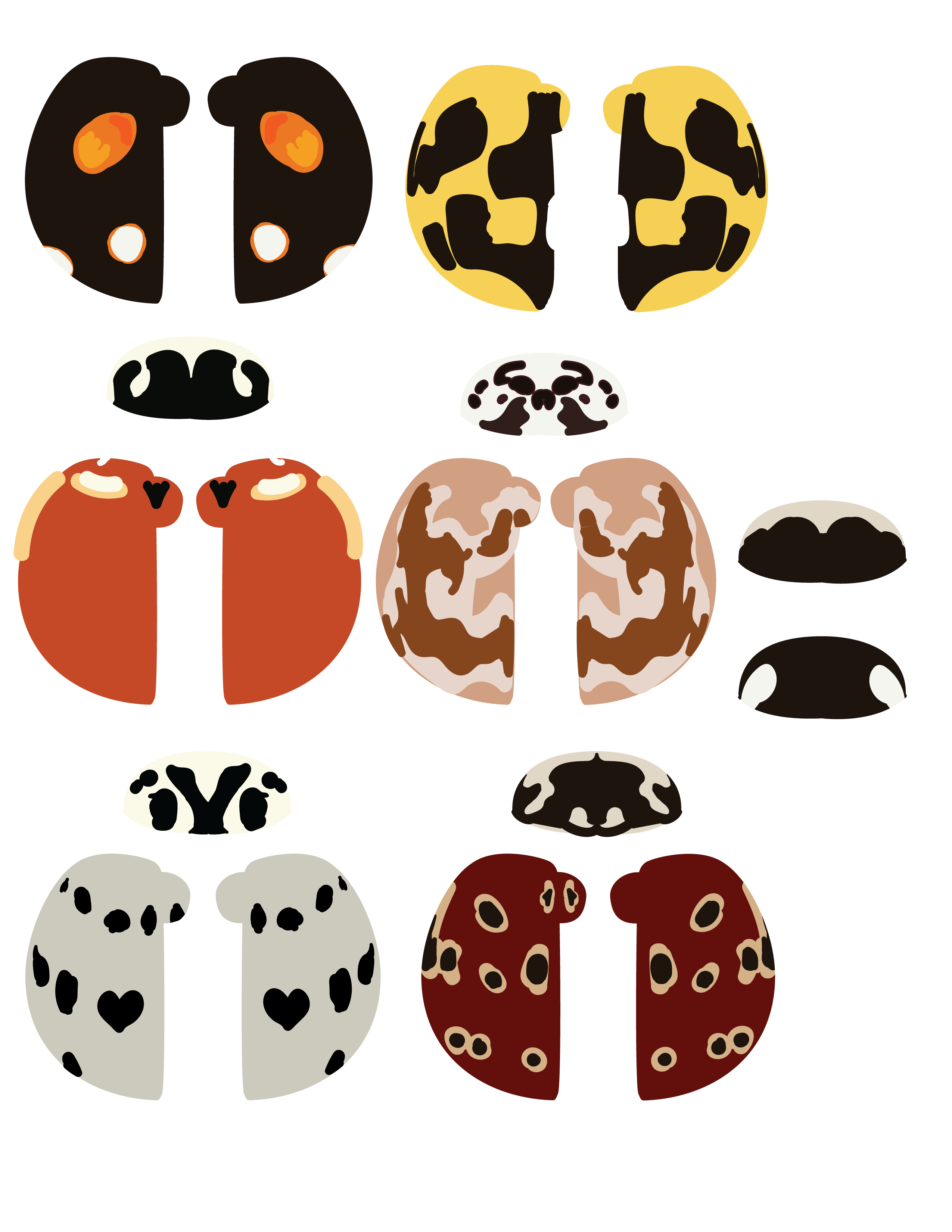

All of these ladybugs are real native ladybugs that are endangered or in rapid decline. I have never seen any of these, but I so badly want to. The anatis mali is my favorite out of the bunch. He has such cool eye spots. Keep in mind what his informational text says: it becomes darker as it ages. This will become relevant soon.
So, what is causing these ladybugs to decline? For the next project, we had to make a newsletter about a chosen topic, so I collected articles about this very thing and put this together:
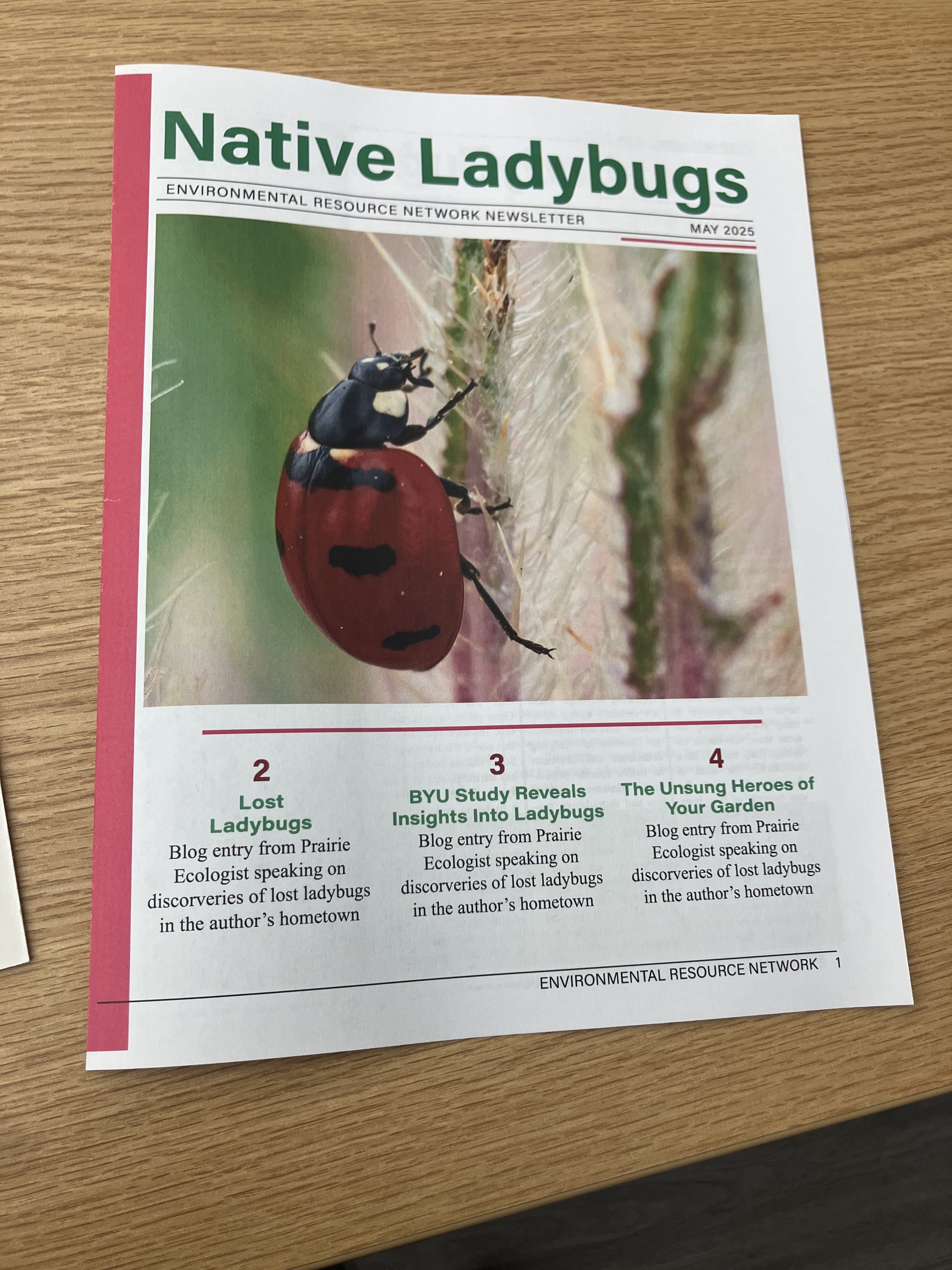
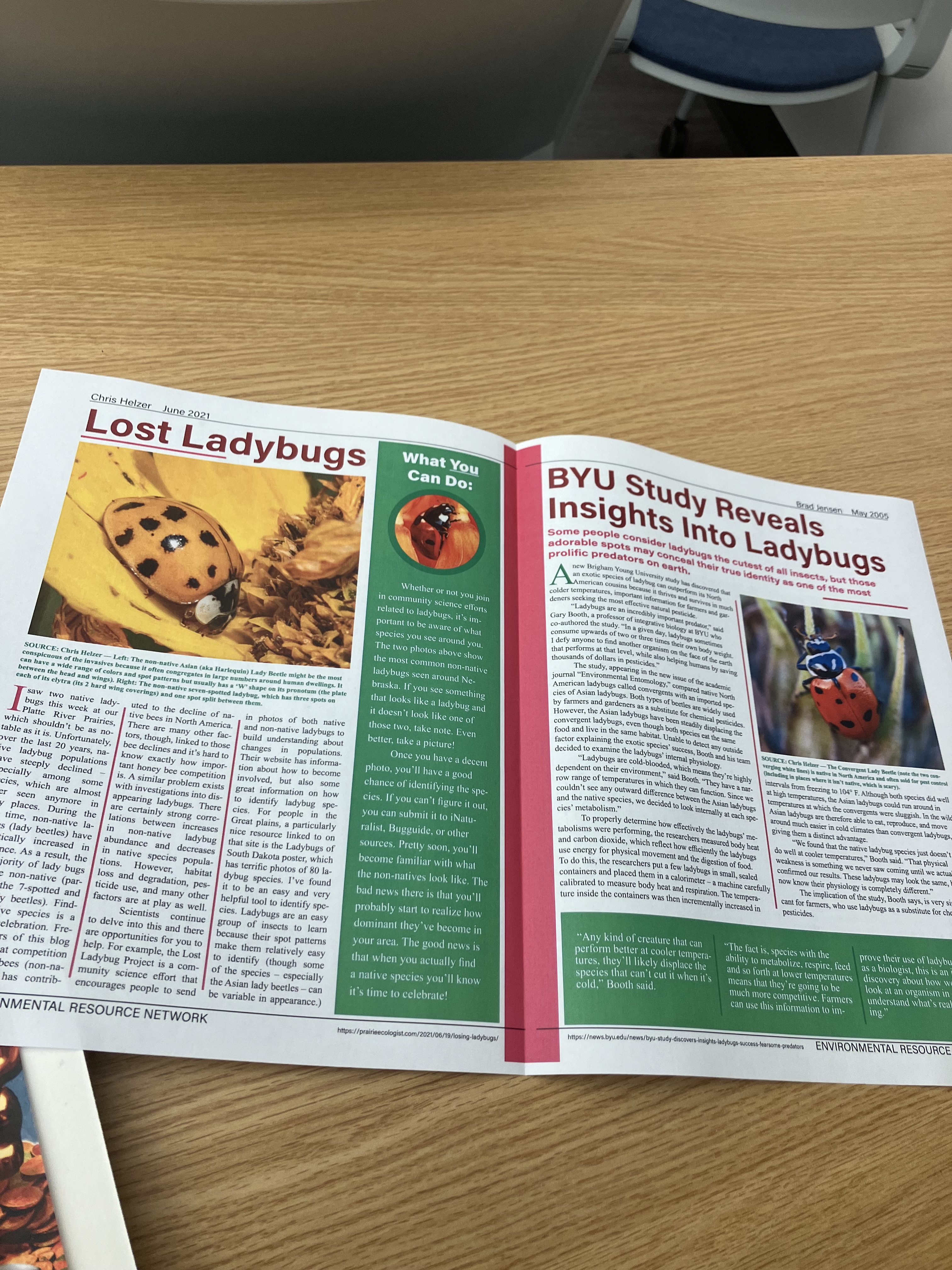

This was a fun foray into graphic design, which isn’t really my greatest strength. To explain my cliffhanger in short for you, native ladybugs are in decline as they have been displaced by the 7 spotted ladybird from Europe and now by the asian lady beetle. These lady beetles aren’t the ones to blame though, nor are Europe or Asia. American farmers have been importing the 7 spot for some time now. They began importing the asian lady beetle more recently. Neither of these ladybugs actively kill the native ones, but because they are widely imported, they end up displacing the native ones because unfortunately, when you import ladybugs, many of them fly off elsewhere. Some farmers import convergent lady beetles, which are native, but this is more expensive, so, unfortunately, more and more asian lady beetles are coming here instead and are being labelled as evil.
So, why am I talking about this now? Well, I recently was hanging out inside when I saw this large, near black ladybug on the window. I was immediately so excited as I hoped it might be a native one. I’m proud to say this ladybug was saved from a sad death inside a window. This ladybug is the anatis labiculata, or the 15 spot ladybug. They’re noticeably much bigger than the standard ladybug. He was about as big as my fingernail. Thinking back to the anatis mali I mentioned earlier, this ladybug is related. They also get darker as they age. The ladybug did have faint spots, but it was hard to see on this cloudy day.
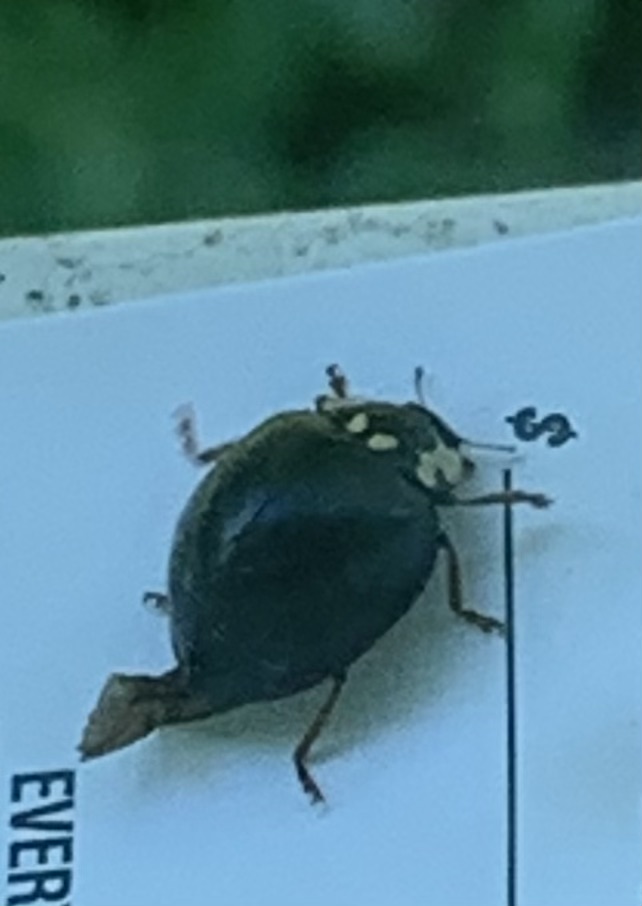
I’m delighted to have seen a real native ladybug! This has definitely made my week and possibly my month. to answer a question some of you may be wondering: his wing is okay! They fold up a very particular way in order to fit into the much smaller wing casing 🙂
This has enlivened me to make more gift tags to sell as soon as I find a printer that will print on my cardstock. In the meantime, more to come!
~Marissa