Over this semester I’ve been taking a History of Popular Culture class and one of the more exciting things I got to learn about was America’s first commercial cowboy: Buffalo Bill.
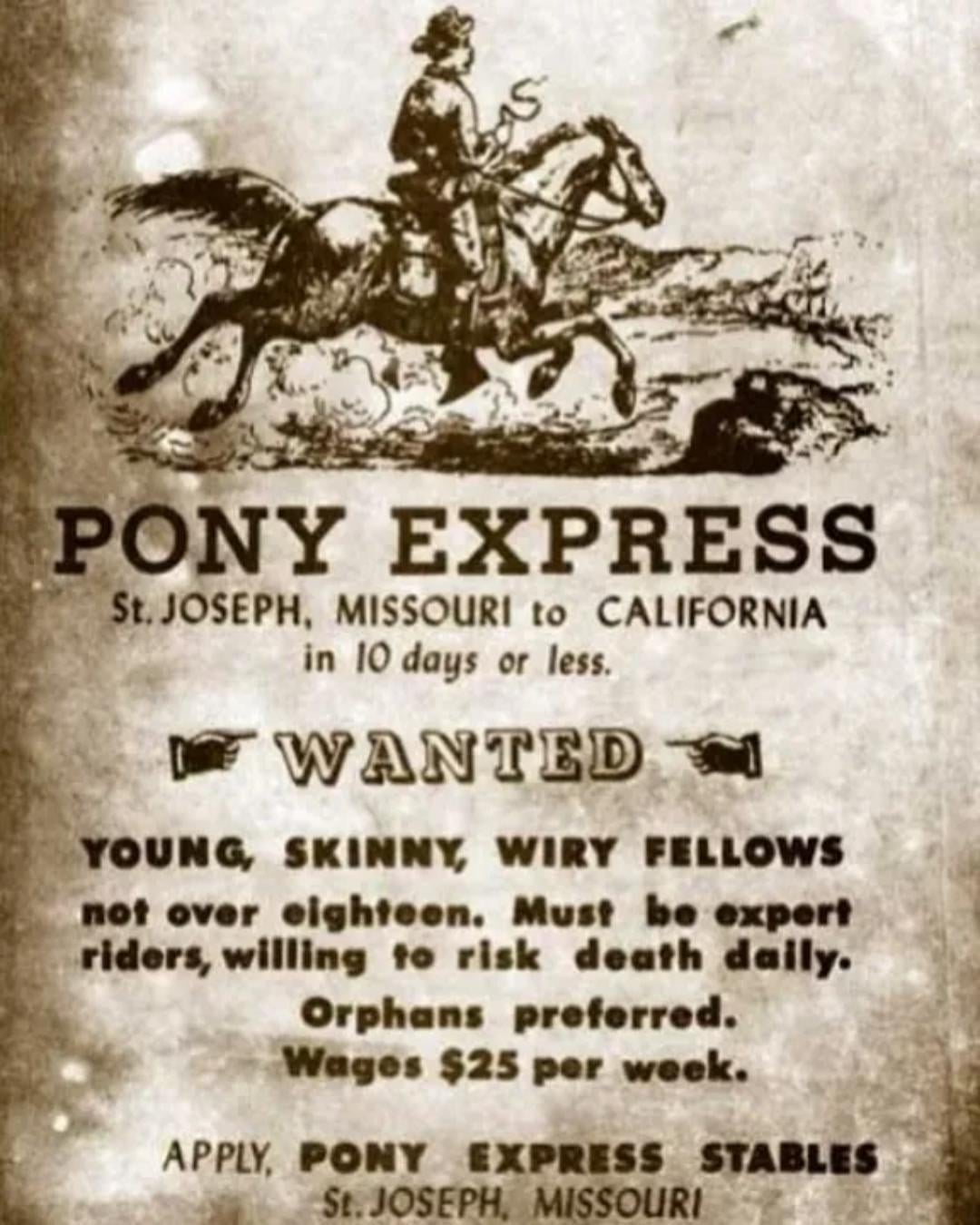
His real name was William Frederick Cody and he lived quite the rough life before he came to fame at 23. With his father and older brother dead he had to become the head of household to support his family. To do this he became he worked taking care of bulls and then working on the Pony Express— a highly dangerous job with high pay though it was primarily aimed at expendable orphans. The danger of the job came from the long travel in “unsettled” lands, the land of the varying Native American tribes who lived there and fought against encroaching colonization. Kids like William Cody were used for the Pony Express because they were less likely to be killed from Native Americans showing mercy. Cody became very successful at his job because he just didn’t care about the risk as much as the reward and he would not take rests along the routes he had to take. He knew the land well and wished to get his work done.
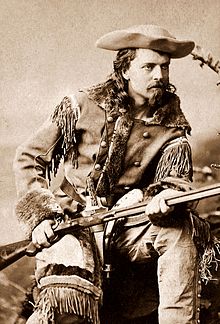
Later when the Civil War broke out he joined the Union Army but was never a fully fledged soldier. Instead, the army enlisted him for his knowledge of the frontier and to hunt for bison to feed both the Union soldiers and railway workers as they went along. Cody became so well known for his work that he was referred to as Buffalo Bill. During this time period, bison (incorrectly referred to as buffalo) were very plentiful to the point of being a nuisance for railway workers, so it was very common for people to shoot and kill them on the side of the tracks. They’d only be used for their meat and not for their fur or bones, a stark departure from how Native Americans would use all parts of the bison. Due to this wasteful behavior, the number of bison dwindled to near extinction. Cody was partially the reason, though he would help rebuild the bison population later in his life. Because of Cody’s time as a scout, he knew generals and high officials and kept in contact. It was recommended when Duke Alexis, son of Russian Tsar Alexander II, came to United States that he see the Buffalo. Duke Alexis wanted to go west to hunt with Buffalo Bill and he was essential to the hunting party since buffalo numbers had greatly decreased within the span of a decade so you had to actually track where herds grazed.


William Cody’s wardrobe of long hair, mustache, large hat, and embroidered jackets made out of beaver skin made him stand out as a character besides his strange life story. He became a romantic symbol of the old west before it ever became the old west. This is the main key that sparked his fame. When Ned Buntline reached out to produce a series of dime novels based on Cody’s life, he agreed. These novels became so popular that he became one of the first national celebrities in the United States. Others wanted to cash in on the fame and when he was handed a script for a live performance of the west, Cody agreed and did his first performance as Buffalo Bill. He had a bad case of stage fright but the people didn’t care because they were more interested in seeing something they had never seen before, the Wild West. Through the magic of theater audiences were able to experience what life on the frontier was like but without any of the danger. Eventually this show went on the road and became a variety act, that included a number a grand racing of hundreds and hundreds of horses which came to be known as Buffalo Bill and his Rough Riders.
When Buffalo Bill went overseas, he was a sensation and caught the eye of one of France’s foremost animal painters: Rosa Bonheur. An artist that was forgotten to history but received great success during her time, Bonheur is known for her realistic and noble depictions of animals, having studied them and art extensively in her youth with the encouragement of her father. Living quite the unusual life herself for a woman of the 19th century, Bonheur never married though had relationships with women throughout her life. She had to entreat the government of France to let her wear pants so she could pursue her work instead of being weighed down with impractical victorian dresses.

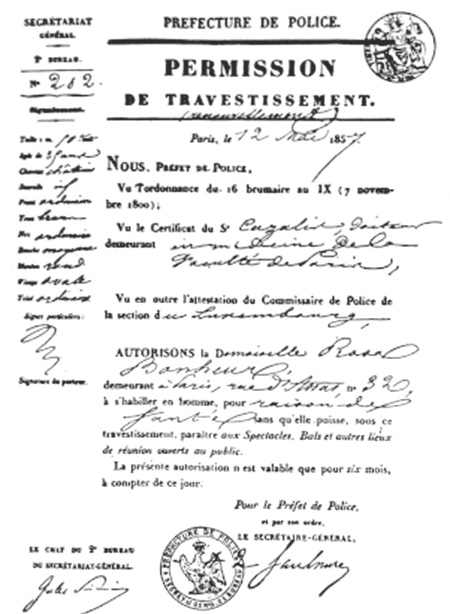
According to Rosa Bonheur’s Permission to Wear Pants by Mattew Wills, “When most respectable women wouldn’t venture into the streets without a chaperone, Bonheur spent “long days sketching in the countryside, at horse-fairs and even in slaughterhouses, standing in pools of blood.” She tramped through fields, manure, and barns to get the details of the horses, oxen, and cows she represented so skillfully. “In such rough, insalubrious circumstances,” notes Gretchen van Slyke, “where she was either alone or entirely surrounded by men, masculine disguise, in addition to the pistol she sometimes packed, not only afforded her ease of movement but greatly reduced the dangers to her person.”
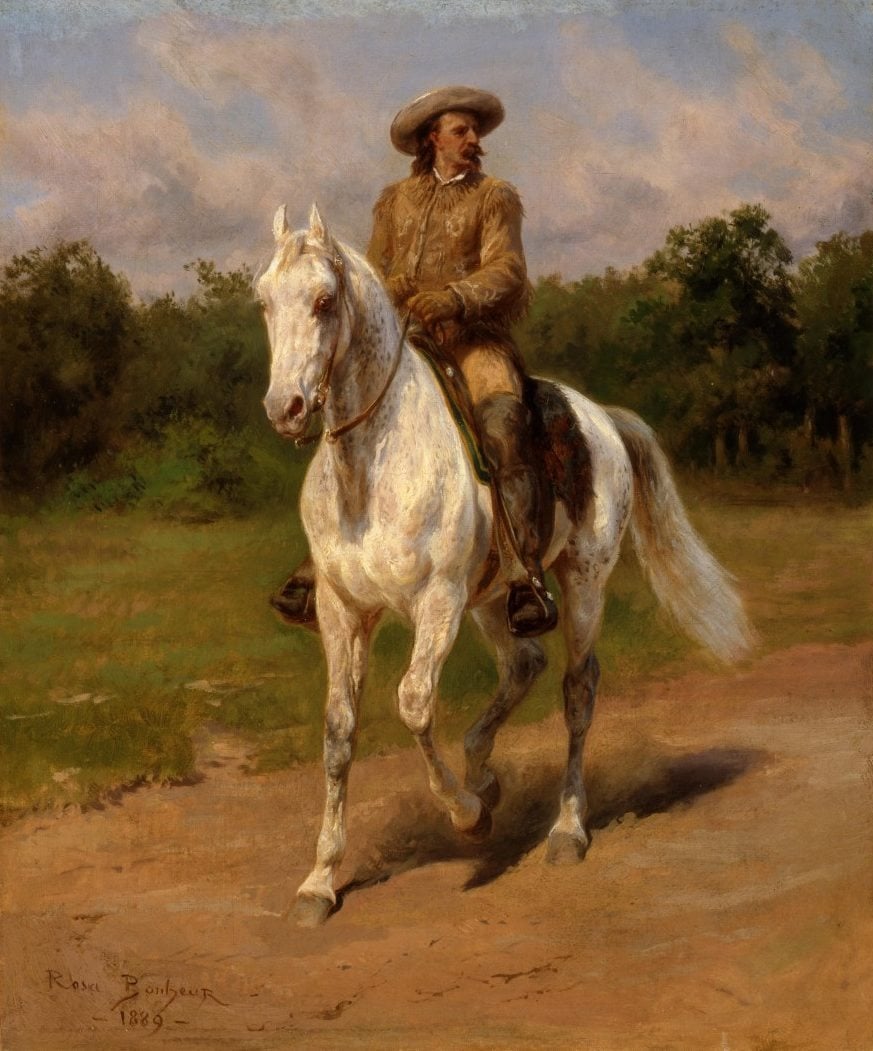
In 1889, Bonheur painted a portrait of Buffalo Bill on horseback. This portrait is interesting for its respectful depiction of Buffalo Bill, though of course the horse is still given a brighter luminosity in their glistening white coat. This image follows up in a long history of paintings of monarchs on horseback, to the point where Buffalo Bill is made to ride alongside Napoleon in the advertising for the Rough Rider shows. However, it is now the frontiersman made celebrity elevated to this grand pedestal of visual history.