“Do what you can, with what you’ve got, where you are.”
Squire Bill Widener, as quoted in the autobiography of Theodore Roosevelt
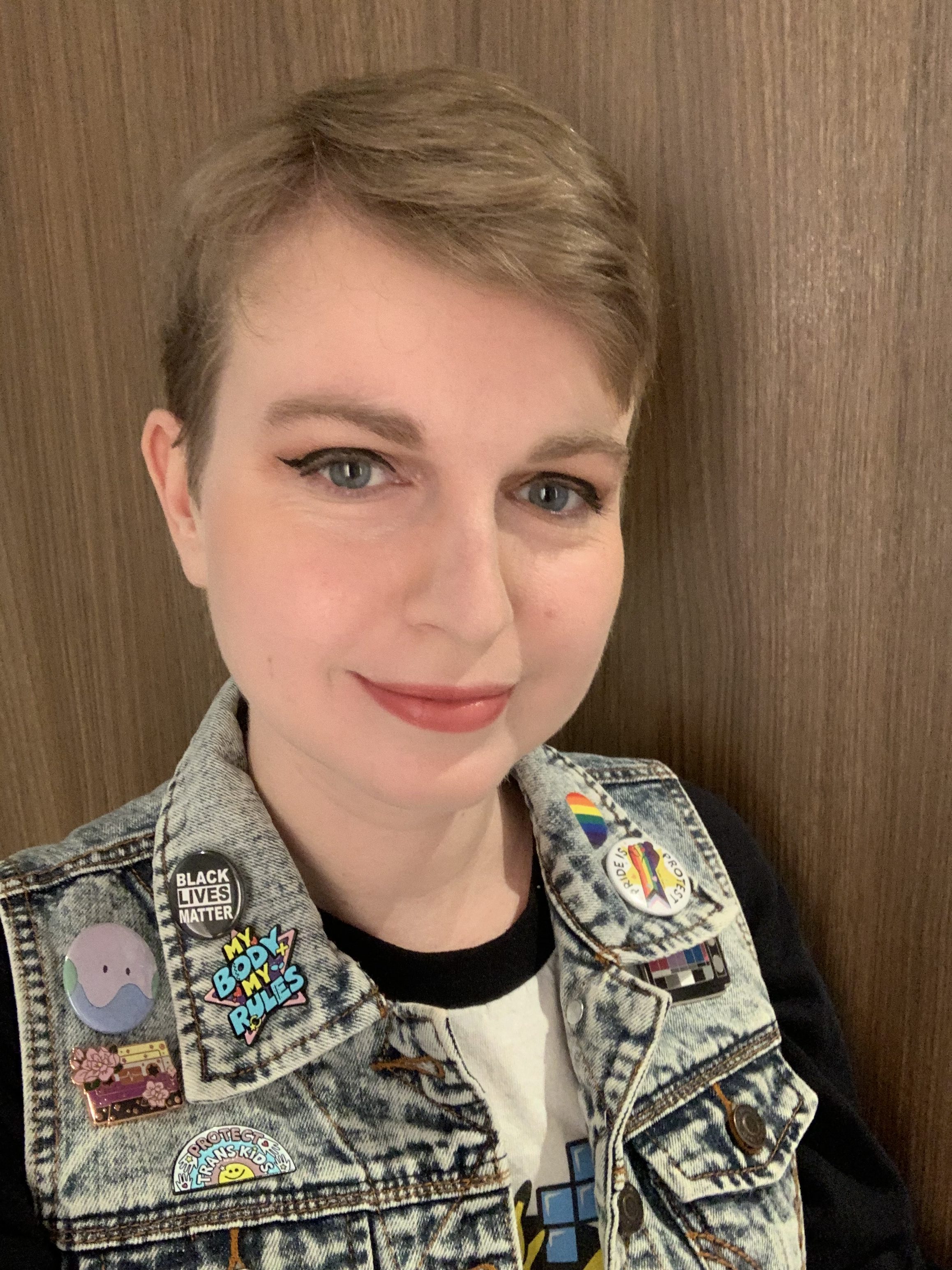
This is a special Alumni Stories blog post that I am honored to write. Meet Lydia Macleod, a mental health clinician, and an accessibility technology advocate and researcher. Lydia earned an Art Therapy degree from Marywood in 2016, minoring in psychology. Lydia was a secretary of the Ally Club and a peer tutor. Following their graduation, Lydia had an injury that left them with intense pain while using fine motor skills, such as drawing, typing, sewing, etc. Thankfully, they did not let this stop them from using art to help change the world. Keep reading to take a peek into Lydia’s life and their role in advocating for others and challenging the way we perceive disability! Also, check out Lydia’s social media accounts to see how they advocate for accessibility! Substack / BlueSky / Facebook / Instagram
What attracted you to this career path?
I was initially attracted to art therapy because I had a personal experience using the healing powers of art through a difficult time in my life and I wished to help others going through similar situations. I love the freedom that art-making gives us, allowing us to express ourselves in ways that words cannot describe. Though my disability prevents me from practicing art therapy in the same ways I have in the past, my desire to help others through difficult times is still practiced in my career as a mental health clinician and as an accessibility advocate.
What is your favorite thing about your current job?
My favorite thing about my job as a mental health clinician is providing a listening ear, education, and advocacy for families who have an adult loved one with severe mental illness. The families of loved ones with severe mental illness are often disregarded during their loved ones’ treatment, asked to engage in impossible caretaking roles, or blamed for their loved ones’ conditions. It is an absolute honor to serve these strong and resilient families. It is through this role that I have found new additional passions in education and advocacy.
While I miss creating traditional artwork and running art therapy groups, the change in my path to be an accessibility technology researcher/advocate has led me to incredible opportunities. I have learned so much more about accessibility technology due to necessity and I am using my personal experiences to help this ever-evolving resource. I enjoy giving presentations on accessibility technology. I always leave time at the end of my presentations for other individuals with disabilities to share their experiences with accessibility technology and it has been an honor to hear their stories. In addition, I enjoy consulting with instructional design and software design professionals to shape the future of these fields. Although I am still new to this field and have much to learn, I am looking forward to seeing where it takes me.
How did your art education at Marywood help your career?
I am thankful for the jumpstart my Art Therapy degree from Marywood gave me in my career. It led me to further my education at Caldwell University earning a master’s degree in mental health counseling with art therapy specialization. The skills I learned in art therapy Marywood University helped me serve clients in a clinical capacity during my internships in acute partial hospitalization and inpatient hospitalization settings, as well as working as an art therapist post-graduation in an outpatient and acute partial hospitalization setting. Although I do not work in a clinical capacity in mental health today, I use the art therapy skills learned at Marywood in my current career, when I educate families about mental illness treatment, including the benefits of art therapy, and lead recreational “art as therapy” activities. In addition, Marywood taught me the importance of being an advocate for my clients. Currently, I advocate for my clients and their loved ones’ needs with their providers. In addition, I advocate for the needs of individuals with disabilities in my role as an accessibility technology advocate. Although traditional artmaking is no longer a part of my daily life due to my disability, I apply the lessons that I learned at Marywood in design in my recreational costuming work that uses mostly thrifted materials and l when create presentations about accessibility technology.
What was your favorite part about studying art at Marywood?
One of my favorite parts about studying art at Marywood was the opportunity to engage in art forms I would not have been able to try otherwise. I primarily worked in pencil and marker before studying art at Marywood. Marywood allowed me to practice and learn more about painting, sculpture, ceramics, printmaking, and jewelry-making. Currently, I am unable to utilize these art forms due to my disability. My experience at Marywood gave me a great appreciation for these art forms and the hard work that goes into them.
However, my favorite part about studying art at Marywood were the personal connections I made. I am still in touch with many other alumni, both as friends and colleagues.
Did your career path match your vision of a career path? What is different?
Initially, I imagined myself running art therapy groups for the rest of my life. However, this dream needed to change when my disability began to affect my fine motor skills and my ability to create artwork. Nonetheless, I am a strong believer that no education is ever wasted. I use what I have learned in the past in my current roles.
Life has a way of putting you in the exact place you belong, even if you don’t see it!
I planned to be an Art Therapist upon graduating from Marywood. I pivoted slightly to get licensure as both a mental health counselor and an art therapist by seeking my master’s degree at Caldwell University. When I became disabled, I was able to continue my career as a mental health clinician by researching accessibility technology on my own. Due to the pain in my hands, I learned to type with my voice.
I use accessibility hardware, such as an ortho linear and ergonomic keyboard and a vertical mouse, to reduce the pain in my hands when I need to correct errors and account for the shortcomings of voice-to-text software. An occupational therapist helped me set up my work desk to be more ergonomic and further reduce the pain in my hands. While my future wasn’t replanned per se, as my disability became debilitating after already starting the job I have now, I am incredibly grateful to my employer for being understanding as I navigated what accessibility technology would be best for me. I am also grateful to the accessibility advocates who fought for the Americans with Disabilities Act, which codified my rights to reasonable accommodations at work, and to my family and my partner who help me with tasks that I cannot complete.
My education prepared me to be resilient and engage in problem-solving and find solutions to my obstacles. In art therapy, we call art making “healthy risk-taking,” as it requires a lot of problem-solving and trial and error. Problem-solving and trial and error are something that people with disabilities, such as myself, face daily and my college education prepared me for these skills, perhaps not in the way they intended.
I read that you are an accessibility advocate, for many, we have heard this phrase, but we are unsure of what this really entails in the day to day life. Do you mind elaborating on what you do to help advocate for others?
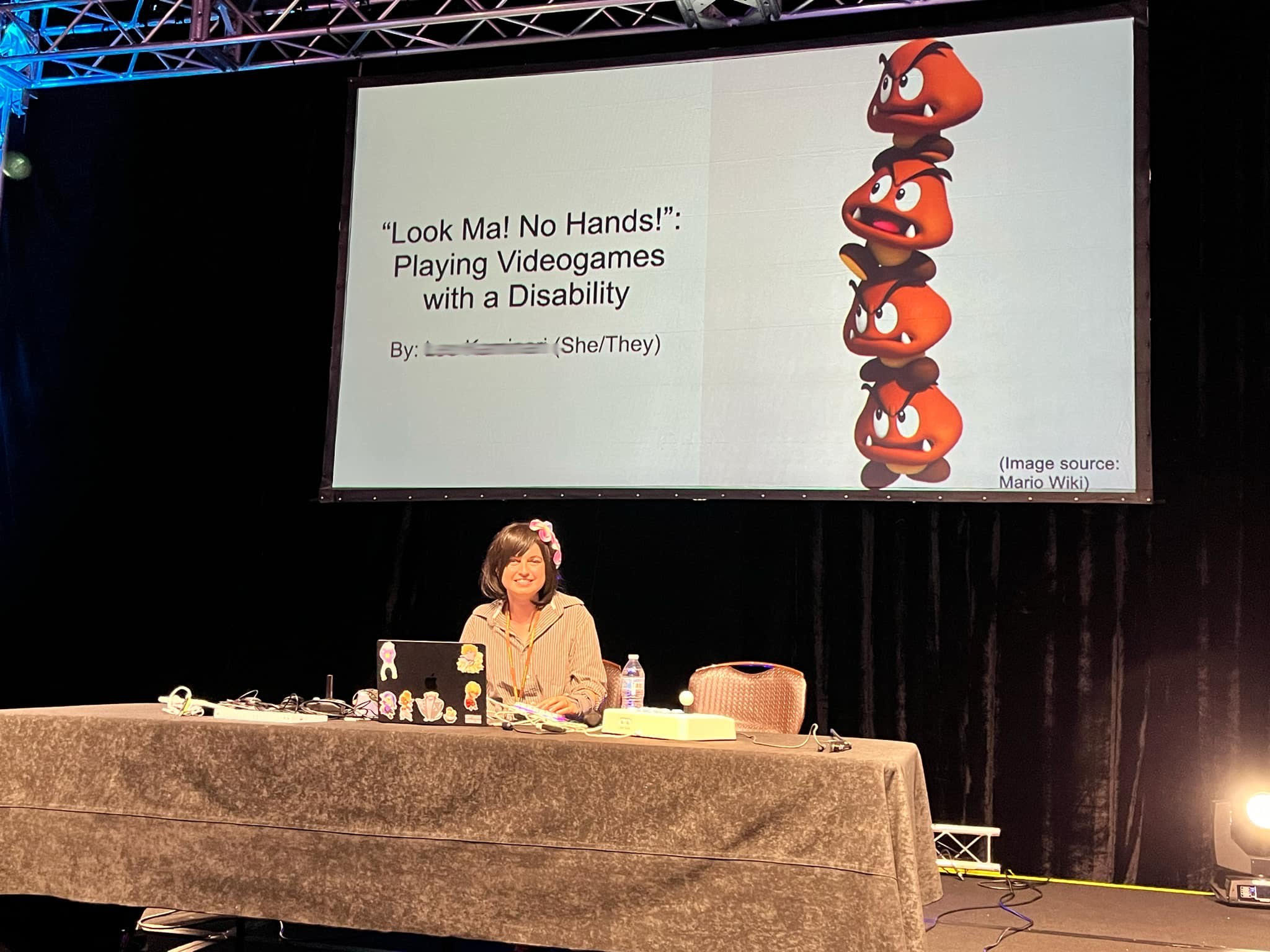
In my role as an accessibility advocate, I champion changes to technology to better serve those with disabilities. In my work, I identify shortcomings and oversights that both software and hardware developers have made and suggest improvements so more people with disabilities can utilize their products. I do this both through my accessibility reviews of software on social media and in my panel presentations at events across the country. Instructional design and software development professionals have reached out to me for advice on how to improve their services in the education and software development fields for those with disabilities.
Do you have any plans to further your education, possibly aiming more toward advocating for others with accessibility issues?
Yes, I am actively working towards earning the International Association of Accessibility Professionals (IAAP) Certified Professional in Accessibility Core Competencies (CPACC) credential to not only educate myself on accessibility further, but to also increase my professional competence to take my Accessibility work to higher levels. In addition, I do my best to remain current on accessibility technology by listening to other accessibility advocates and creators.
Another thing that we hear about a lot is accessibility advancements in technology, is there one or two pieces of technology that you use daily that you could explain to further others’ education on accessibility and advancements that surround it.
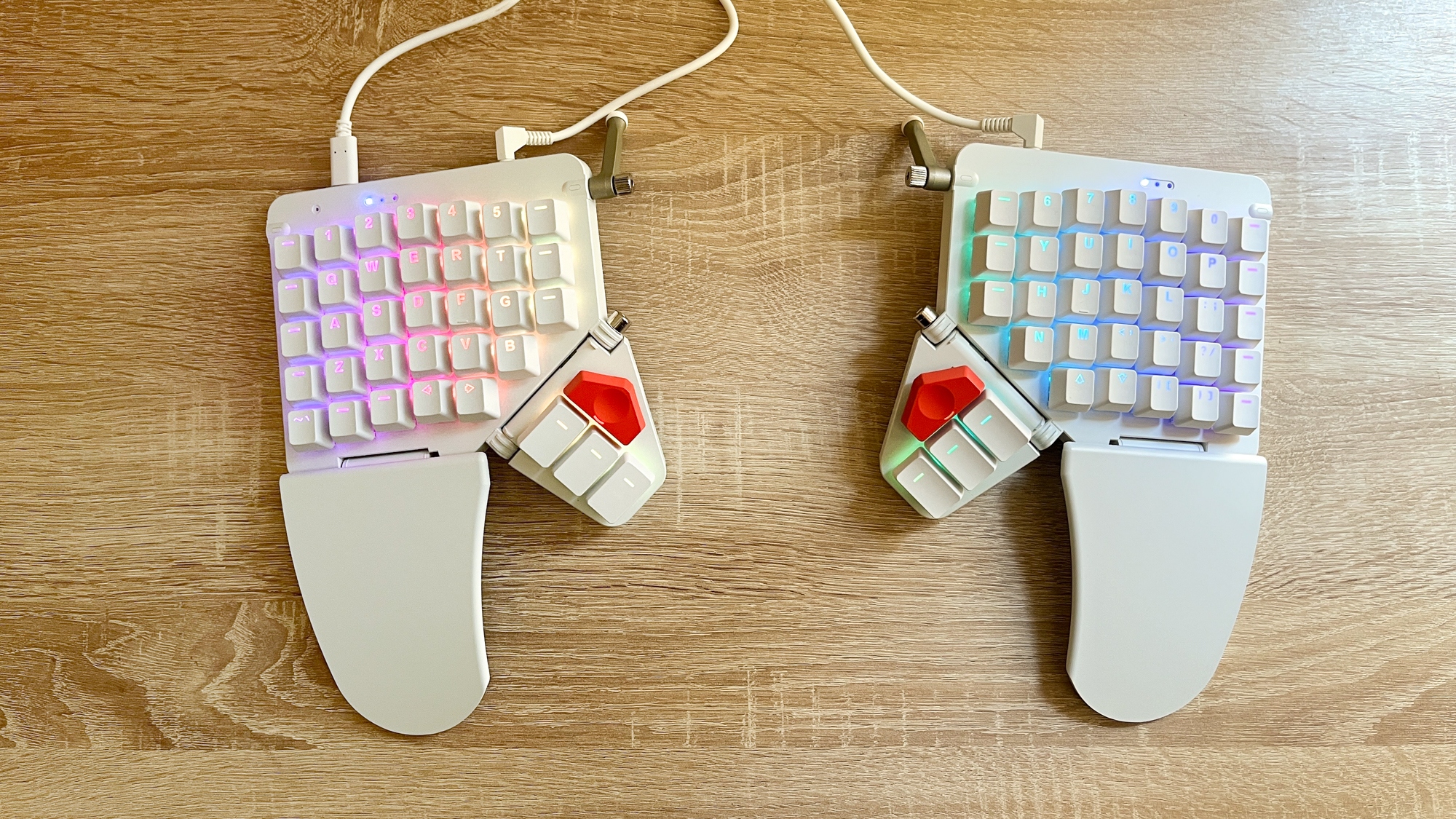
Yes, I use the voice control software that is included on both my iPhone and MacBook Pro to both type and click, as these actions cause a lot of pain in my hands. To make up for the shortcomings of these technologies (such as when they fail to listen to commands or type in an incorrect phrase), I utilize a ZSA Moonlander keyboard, as well as a vertical mouse, to reduce strain on my hands. The keyboard split and tilted upward to reduce the pain caused by twisting my wrist.. The keys are ortho linear, i.e. they are stacked vertically on top of one another instead of staggered like a regular keyboard. This design reduces pain because the movement between key strokes is reduced. The vertical mouse is tall, has keys on the side instead of the top, and can be moved around without twisting my wrists. Without this software and hardware, I would not be able to work or use a computer, and I am incredibly grateful for it.
Using social media platforms for good!
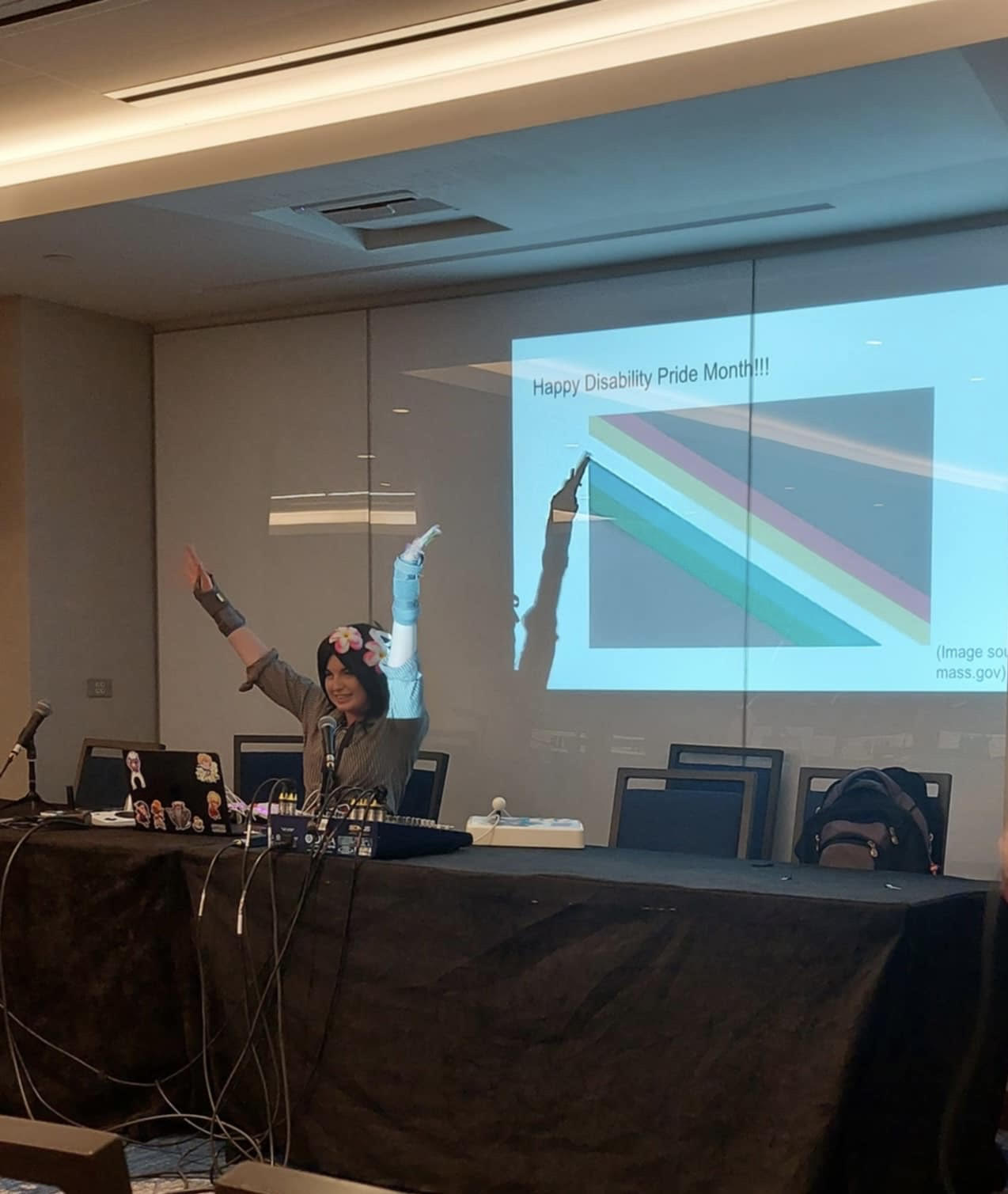
People with disabilities often feel they do not have a platform. They are often not listened to, not respected, or are not given the same opportunities as those who are able-bodied. At the end of my panel discussions I leave time for other people with disabilities to share their experiences. Everyone with a disability has a unique experience that needs to be heard and given the proper attention. I understand I live with the privilege in that I can still work, and be financially capable of attending events and trying out new accessibility technology. With this privilege, I hope to make accessibility issues and solutions known to as many people as possible so that they can be addressed. In addition, I want to increase visibility for the disability community. People with disabilities are worthy of being in all academic, occupational, and recreational spaces. This goal to help others is a huge motivation in my life. If I can make someone’s life easier, I consider it a big win!
What are some of the biggest rewards in your career?
The biggest rewards in my career in the mental health field are the thank yous I get from clients I have helped. Both mental health counseling and art therapy require a master’s level education and over 1000 hours of internship, often unpaid. However, I feel it is worth it because I can help others. I feel similarly about my accessibility advocacy work. It is the greatest reward when I get to hear that someone with a disability was able to do something that they were not sure if they would be able to do before thanks to my presentations about accessibility technology.
Are you currently working on any interesting side projects?
In addition to submitting accessibility technology presentation proposals to upcoming events across the country, I have started creating software accessibility reviews on social media. While creating traditional art causes me physical pain when done for long periods of time, thanks to voice control software, I can still write these accessibility reviews, not only to advocate for better accessibility technology, but also as a creative outlet for myself.
What is something that would surprise people about your day-to-day?
People would be surprised by the amount of unconditional love and resilience I witness daily as a mental health clinician. Many of the families I serve, and their loved ones, have been through extraordinary situations and the love that they have for each other remains strong and unwavering through it all. As for my work as an accessibility advocate, people would be surprised at the number of people who care about and want to advance the field of accessibility technology, including those without disabilities. At each presentation I hear not only stories of strength and resilience from the disability community, but also people who want to help. The media often paints people as angry and selfish, and I can confidently say many people in this world are good.
What inspires you?
My desire to serve others and be a part of something bigger than myself inspires me daily in my job as a mental health clinician and as an accessibility technology advocate/researcher. As a mental health clinician, I know that there are people counting on me to help them through difficult times. This is what gets me out of bed in the morning, even on days when I feel the worst. As a person with disabilities, I am aware of the incredible feats that advocates before me have overcome so I have access to the accessibility technology I have today. When I see shortcomings in this technology, I know it is my calling to make it known so the future can be even brighter for those with disabilities after me.
Any advice for current art students at Marywood?
Remain authentic, enjoy your time there, and ask for help when needed. When you love the artwork you are making, it shows through. Whatever your interests are, use them as inspiration for your assignments and find joy in the process. Not every professor or peer is going to love what you’ve made, but when there is authenticity, someone out there will. More importantly, authenticity will make it easier for you to love your own artwork and to keep that love of art-making going. It is also important to enjoy the time you have with your friends at Marywood. Life is not just about academics and careers. The friends I made at Marywood stayed with me. I miss the days when we could all easily hang out together on campus. Finally, if you’re not feeling well, ask for help from a professional. The issues with my hands began at the end of my time at Marywood and exploded into being a debilitating and possibly permanent condition five years later. If I had gone to the doctor and utilized accessibility technology sooner, instead of pushing through it, maybe I would still be making traditional art to this day.
I hope we all were able to learn something from this post. Maybe today, you learned more about disabilities and how advocates are helping to ease the lives of those who cannot work in conventional ways. Maybe today, you learned about how others navigate through a world we take advantage of. Maybe today, you learned that things happen, but life has a way of putting you right where you need to be. Thank you Lydia for being so honest and vulnerable and for sharing both their story and their way of advocating for others. ~Kelsey