Abby Oxford Art Therapy Symposium: April 10, 2026, 9am-12:30pm
Hello everyone! I hope everyone is doing well, especially with the weather starting to get warmer. With all the beautiful nature blossoming as spring is coming, it is easy to find inspiration to make, create, and use nature in our art! That brings me to the main point of Abby Oxford’s presentation, “Beauty in the Imperfections,” during the art therapy symposium. Abby talked about taking things she finds in nature and turning them into beautiful art pieces.
Some quick background. As a child, Abby would always explore the area around her house; she would stumble upon a variety of found objects that drew her in. The pieces she would find held a lot of history and told their story in the way they were naturally going through time. Objects she would find were nature-driven; they had natural shapes, colors, textures, and natural aging. Even as an adult, Abby says she finds objects in the woods, creeks, and shorelines, and finds comfort, inspiration, and joy in this. Her jewelry and art making are made from found objects, even fragments of whole objects.


Today, Abby still makes time to find the joy in looking for objects and turning them into something not only beautiful, but also meaningful to her. As an art therapist herself, she finds time to take care of herself, finding objects and turning them into beautiful art. Abby mentioned how her adult children were leaving, and it was really hard on her, so to help her process this transition she created art made from found objects.
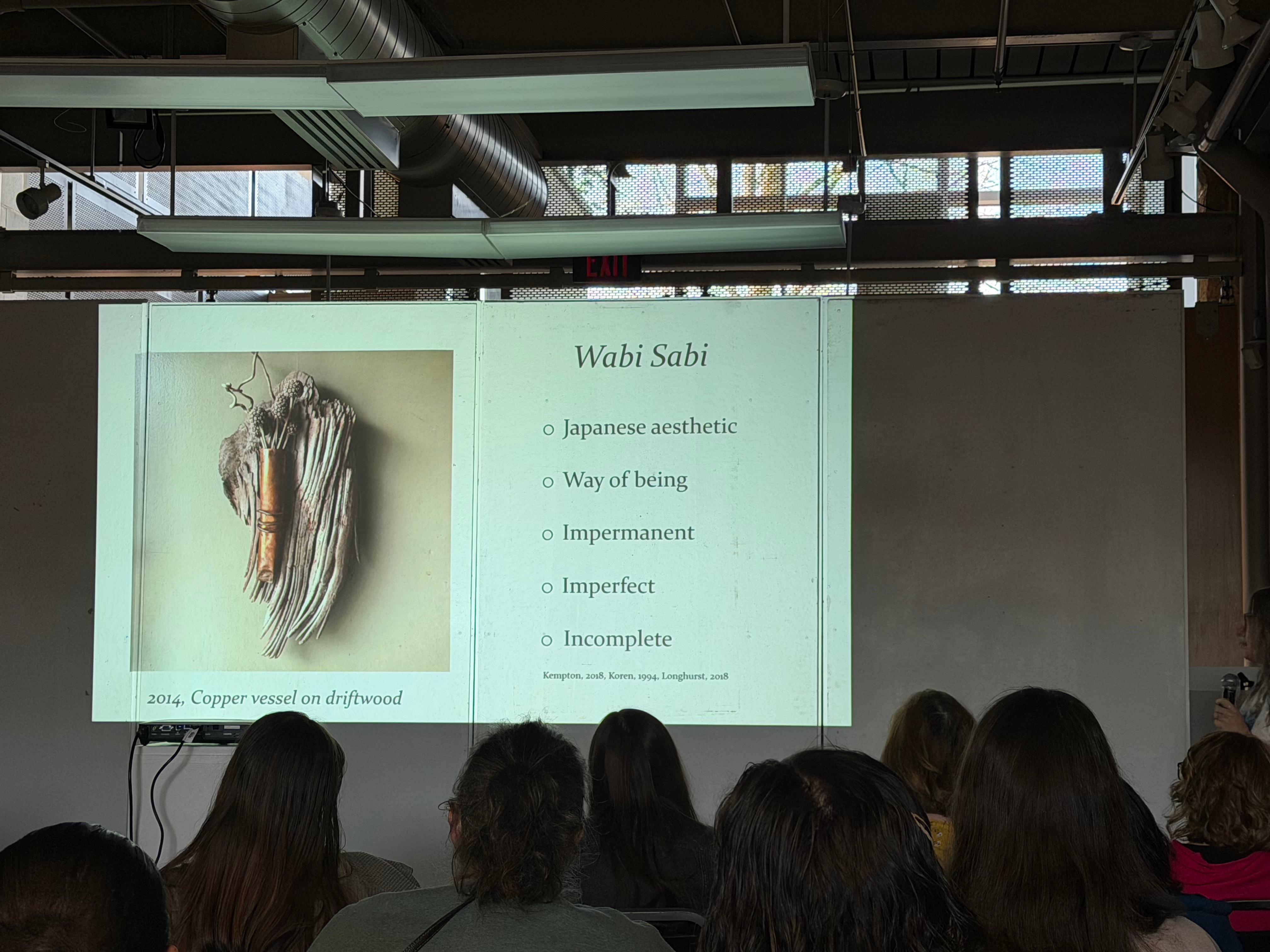
Abby discussed her appreciation of Wabi Sabi Philosophy explaining that she has always been drawn to broken pieces and objects as they tell a story; are impermanent, imperfect and incomplete. She then discussed the art of Kintsugi highlighting three types of repair.
- Kintsugi: repaired by golden joinery to represent what was broken; these pieces are typically from the same object.
- Gintsugi: repaired by silver joinery to represent what was broken; these pieces are typically from the same object.
- Yobitsugi: repaired by choice from broken pieces, one can choose how to repair; one can take pieces from other broken objects and you don’t need all the pieces, it can be filled with joinery of your choosing.
As an art therapist, Abby briefly discussed how she incorporates choice of materials in session to assist clients to repair and assemble meaning in what they’re processing. She shared her personal artwork and process of incorporating a variety of found and collected objects, transforming them into something new and meaningful. Some of these found objects get turned into jewelry such as pendants. One thing that she likes about creating her metal electroformed jewelry are the imperfections that occur through the process. Abby honors each piece that she makes, and she likes to think of her pieces reflecting different times in her life.


She uses natural, found materials such as ferns, leaves, found pottery, glass, and other similar materials. Abby mentioned that she honors her art and inspires others who look at her work. She takes temporary objects in nature and found objects and turns them into something new.
Abby finds beauty in her art making. There is something significant about what she creates; as she allows herself to just create. Something came from that art-making experience that I took part in, and you too can even make something special for yourself that has meaning to you!


After Abby’s presentation, we had some time to create a piece of art using some found objects ourselves. It was nice to take some time to gather objects that spoke to me and create a piece of art.
As for me, listening to this symposium was stabilizing in a way. I was always worried about not having the time or creativity to make art myself, but having Abby explain that even though she has clients, she still makes time for herself to make art that she loves. She uses her art as a therapeutic outlet for herself to process things in her life. I will keep this in the back of my mind as I continue my journey to become an art therapist. It was really inspiring to hear her talk about her experiences and be vulnerable to her own life and create art about it. Thank you for taking the time to read! Maybe you can find some objects yourself and create new art; whether it’s to help you process something or just to try it for yourself!
Remember, take time for yourself,
~ Emma