INTERVIEW BY KELSEY GREEN, ALUMNI STORIES BLOGGER:
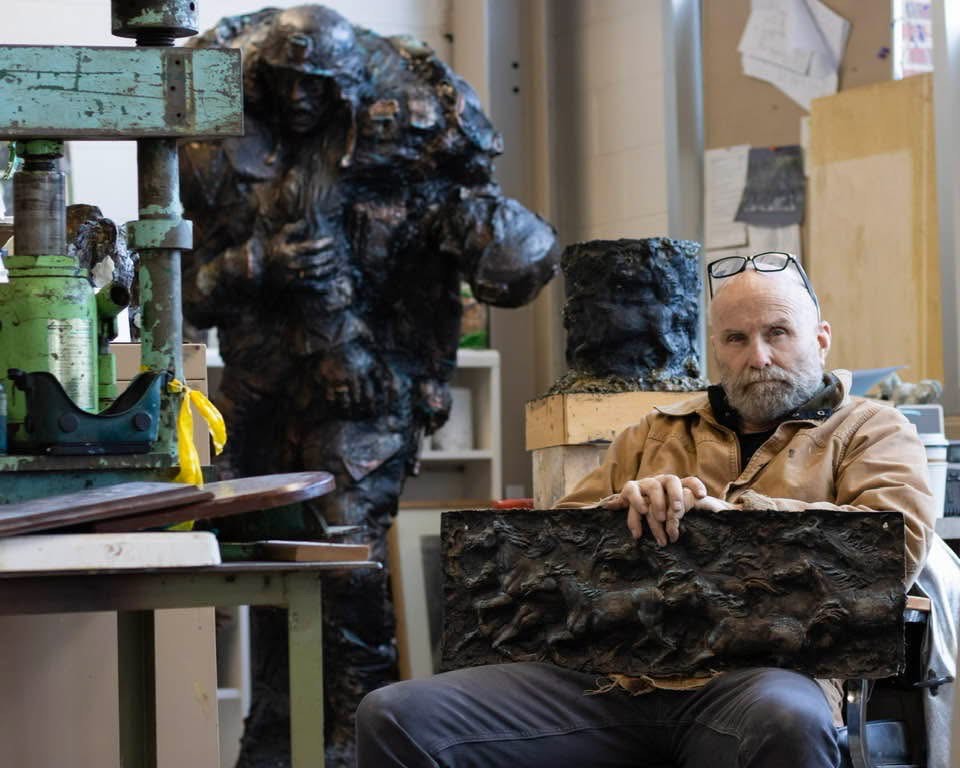
I know that I typically post alumni stories, but for this special blog post, I interviewed an Art professor that many alumni and current students will recognize. This blog post is probably one of my favorites, as I actually was able to meet Stephen Colley in person for the interview and a personal tour the sculpture studio.
Stephen Colley is an impressive artist, specializing in sculptures and tile work. He is a graduate of Swain School of Design in Bedford Massachusetts, and Parsons in Manhattan New York. He graduated with his bachelor’s of fine arts in 1984 and he went back for his masters and graduated in 1986. Fortunately for Marywood and the students that have come through our doors, Stephen began working on and off here in 1989. He is currently the 3D Studio Tech and a beloved Adjunct Professor. Stephen and his wife are also important faces within the Wyoming Area Cultural Center Detrick Theater Art Program. There, Stephen and his wife give back to the Tunkhannock, PA community by providing art classes for special needs adults, art classes for children, and free art classes to those who cannot afford to pay for courses. Please take a look at the Detrick Theatre and its incredible role in the community. Last but certainly not least, Stephen is an incredible sculptor, and he leads Endless Mountains Monument Company. This is where he is able to create monuments for the community. Keep reading to find out more about Stephen’s life, career, art, and his and his wife’s current endeavors.
~Kelsey Green, Graphic Design Major & Alumni Stories Blogger
The Journey Begins
I asked Stephen about his journey into the arts. He said that he started drawing and painting and decided that art school was the way to go. He received a four-year tuition scholarship and was able to pursue art at Swain School of Design. Immediately after college, Stephen was presented with another scholarship that he used in grad school at Parsons. Here, he met his wife. Stephen and his wife worked with each other post-college, traveling and working with artists. Stephen also mentioned that he learned a lot through working with artists like Nelly Blain and Robert Dinero Sr. He said that learning by working for other artists taught him that work ethic is everything, and art is not for the faint of heart.
Exhibitions
Stephen worked at the Metropolitan Museum of Art and the Smithsonian. Here, he worked on exhibitions and had contact with physical sculptures that we students just got to learn about. He said this connected him to the art. Stephen mentioned that he had a few of his own works in exhibitions. Stephen said that this was an opportunity for a young artist to put themselves out there and gauge where they are at.
The Human Condition
Stephen said that he was fascinated by the human condition, and sculpture was a unique way to explore this. Being able to talk to Stephen face to face, I was able to see how much he truly loves this work. He is inspired by the things around him. When I was in the shop, I was able to view his personal work, seeing art inspired by tragedy, war, birth, and life. The way that Stephen sees the world is truly amazing.
I asked Stephen why he did what he did, and he gestured to the room full of war monument sketches, saying he did it so that the Veterans who saw these could be reconnected to a feeling or memory that they may have had. Stephen said that his family is a military family, and he feels that he can capture these emotions through sculpture. Stephen said he does what he does to give a sense of closure and healing to a viewer. He wants the message behind every piece to be whatever the viewer needs at that moment.
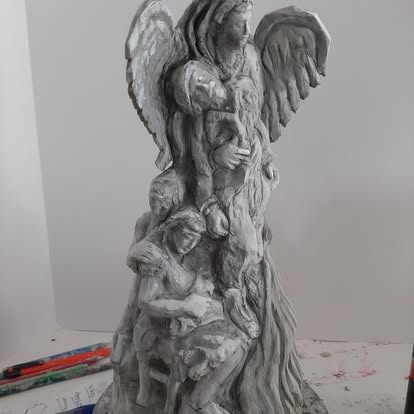
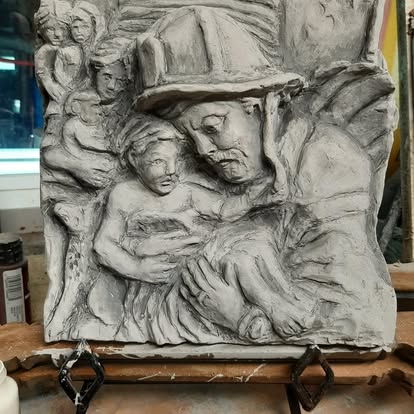
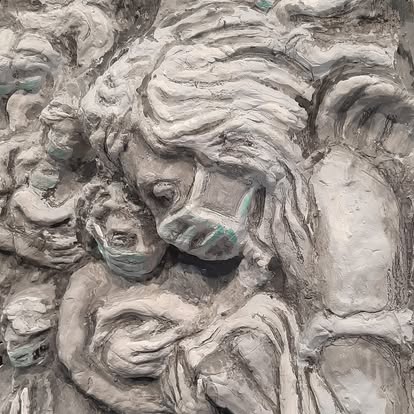
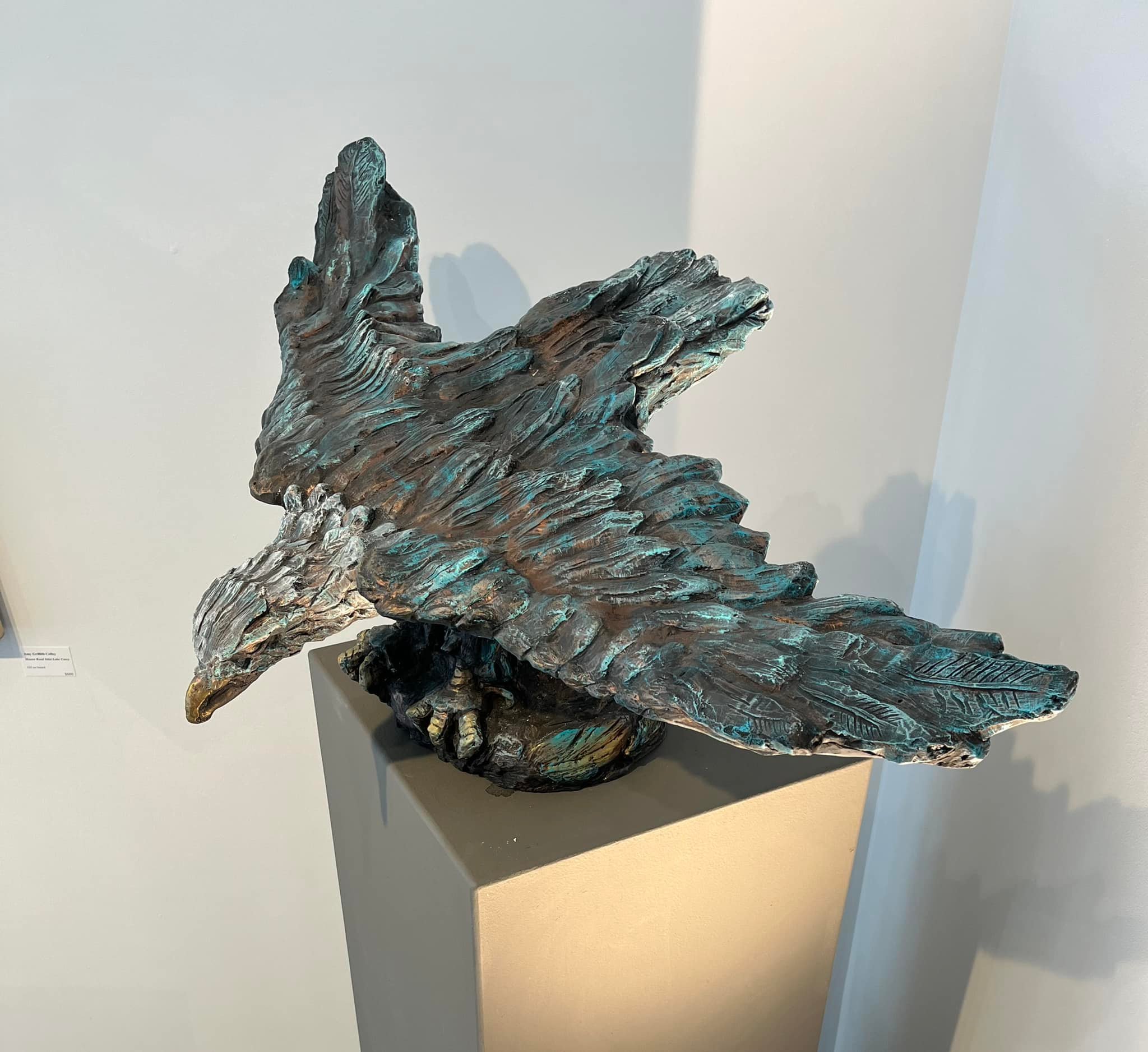
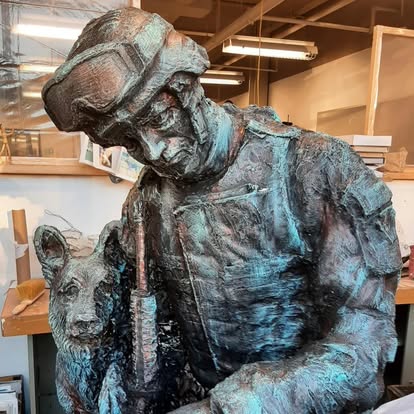
After viewing some of his work, Stephen has this innate ability to capture a feeling and emotion. The faces of his sculptures are so incredible, that you almost feel like you’re watching these people in real life.
The Process
Stephen took me on a tour to understand more about the process of sculpture and monument making.
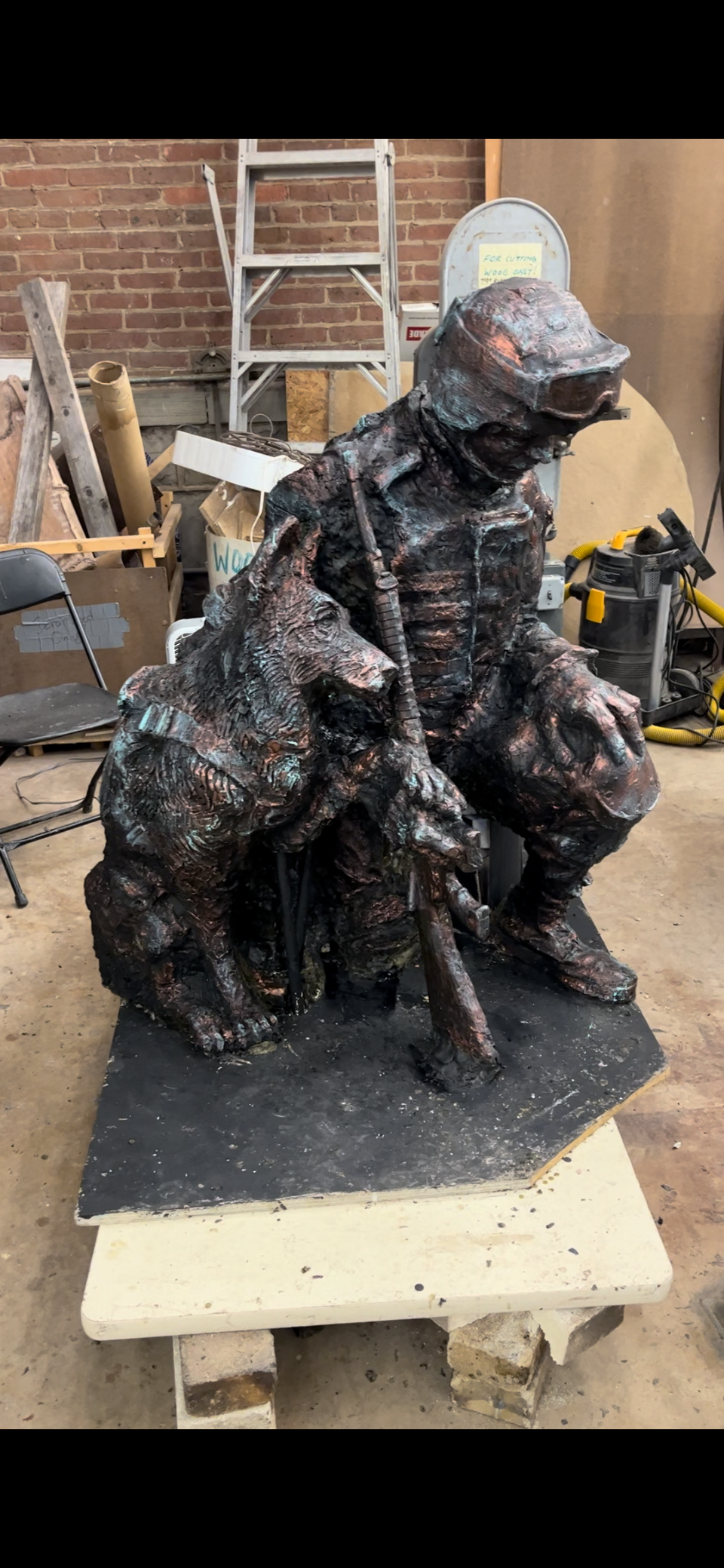
To begin, Stephen starts with clay “sketches.” These are just small sculptures to get his ideas across. He then makes wax “sketches”. Many times, Stephen will make multiple sketches and sizes to bring his ideas to life. He adds plaster, wood, clay, wax, foam, and insulation to complete the life-like nature of the sculptures, and then paints them in a distressed bronze manner so that one can envision what these will look like upon completion.
Stephen will then make a rubber mold of the full-size sketch, melting wax to fill this mold, and once out of the mold, rebuilding the sculpture. He will again paint this so it is scaled to size and life-like.
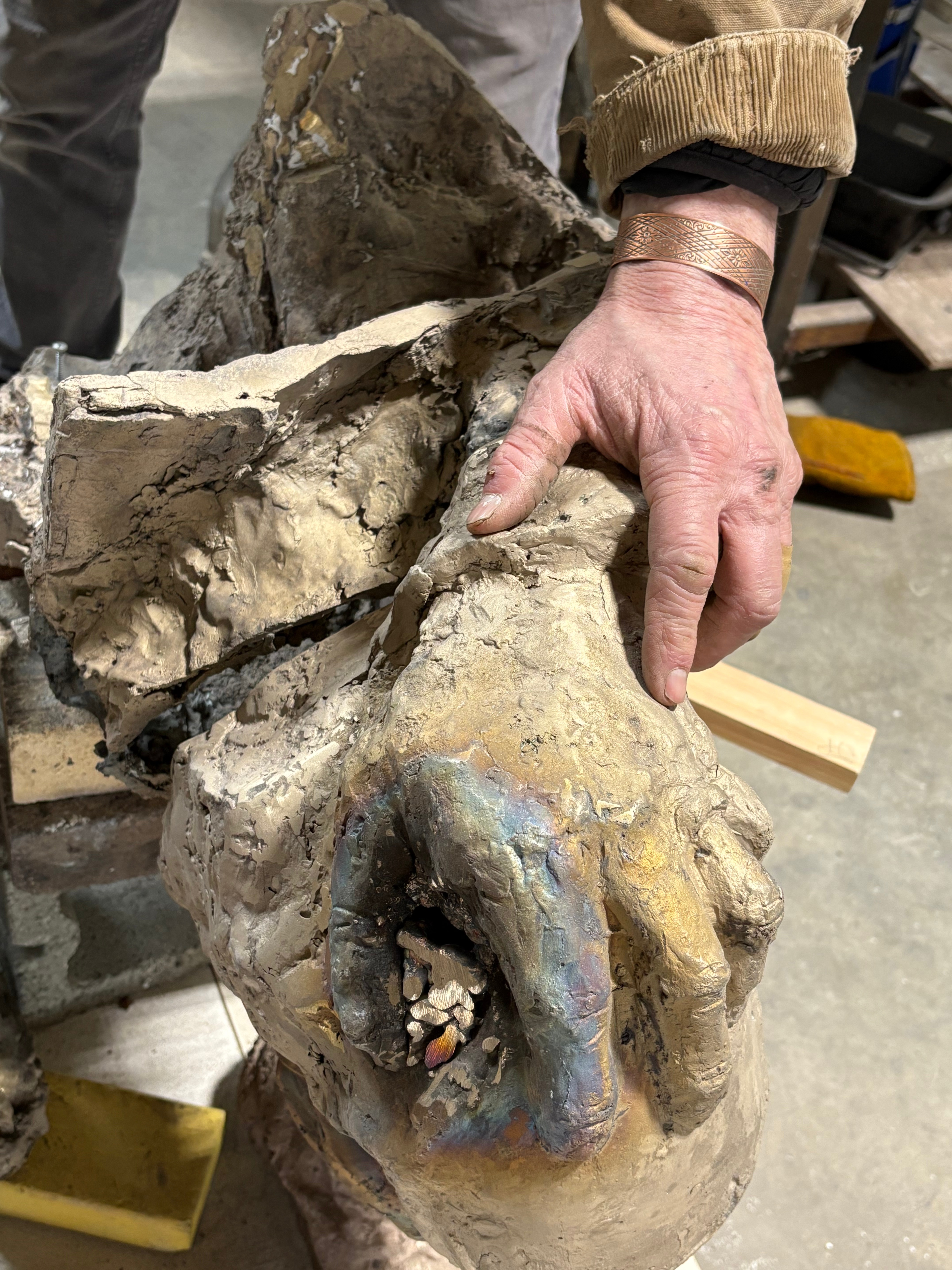
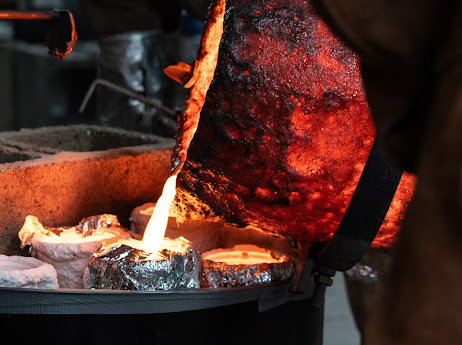
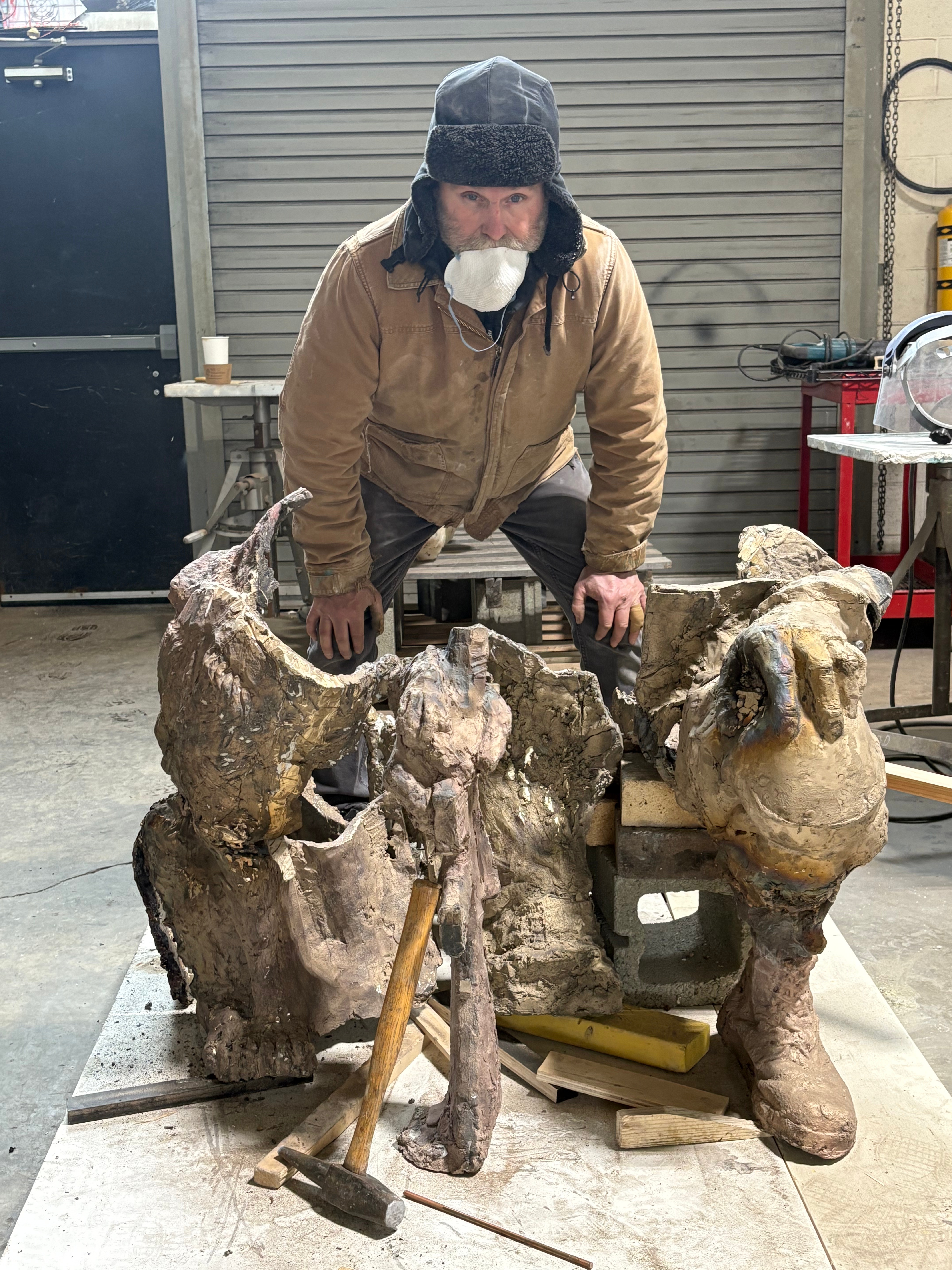
He then will cut the wax “sketch” into 18 pieces. To cast a harder mold, he will dip this into sands and solutions. Stephen will fire the hard mold full of wax in a kiln at around 1500 degrees. Once the wax melts, he will put it back into the kiln at 1000 degrees and melt bronze. He will pour the bronze into this now hollow mold.
After pouring in the bronze, Stephen lets it harden and then has to break it out of the molds. Then, he has to weld all 18 pieces back together. After smoothing out all the parts and connecting everything, he can polish.
This work takes a lot of time. From the small sketch to polishing, this can take over a year to complete. The time is not the only difficult part. The sheer size and weight of just one piece is crazy! (Not to mention the cost!)
Advice
Stephen said that students should learn all the lessons they possibly can. He said that working for other artists, he was able to see their art and their own processes. Learning from others helped Stephen understand the art world and what it takes to run an art business. He learned what it takes to be successful. He said that art is all-encompassing especially when you have your own business.
He and his wife owned a hand-cut tile business. He showed me a few pictures from their time doing this, my goodness they were incredible. To do all those pieces by hand is amazing! He told me it took understanding that success takes time. He and his wife went through what all artists fear, they started a business and had to wait for the gates to open. They both knew that one day, they would take off, it would just take time. They waited, and boy did it pay off! They were getting orders for murals and thousands of tiles at once!
Art’s Purpose
I asked Stephen why he thinks art is important for the world and he said that art brings peace. He said that art has done so much for him and his wife. This is why they give back so much to the art community. He said that he wouldn’t know where he would be without art. Art is more than just making something, it is a way of life, a purpose. Art shows that there is more to life than sitting behind a computer.
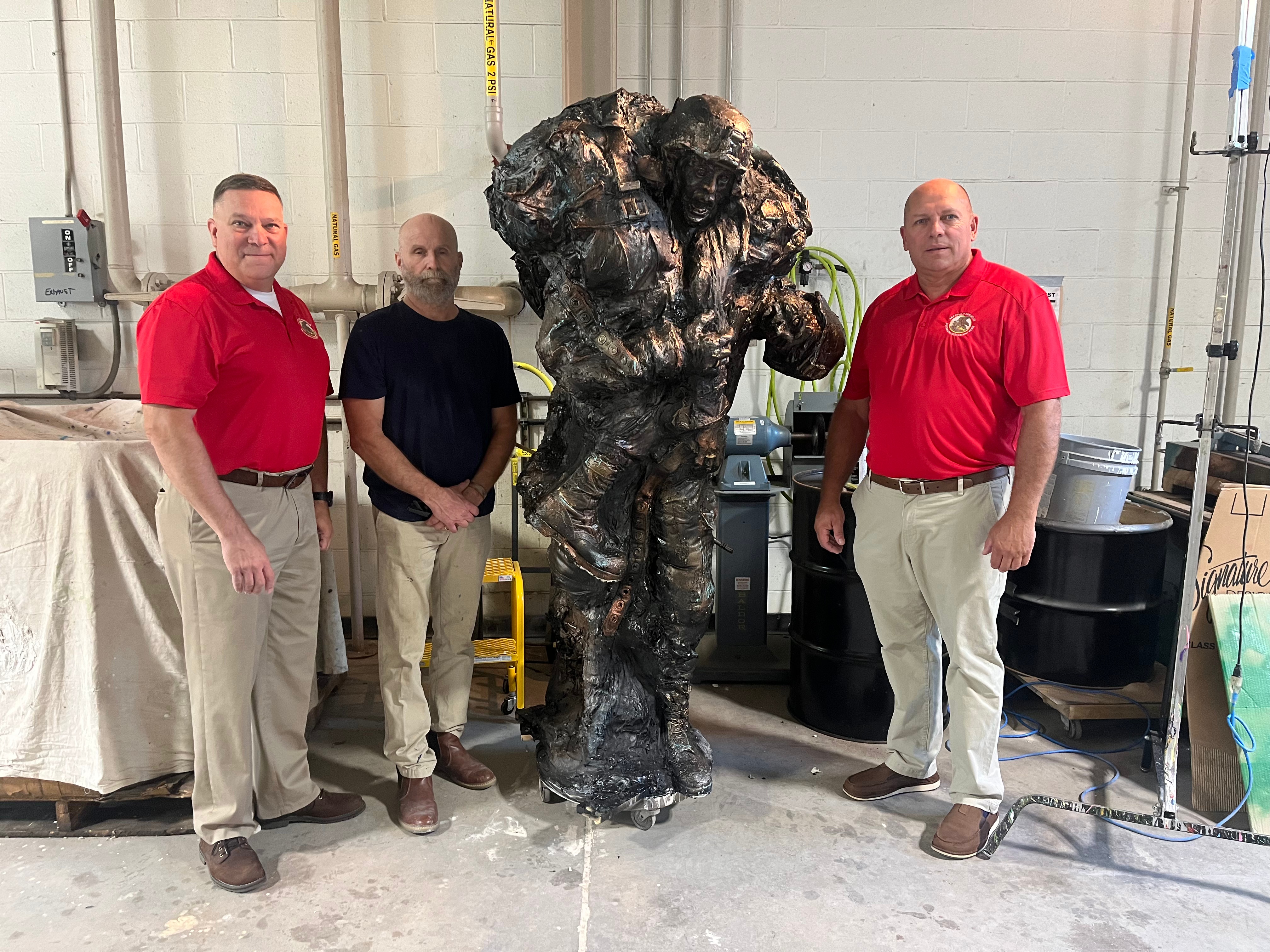
I asked Stephen what his favorite piece of art is, he said that his last one is always his favorite. He works for the next project. He says that he hopes whatever is his last, is his best. That is why he keeps creating art. He mentioned that he does not have a favorite, because he is striving to evolve his art. He wants to make as many monuments as he can, competing to outdo himself each time.
I had a moment in the interview where I remembered when I knew I was on the right path, so I asked Stephen about his moment. He said that he had a teacher in graduate school, David Smith. This professor pulled him aside and told him “You could do this.” This helped Stephen push away all the thoughts of whether this was the right path or not.
What I have learned from this interview is that Stephen was made to teach, he was made to sculpt, and he was made for this art world. Thank you Stephen for giving me the opportunity to meet you and learn more about sculpture and your life. On behalf of Marywood, thank you for all you do for our school and community! Stop into his shop or maybe take a class to understand just how awesome he is.