When painting, a crucial element to capturing form is the use of light and shadow. Light and shadow reveal how the subject exists in space, making them essential elements of composition and drawing. When drawing, it is helpful to break the subject down into simple shapes of light and shadow. Although it can be challenging at first, with observation and practice, mastering this technique can elevate your work to a higher level. The famous French painter Jean-Baptiste-Camille Corot was particularly skilled at identifying these shapes. Below is one of his paintings, The Roman Campagna with the Claudian Aqueduct from 1828.
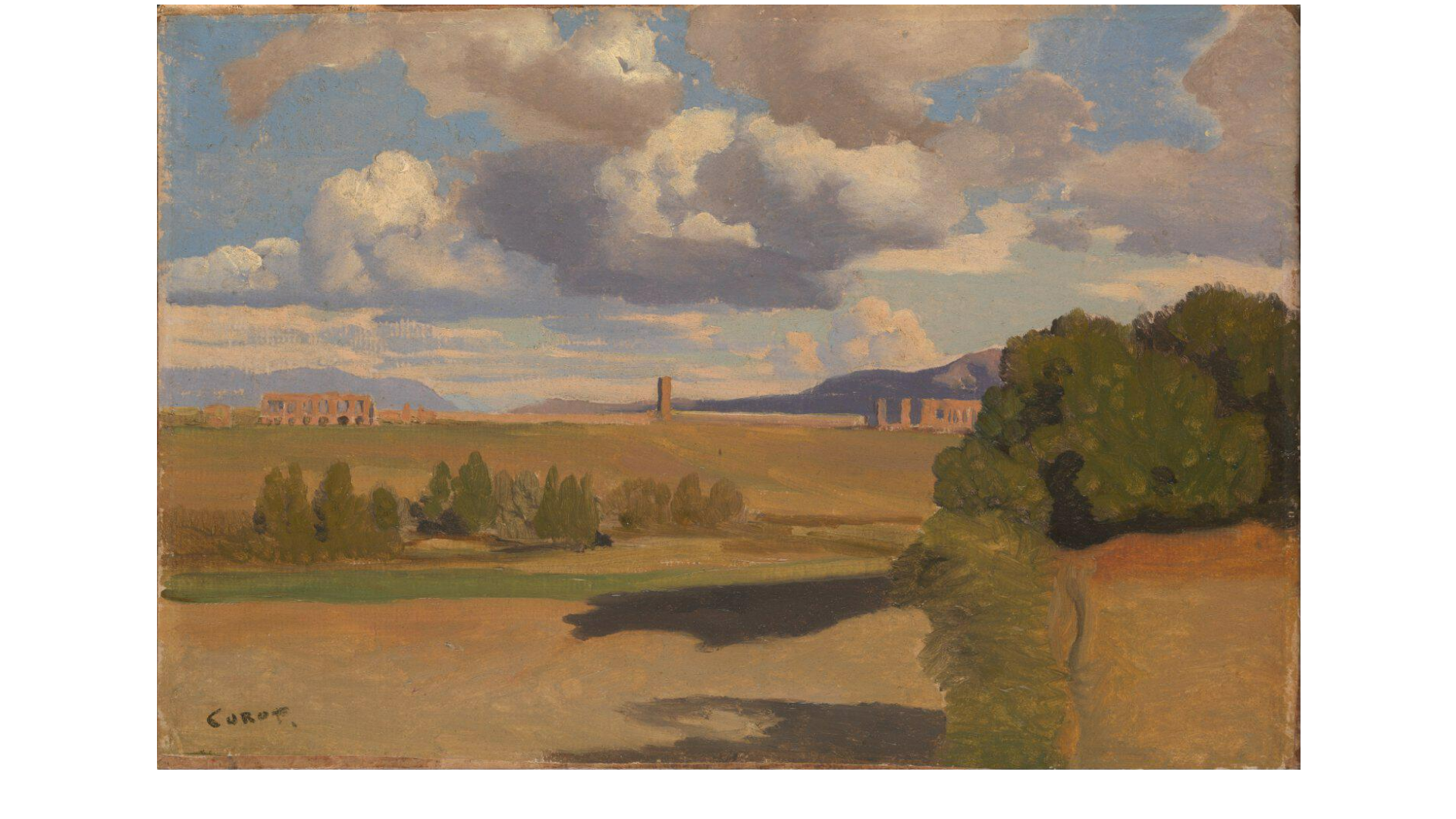
This painting is an excellent example of simplifying light and shadow into large shapes. While the painting lacks intricate detail, it is highly successful in its depiction of the landscape. This success comes from Corot’s masterful use of shadow shapes.
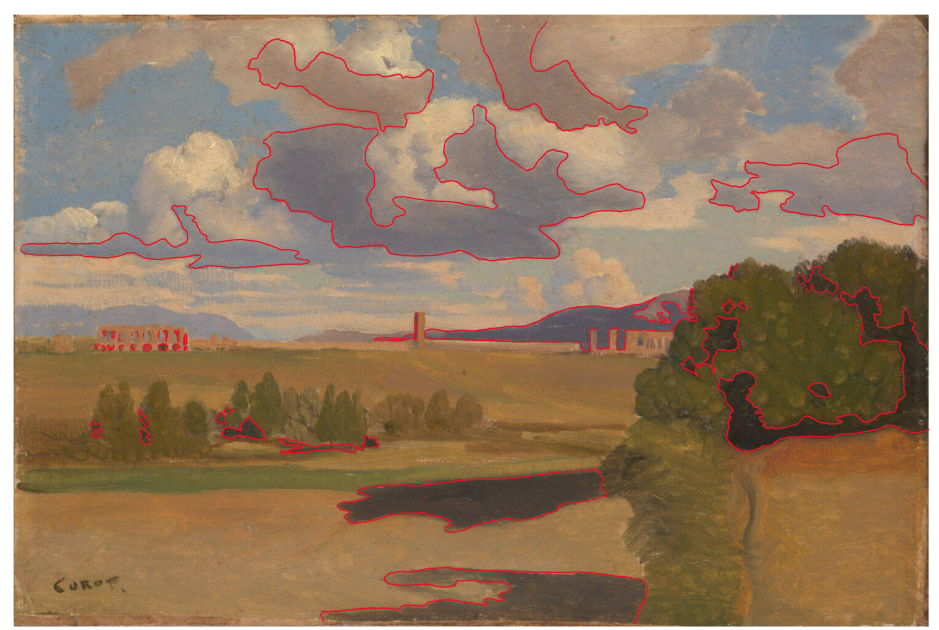
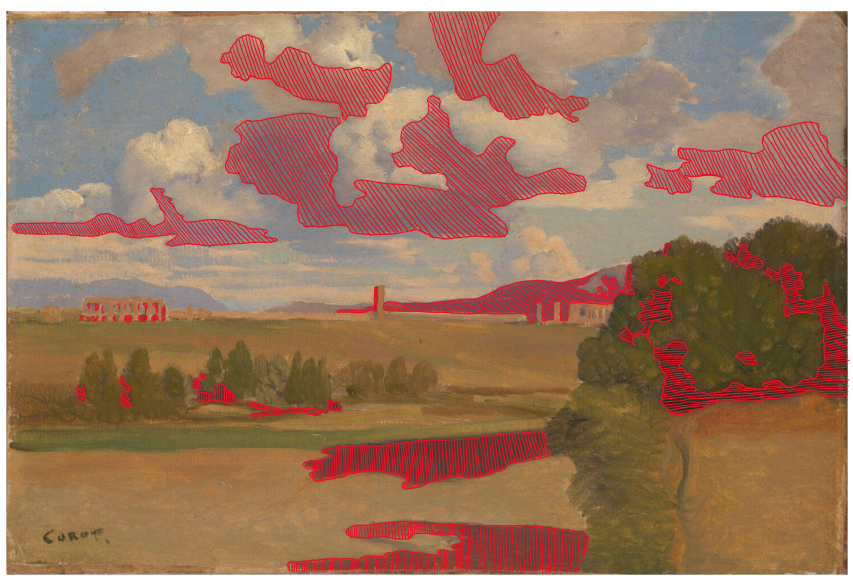
To better illustrate the shadow shapes he created, I drew over the painting. On the left, I outlined the shadow shapes in red, and on the right, I filled in those shapes. Each shape contains a single value, with its edges defining the shapes of light. For instance, the shadow shape of the bush in the foreground has rougher edges, adding to the illusion of depth as it is closer to the viewer and has the texture of leaves. The filled-in image on the right flattens the shapes, making it easier to see Corot’s approach. In reality, the shadows he created are flat shapes with distinct edges and by using the right values, he captures a beautiful atmosphere. Understanding this concept makes modeling objects easier and helps create more accurate and successful depictions.
Image of The Roman Campagna with the Claudian Aqueduct from The National Gallery: https://www.nationalgallery.org.uk/paintings/jean-baptiste-camille-corot-the-roman-campagna-with-the-claudian-aqueduct