At the Everhart Museum in Nay Aug Park, a gallery showcases artworks discussing American politics and the importance of voting. One such artist is Jacob Lawrence, a social realist painter who documented the multitude of struggles that African-Americans had to face in not only gaining freedom but a voice in their countries political future.
“Jacob Lawrence grew up in Harlem in the 1930s, where, despite the Depression, he found a “real vitality” among the black artists, poets, and writers in the community. He studied at the Harlem Art Workshop and joined the “306” studio… Lawrence never completed high school but taught himself African American history, spending hours in the library researching legendary black figures and events to use in his paintings. He worked for the Works Progress Administration in the late 1930s and in 1941 was the first African American artist to be represented by a New York gallery…” (Luce Artist Biography from the Smithsonian American Art Museum).
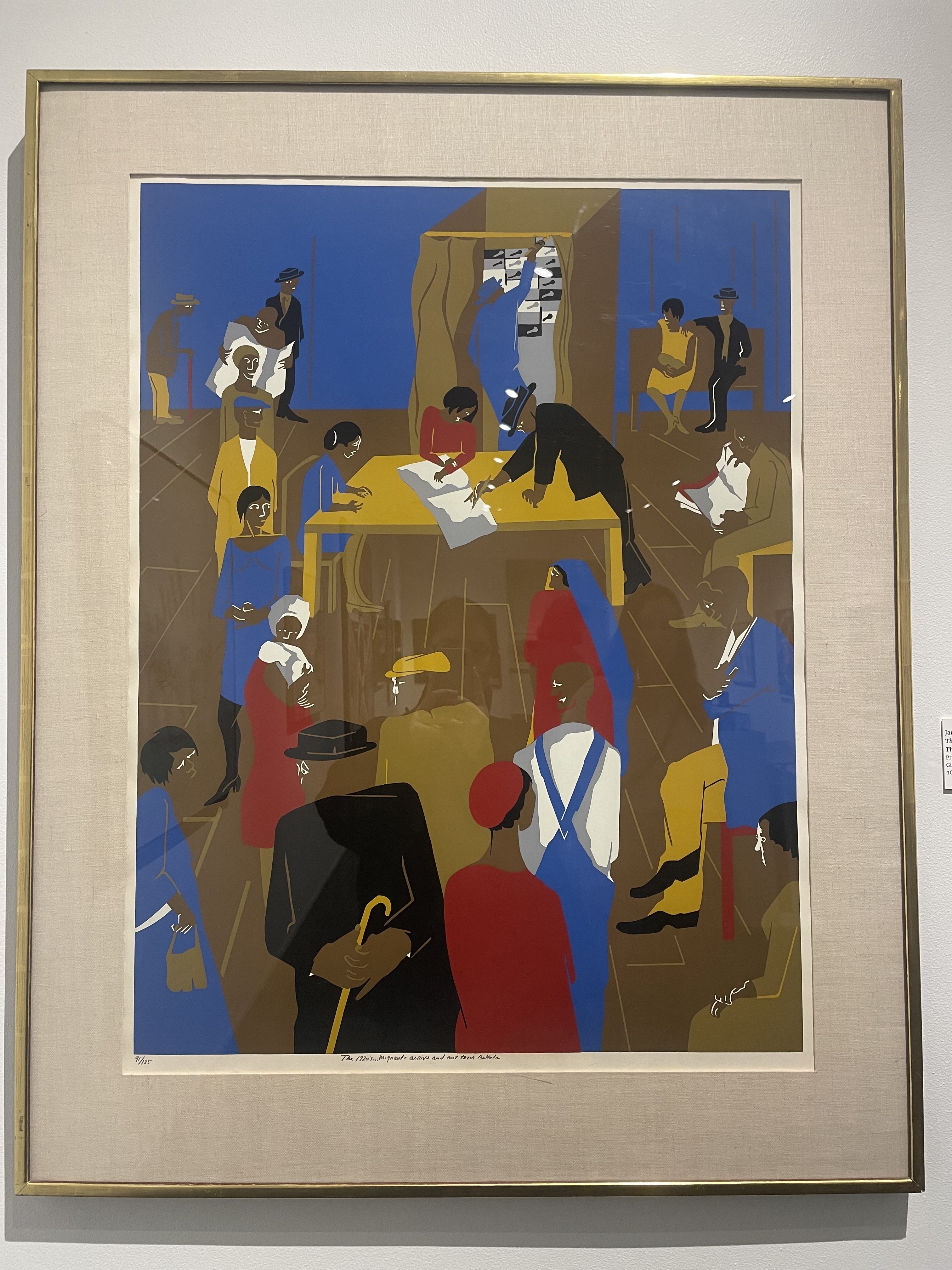
Jacob Lawrence (1917-2000), The 1920’s…The Migrants Cast Their Ballots, Print, Lithograph/Serigraph, 1976.
Lawrence’s work is cubist in style, a blend of bright primary colored shapes creating the scene of a voting hall. The space is sparsely furnished but highly populated, a mix of people of different ages, sexes, and occupations. The point of view is from above and zoomed out. The man’s cane in the foreground, as well as the lines of the floorboards and table point towards the female figures bowed head as being the focal point of the piece. The squiggly line for her mouth implies she’s worrying over her lip or at the very least concentrating on something important. It is the effort to make an educated vote that is the greatest message of this piece.
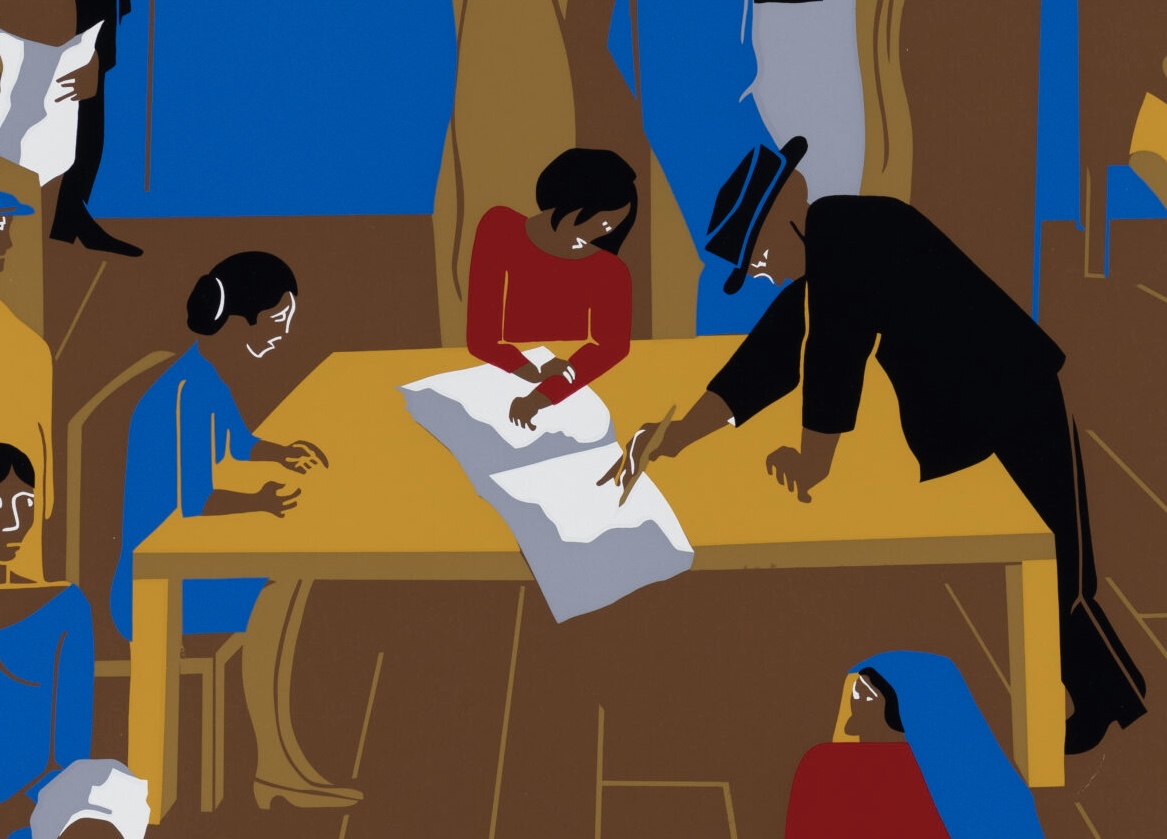
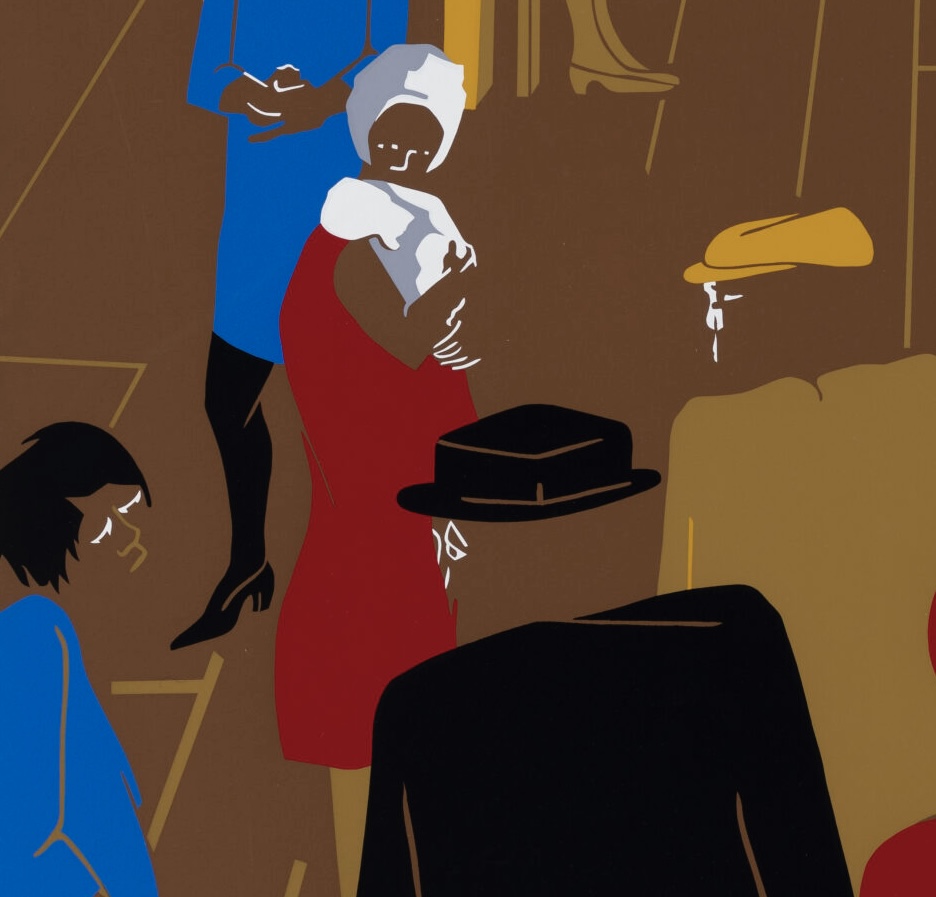
The responsibility being taken on by those that have often times been subjected to the worst treatment imaginable, and in this instance specifically showcasing a voting public that is working class based on the men in flat caps and overalls and women nursing their children, is important to bring to light. Considering that the government does not put Election Day as a National Holiday, allowing businesses to close so that the public can take work off and go out and vote, this makes it difficult for those that have to balance their full time work schedule with their civic duties. Not to mention the toll it takes to get to the voting halls in the first place, such as a lack of public transportation. These are issues that affected the people of the 1920s that Lawrence depicts in this work and it affects people into today.
As we’re all inundated with political ads this Election Season, the urge to dismiss politics out of sheer exhaustion is strong. The human brain is not meant to handle the sheer amount of information thrown at us day in and day out in the age of social media. However, I urge readers to take a page out of Jacob Lawrence’s book and look back on the past and the pains it took to get this right to vote in the first place.
Resources:
https://americanart.si.edu/artist/jacob-lawrence-2828
https://www.brooklynmuseum.org/opencollection/objects/102346