Hello there and welcome back! For today’s post, I wanted to talk about one of my favorite paintings I learned about in this past year called Judith Slaying Holofernes by Artemisia Gentileschi. Gentileschi was a famous Italian painter from the 1600s and at a time when most artists were men, she became known for her powerful and emotional paintings. Judith Slaying Holofernes is one of her most famous pieces and it was painted around 1612–1613.
The painting shows a dramatic and violent scene from a story in the Bible. Judith, a brave Jewish woman, saves her people by killing a powerful enemy general named Holofernes. In Gentileschi’s painting, Judith is shown in the act of cutting off Holofernes’ head with the help of her servant. It’s a very powerful image full of strong emotion.
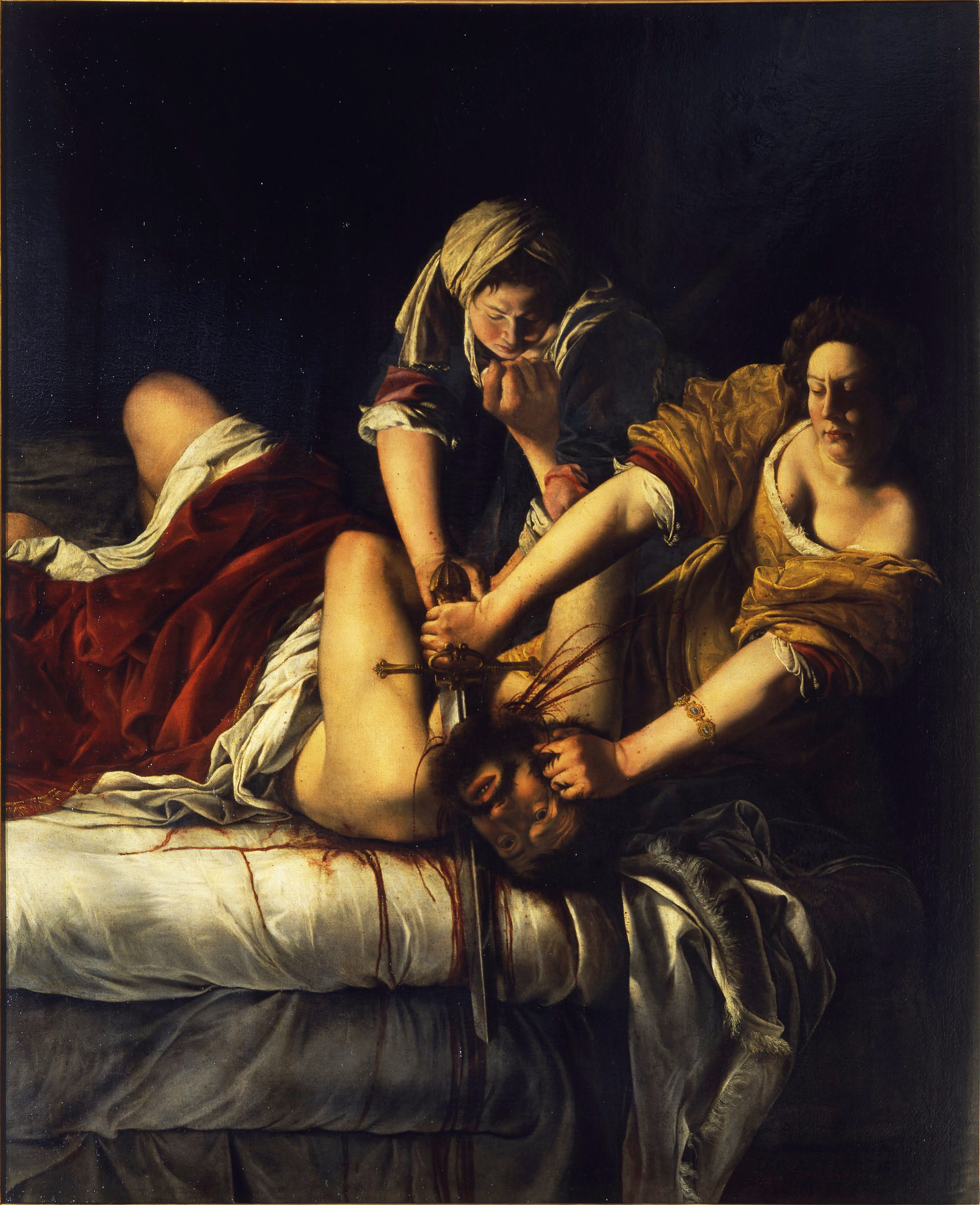
Many artists painted this story, but Gentileschi’s version is different. Her version of Judith is not calm or distant but focused and strong. I think this actually may reflect Gentileschi’s own life, when she was a young woman she was assaulted by a teacher and later went through a public trial to seek justice. Some people believe she used this painting to show her anger and her fight for power in a male-dominated world.
There is also strong symbolism in the painting. Judith represents justice, courage, and female strength while Holofernes can be seen as a symbol of cruelty or oppression. The act of beheading him is meaningful and highly symbolic, it shows a woman taking control in a world where women had very little power.
Artemisia used dramatic lighting and dark shadows, a style known as Baroque, which helps make the scene feel even more intense. The red blood, heavy fabrics, and expressions on the faces all add to the power of the painting.
I hope you enjoyed learning about this powerful and symbolic painting! Thank you and see you next time.
~Marissa