Hello! Today I wanted to talk about Differentiated Instruction. First, what is it? It is a teaching approach that encourages inclusion and tailors learning to students’ individual needs. In my Special Education classes here at Marywood, I have learned a few techniques for differentiating instruction. Specifically, in the class I am taking now, we are instructed to tailor a lesson plan to meet the needs of 5 exceptional learners plus 20 general education students. This is not unrealistic in a real art classroom.
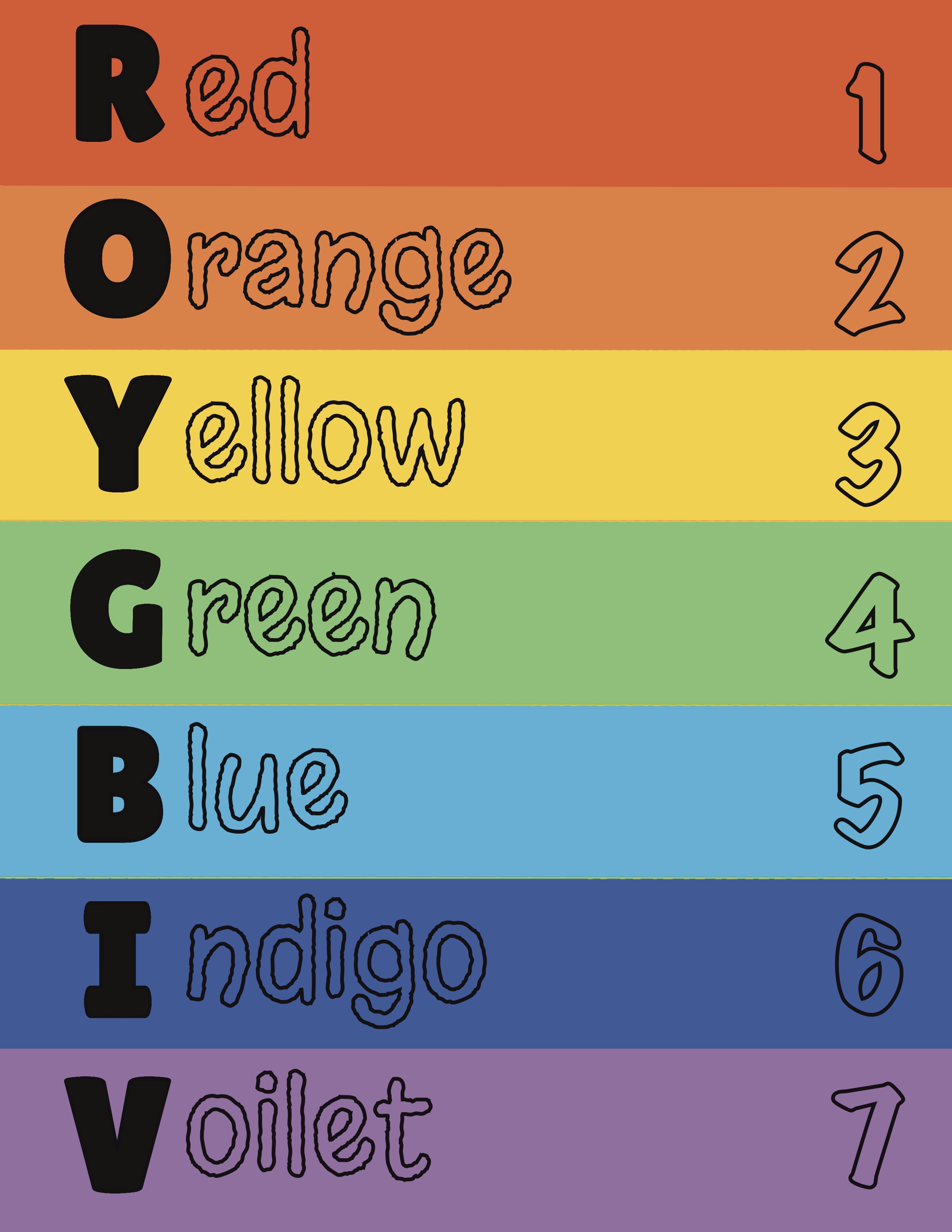
The lesson plan I chose for this project was a collaborative activity on the colors of the rainbow. Visuals are highly referenced in my lesson. The students practice the acronym ROYGBIV to recall the rainbow order. After ROYGBIV is established, students color a section of paper 1 assigned color. They can use multiple art materials in that color as long as it is 90 percent covered. Once everyone is finished, the teacher helps reassemble the sections of paper into a rainbow. Students need to work together to decide what the correct rainbow order is when reassembling the rainbow. After the rainbow is assembled, the students can work independently on a coloring page of the rainbow to summatively assess what skills they’ve learned. My challenge was differentiating this instruction for a student who is nearsighted, a student who is deaf but has an FM system, a student who exhibits an Emotional Disturbance, a student who has a Specific Learning Disability (SLD) in reading comprehension, and a student with Cerebral Palsy.
Differentiated instruction does not have to be complicated. It is important that it is not very complicated and can be integrated into the lesson easily. For my student who is nearsighted, differentiated instruction may mean placing her at the back of the class so she can see instruction better. It may also mean printing a larger coloring page. For the student with an FM system, meaning the teacher’s voice is transmitted directly to the student’s ear via technology, it may mean verbally explaining all instruction. For a student exhibiting an Emotional Disturbance, it may mean using increased positive reinforcement, offering choices, and allowing breaks. For a student with an SLD in reading comprehension, it may mean relying again on explicit verbal instruction. Lastly, for a student with a Cerebral Palsy diagnosis, it means being conscious of materials used, communication, and expectations. The lesson and objectives may need to be modified to fit the needs of this student. For example, instead of covering 90 percent of the paper, cover at least 30 percent of the paper since Cerebral Palsy affects motor skills. Overall, just being aware of students’ abilities, strengths, and needs.
These classes are extremely important to my development as an educator. Learning about different exceptionalities and how to apply differentiated instruction promotes success for each student. It is very likely I will use this type of instruction in the real world. I hope these examples helped visualize what it means to use differentiated instruction.
Thanks for reading!
~Eleora