I’m finishing up my third week ever at Marywood University as an undergraduate art major. A lot of the adults in my life, no matter where I seem to be, ask me the same few questions. “How’s school?” “Do you like your classes?” “Are you switching to astrophysics yet?” And the answers are always, “Good,” “Yeah,” and “No, dad. They don’t even have that here.”
Art is a pretty huge part of my life, I’d say. I mean, I’m only taking out thousands of dollars worth of loans to learn how to get better at it. All digs aside, the art world is the sphere that has intrigued me most throughout my life. I always liked looking at it, making it, and knowing who made what. I think everyone feels a little smart going to a museum and being able to say, “Ah, yes! An original Picasso!” It just makes you feel cool.
But that’s just the surface, isn’t it? You can play memory match with painters and paintings all day, but nothing beats the feeling of actually knowing what you’re looking at. I found this curiosity sparked in me pretty recently, when I was at the tail end of my junior year of high school filling out my elective sheet for the incoming fall.
Taking that AP Art History class was one of the best decisions I’d ever made. You’d be surprised at how much you can learn in a little under a year! The most important of all the lessons, though, is learning that art has always been with us. Even before writing, humans in pre-history were spreading pigment across cave walls and making grand murals across stone. They were making jewelry, tunics, masks, and pottery. Even when writing did come into the picture, couldn’t one argue that Kufic script across a folio embellished with gold is art, too? By all definitions and purposes, art is a part of being human.
Coming into Marywood with that love of art history (and the scores to prove it) put me into the Global Baroque Art class. Imagine my surprise when I was pointed out as the only freshman! But, that just means I have more time to learn even more things.
So far, we’ve discussed the origins of Baroque art and how art changed focus leading up to the era. But before we begin there, I think it’d be a little better to go further back in time and a distance away from Italy, to the Greeks.

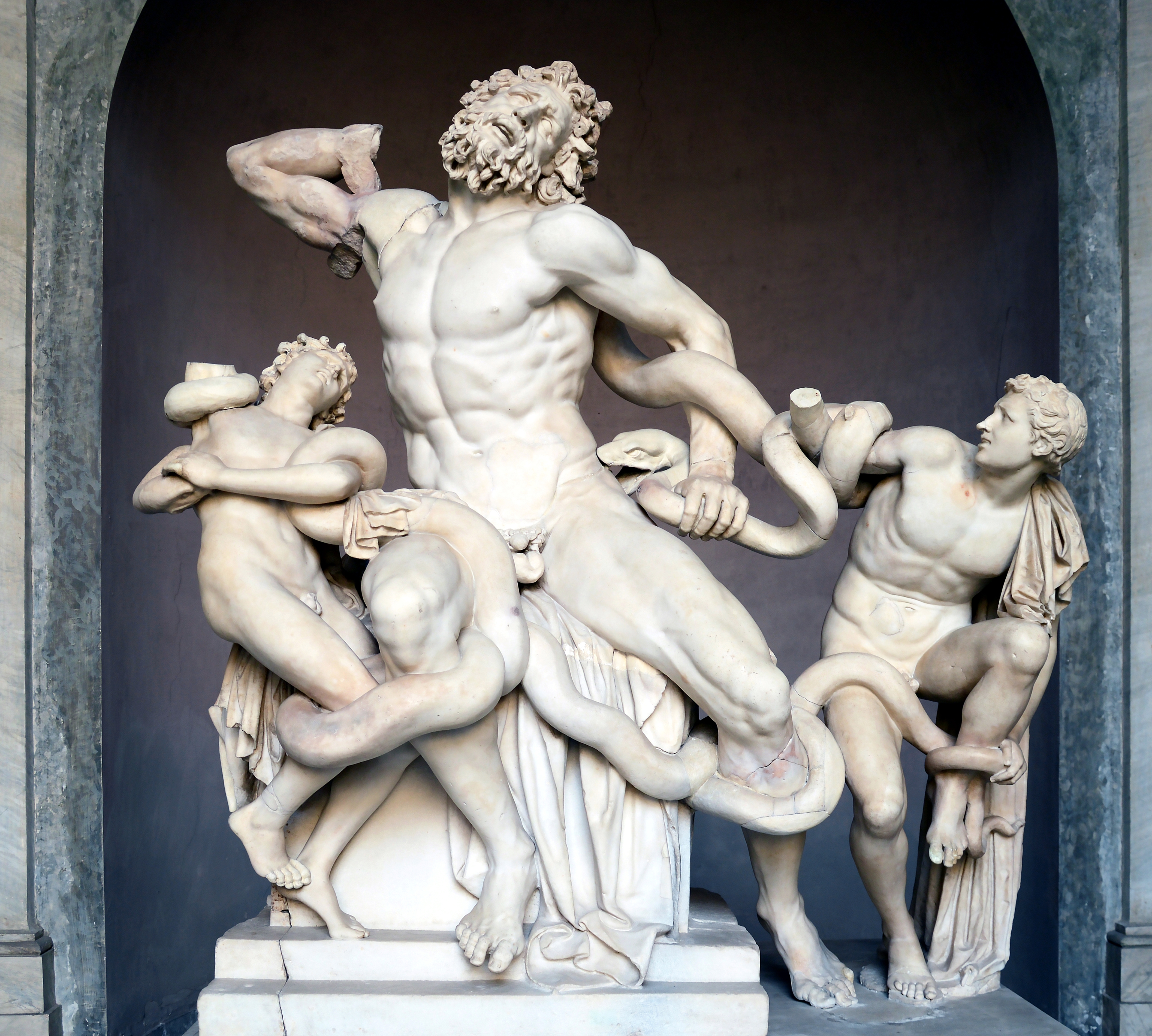
The Greeks had three very distinct eras of art, actually. Most people tend to picture white, marble statues of beautiful goddesses and very naked muscular heroes. Very fair reading, they really did have a favorite subject in those days (see Winged Victory of Samothrace and Laocoon and His Sons)… But that’s not all they made. In fact, that’s just one era! As modern people, we look back on the Hellenistic era as the most notable part of Ancient Greek art. However, let’s be modern scholars for a minute, too. The Greeks didn’t always focus on beauty and drapery; for a long time, their art was about practicality. Sculptures didn’t have movement to their form and they were usually only made for prayer or for remembering the dead. We call this the Archaic era of Greek art. A little later, they started thinking “but what if it looked cooler?” and added poses (like contrapposto, where you put your weight onto one leg; a cute little lean!) to the stiff statues. This and adding a little more perfectionist, idealistic beauty standards onto the sculpts are key traits of the Classical era of Greek art. Finally, they decided that the most beautiful thing they could depict was real, raw emotion. In the Hellenistic era, you stop seeing stoic perfection or practical function, and you start seeing turbulent, twisting shapes and feelings like sorrow and pain.
My professor taught us these eras of the Greeks alongside the journey to the Baroque era. It was interesting, for sure, but I didn’t really understand why it was important until he pointed something out to us: art had a huge reset in Europe. The Greeks had the formula for beauty down with Hellenism, but then the collapse of the Roman Empire came along. People weren’t worried about making grandiose, emotional sculptures anymore. There wasn’t time for that! The economy is crashing, for God’s sake! Literally, for God’s sake. People turned to Christianity as a reprieve from the sudden troubles surrounding them. Art had to be functional again. It didn’t have to be as emotionally moving anymore, it just needed to exist so that people could worship. This is why during the Middle Ages, art returns to rigid forms and heavily stylized figures (take a look at some Byzantine art, they really do just stand there).

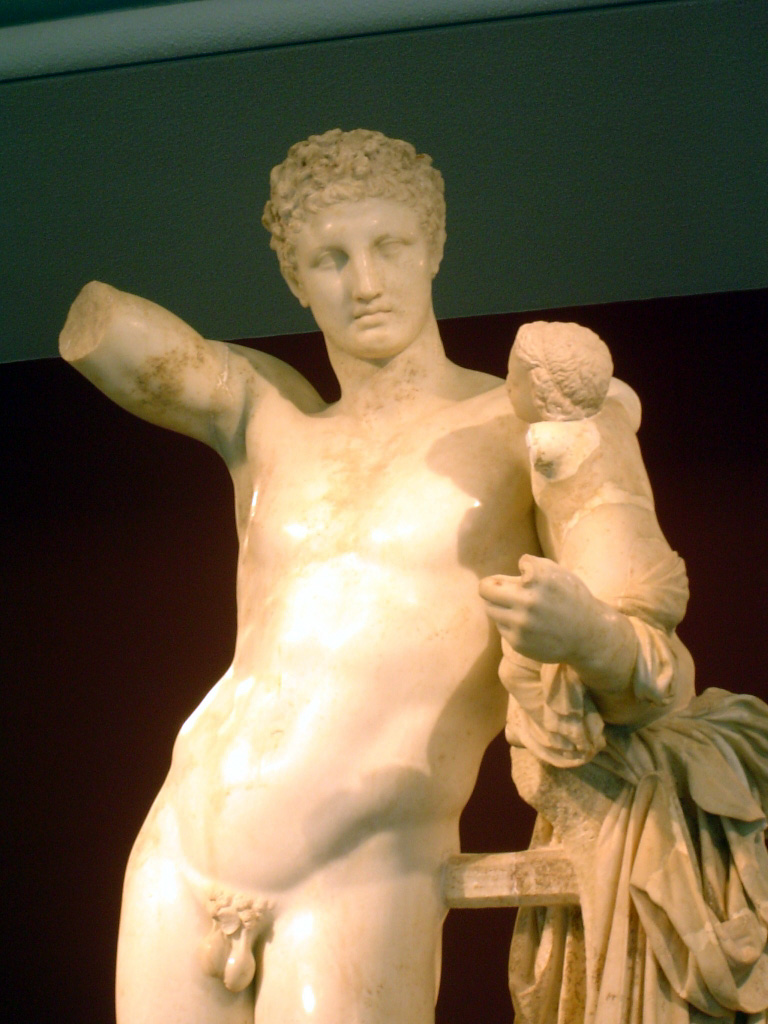
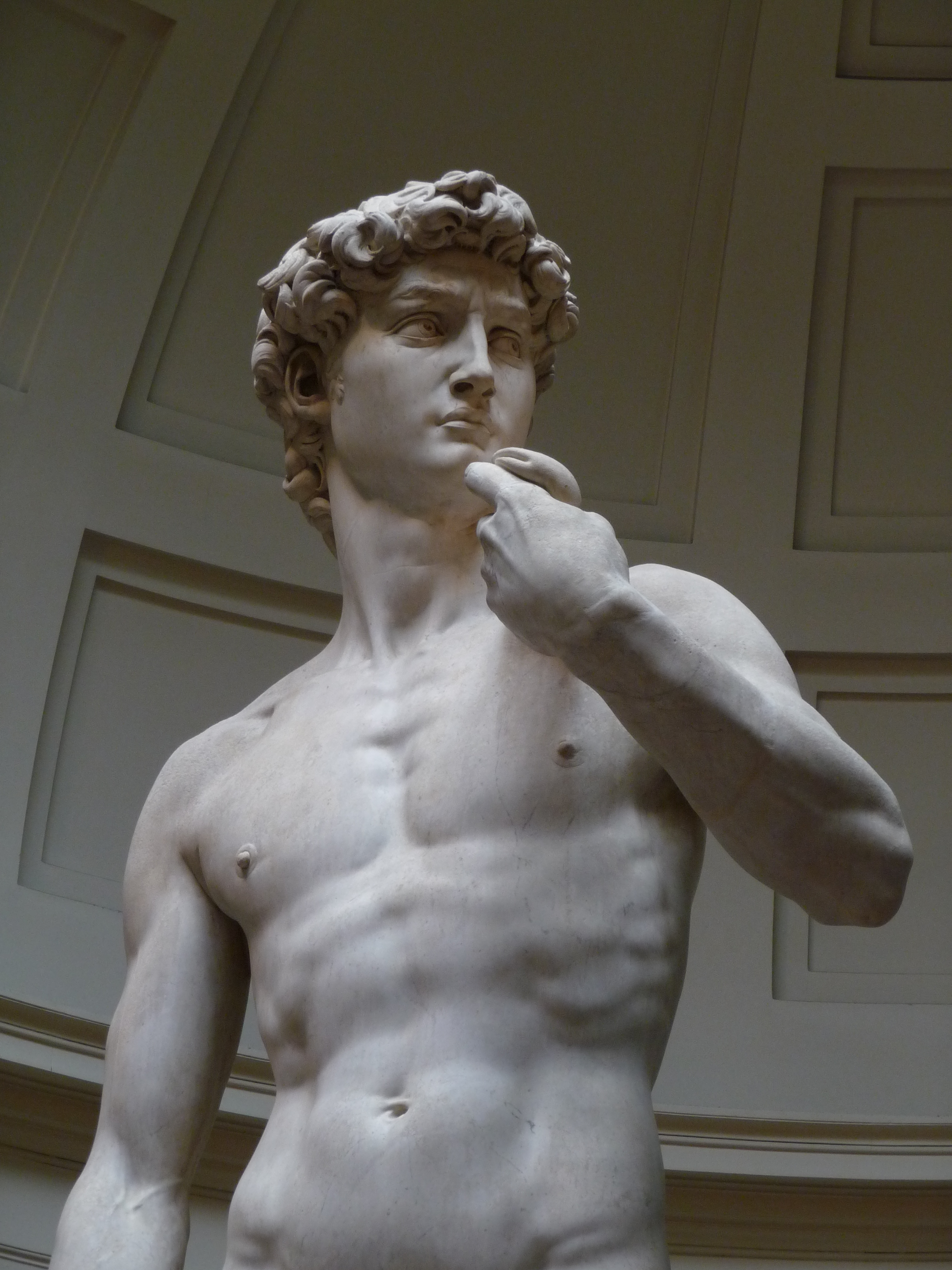
Then, he demonstrated something more interesting to us. The timeline from the Middle Ages, to the Renaissance, to the Baroque… well, it’s an awful lot like the transition from Archaic, to Classical, to Hellenistic. The first shift from each culture moves the focus from function to beauty. The second shift moves from beauty to emotion. Even more fascinating, both the Renaissance and the Baroque drew inspiration from their Greek counterparts! We call it the Renaissance in modern times because it was a rebirth of the Classical Greek style. Michelangelo’s David resembles the Classical Hermes of Praxiteles piece in the stoic expression and idealistic beauty in the male body.
Then, artist El Greco (who is widely considered the first of the Baroque era) makes a piece directly inspired by the Laocoon and His Sons (remember that? I told you to look at it), a Hellenistic sculpture! The Baroque era brings back the turbulent, movement filled art found well over a thousand years prior.

All of this feels very obvious now that I’m typing it out again, but to think that just a few weeks before, I wouldn’t have been able to make that connection on my own! There’s a lot to learn about art history; it’s more than whodunnit! It’s also why-dunnit.
That line isn’t corny. Don’t you dare say it is.
On a more professional sounding note, having the opportunity to look at the art I learned about with fresh eyes and through the voice of someone new to me has been a very insightful experience. All these connections are things I wouldn’t have come up with on my own, and being able to find them and feel the timeline click into place is a reward of its own. I feel as though my love for art history has been reinvigorated, and thus an interest in finding these patterns in our contemporary world has been born. I hope the same can be said for any readers tuning into this nerd’s ramble.
I should come up with a good sign-off for these posts… but until then, be curious!
— Ari A. 𓆟