Hello everyone!
I hope you are all doing well in this heat!
How did you first start learning how to draw? How did you learn as you got older?
Were you the kid with a sketchbook tucked under one arm, a wad of pencils in the other? Or did you learn to paint first, sketch later? Maybe you were the kid who was enamored with alcohol ink markers, just to fall in love with digital art a month later. Were you the self-taught aficionado, or the classically trained student?
There are so many ways to start drawing seriously, and every artist is perfectly unique.
For me, I started with color pencil and graphite first. Copy paper came first, and then I eventually grew to prefer a 5 x 7 inch sketchbook, which I would fill with wildly non-proportionate drawings of all my favorite characters. Fanart was my favorite subject, and I would love getting to expand my love of a book or movie through my art. At age 12, my parents had bought me a stylus to use on my Kindle Fire, but I had rejected the digital world because of my disdain for the texture of the stylus against the screen. The stylus-screen friction just could not hold up to the scratch of pencil against paper. No to mention, my skill level using a tablet was way lower than if I had just used a pencil and paper. (I needed practice, but I took this as discouragement). Just a year later, I started taking classes in painting and drawing; I learned a variety of traditional media, including acrylic paint, oil pastels, graphite, color pencil, and pen & ink. I ended up taking these classes until my Senior year of high school.
At age 14, I had just been accepted to Morris County School of Technology’s Academy for Design, and suddenly, I was thrust into a world of art I had been avoiding since my initial attempt two years earlier: Digital Art. During the open house for the vocational school, I had noticed that most of the student work had been done digitally. I was terrified; for the first time in my life, I was introduced into the world of comparisons, artistic anxiety, and digital art. For the first time in my life, I felt super unprepared for my art class — a class I usually excelled in during middle school. How could I keep up with my classmates if I could only draw on paper?
In an attempt to catch up to my peers who were already drawing digitally, I spent that summer teaching myself how to draw digitally. Almost every day, I would pull out my Kindle and stylus — the very same that I had forsaken two years earlier — and would practice drawing there. By the end of the summer, I had felt a little more confident and excited to start my time at the Academy for Design.
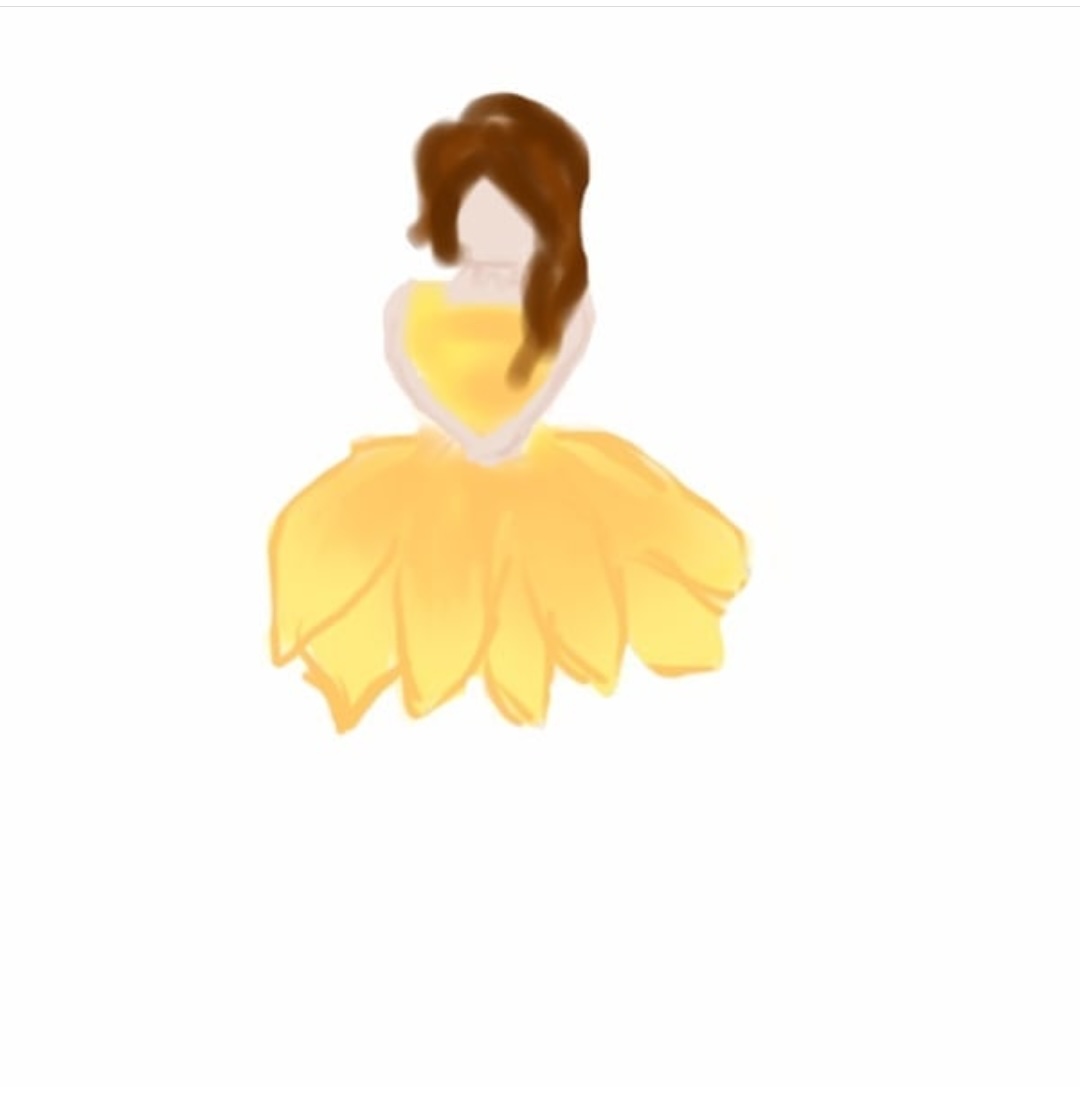
In reality, all that worry I had built up over the summer that made me practice so much digital art was genuinely unfounded and excessive, as my teachers made sure that the program was suitable for artists of all type. In general, I feel that my time at the Academy for Design actually made me become a very well-rounded artist; I was given free-reign to experiment with lots of different media, and I ended up falling in love with all of them, digital and traditional. The support of the Morris County School of Technology’s Design faculty was also incredibly helpful and shaped me to become an aspiring artist. I will never forget the awesome program that I was fortunate enough to be a part of.
However, this self-taught digital artist backstory haunts me to this day — because it is the start of my digital artist’s dilemma. The way I taught myself to draw on a tablet was more or less comparable to throwing a kid into a kitchen with zero understanding of the tools and hoping they make a cake. For whatever reason, I never thought to look up tutorials or videos — instead, I just selected random brushes until I developed what I liked. Because of this, I often fell back onto techniques that mirrored what I would do on paper.
One such quality of my early work, because of this reliance on traditional techniques in my digital art, is that I had no concept of line art. Absolutely none of my early work had line art. (Pieces signed by “Half,” as that was the pseudonym I was using online. I actually still sometimes use that name).


As I worked more with digital art and saw more of my classmates’ artwork, I realized that I did not like the fuzziness of my drawings. I wanted a crisper, cleaner, edge, and my friends were achieving that with line art. For several years, I experimented with different ways of doing line art on my kindle. For a while, I just had these thick lines that looked awful. Later, I would painstakingly color my line art to match the surrounding shading around it. This ended up looking choppy too, so then I would just use whatever the darkest shade in my piece was.


I tried so many different ways of making line art, but I was never really happy. I could never seem to achieve that thin, smooth line art that I saw online. However, I much preferred my line art, albeit unrefined, over my lineless art. I continued to make questionable line art most days.
It was not until college when I switched to use a Wacom tablet and Photoshop that I truly found a way of making line art that did not look completely awful. The app I had been using on my kindle had no settings for brush smoothing or brush sensitivity; while it is still possible to create beautiful line art without these settings, it is much harder. On Photoshop, I could finally access these settings, and my line art game completely changed. I found myself happier with my work, and oftentimes I will still choose to use line art. However, I seem to still make line art a different way each time I draw!!


However, college also introduced me to a new cohort of artists that I could learn from as well! I was introduced to so many artists who used no line art, and did it so well, that I was inspired to finally try my hand at no line art again. Digital painting and lineless art became a skill I wanted to work on. I have tried it a few times, over Summer 2025 and during the 2025-2026 semesters, and I have had varied results too. Some days I end up liking what I come up with, and others I do not.


So… are you starting to see my artist’s dilemma?
I seem to be in this no-win situation: I am neither happy with my line art work, nor my lineless art work. Both techniques, I find, I struggle with. From piece to piece, I seem to vary what I choose to do! For my Digital Illustration class alone, I kept flip-flopping between line art and lineless art (which is just a bad idea for a cohesive set of drawings in general, so I don’t know where my mind was at).


I genuinely have no idea nowadays what to do when it comes to line art or no line art. Some days, this is more frustrating than helpful. I end up in this decision paralysis, or, once I do choose line art or no line art, find that I don’t like how it comes out. I want to have a defined style, and I am just not there yet; and even with my current work, I am unhappy whether it has lines or not. However, I think this is also a strength that I have not limited myself to line art or no line art. I am much more free to try new things, see what I like, and practice both techniques. After all, who says I actually have to commit to just one way of drawing?
This, in turn, actually leads to some really interesting phenomena in my art. In my latest piece, I actually found a way to combine line art and no line art. I felt totally bonkers doing it, but I think it actually helped the piece become what I wanted. If I had stuck to just one style — lined or unlined — I would never have been able to achieve what I did with this piece.

So there’s my artist’s dilemma: to line art or not to line art? I have a long way to go with both techniques, and a lot to improve. What do you think I should do? Do you have any advice for achieving quality line art, or achieving quality pieces without line art? I would love any advice you have, as I am completely and utterly stuck!
Thank you for sticking with me on this exploration of my artistic journey! I know this was a long one, and I really appreciate you bearing with me!
Until next time!
-Rebecca Prowse