When we study art, we usually separate and categorize what we see by eras or styles. We can point to the Renaissance and say that they painted in realism or naturalism. We can look to the Modern era and its impressionism, dadaism, fauvism, cubism… but what about right now? With all the time we have spent analyzing the past, it’s difficult at a glance to say why it is we don’t see patterns for our current times. Art produced in today’s age is called contemporary, and it is distinct from actual “modern art.” Typically, we would call art created during the 1500s all the way to 1945 “Modern,” while everything beyond that is “contemporary.” Modern artists are people like Van Gogh, Picasso, and Frida Kahlo, while the contemporary artist could include Keith Haring, Banksy, and Takashi Murakami. That famous banana on the wall that people like to laugh at as “modern art,” is really a contemporary piece (that was 2019!).
But enough of that lecture… the question I want to ask today is why the contemporary era seems to not have its own collection of “isms.” There is such a wide variety of art being made in our world right now, and none of it feels like it’s very related other each other, even in the same places. In all the art classes I’ve taken through the years, whether that was middle school, high school, or my university classes; I’ve realized that we aren’t really sharing one similar style. In fact, everyone seems to be inspired by totally different things. You don’t find waves of people studying the same master artist anymore. You can’t point to a lighting style or a pose across several different works made by the same group and say, “these are totally similar! We should give this a name!” If anything, art nowadays seems to embrace differences. People are encouraged to explore what makes their art unique and lean into that style. It isn’t a bad thing; but it’s a new pattern that is, ironically, anti-pattern.
We could say art is just pluralistic now and leave it at that, but I don’t find that to be a satisfying answer. It just leads me back to asking “okay, but… why?” With this question itching my brain, I decided to start digging for something more conclusive. I went outside and dug this big, huge hole. I kept digging and digging, and eventually found a lot of little bugs in the hole that whispered some neat things in my ear like “individualism,” “patronage,” “history,” and “turkey sandwich.” That seemed pretty solid. Following their advice, I got out of the hole, washed my hands, and ate a turkey sandwich. Then, I did some research. Turns out, those other bugs were onto something, too.
Disclaimer
Contemporary art doesn’t completely lack movements. It’d be objectively incorrect to say so. Pop Art is a primary example of this. Warhol is a contemporary, and we can certainly point out that he was part of a larger art movement. Undoubtedly, a bigger art-head than me could say that Neo-expressionism and postmodernism and abstract and Neo-what-have-you are movements too. But, I find that these predate the 21st century, even if they teeter along that line. My thoughts today will gear more towards our current, current era. I would also make the argument that we see less distinction between styles and “-isms” as the years progress, and it wouldn’t be quite right to say that “digital art” or “performance art” are movements so much as they are mediums, and so on. Finally, these are observations I’ve made from my won research, and if none of this sounds quite right, I encourage you to dig your own hole and talk to your own bugs. Art history should be reevaluated as often as possible, and we should always look into our questions as they come. Curiosity is a wonderful thing, and these were just my own answers to my own question.
Individualism
The culture of contemporary society is far different than the society in which past major art movements took place. Our focus has shifted to where we are creating work for our own pleasures, as opposed to serving the purpose of a greater audience. In the past, a good portion of fine art was to be displayed in or around churches and other religious establishments. In other words, there was a much more collectivist approach to creating art. Society in the contemporary age, especially in more developed nations, we move away from religious focus or work with collectivist function, and instead begin creating work that carries the artist’s personal messages. While there is potential for overlap, generally, you will find that artists are creating with the intent of appealing to something more human.
There is an argument to be made that past movements have done this, and that we could label much of the contemporary era as “neo-“ because of their shared subject matter. However, I would argue that subject matter alone does not warrant the application of a movement title. Additionally, and maybe this is more of a subjective take, but individualist messages are so broad that I couldn’t attribute them to just one movement. My point is not that “contemporary lacks movements because we aren’t a community,” but rather that “a lack of collectivist intents makes it easier for contemporary artists to focus on their own styles and messages, thus removing the need for distinct movements in the later age.” Something about squares and rectangles. You get the point, I hope.
To put it in a much less wordy way… I think culture has changed so that artists want to make unique work for themselves, instead of all making the same king of work for one group.
Patronage
The way art is funded isn’t the same as it was before. I’ve seen a good amount of displayed art, I’d say. The big museums in the Big Apple, some smaller pop-up exhibitions here and there, and personal collections. What I notice most from the largest, permanent displays, is that they’re all historical. They collect from artists that have already passed, or they’re preserving art from centuries or thousands of years ago. That’s all important, but it does show where the money is going. Contemporary exhibits do exist, but again I notice that it is generally one piece from one artist, and then another piece from another artist. Only a few times have I seen that a museum carries plenty of works from one person, or that they continually fund several different people. One time, one off purchases have become the status quo.
In the past, we’d see wealthy families continuing to sponsor or commission a regular artist. Think about the Medici family. Florence, Italy during the Renaissance was able to create so much art of a similar movement, and we can certainly attribute at least some of this to the Medici family’s funding. Notable artists like Michelangelo, Botticelli, Donatello, da Vinci, all had works commissioned by this family. Many noble people and rich families historically have been the ones funding artists.
In the contemporary world, can we say the same? With the rise of the internet, the world of art has undergone many changes, including financially. While keeping my prior observation in mind, I realized that the current model doesn’t go from patron to artist, but rather artist to patron. Its hard to say which variable comes first, but in today’s world, you find that many artists are making their work and then hoping to find a buyer for it rather than following a line from a commissioners demands. That said, I’ve been online enough to see when artists open commissions on a webpage or social media and follow a customer’s asks. Even with this more traditional patronage model, you seldom see repeat customers. Online commissioners, from my observations, tend to buy art for a one-time purpose rather than funding the artist continually. I don’t wish to note this is a good or bad thing, but only to bring it up as a fact of the current model.
Consistent patronage today typically comes from nonprofits or other philanthropic organizations. I believe they can aid to an extent, but the dent in funding art isn’t large enough to constitute a widespread artistic movement. Again, we’ve turned to an individualistic society where these organizations are not commissioning, but rather finding an artists desire to make art for themselves. With this in mind, I’ve deduced that there is one huge financial reason for a lack of a true contemporary “ism”: there is not a continuous line of commissioner profit. If there is no financially-backed guideline for how art looks, you can’t piece together a movement.
History
This reason I find to be the loosest, but also the simplest. All the art movements we study today are far back in our history. And not to single any of the older generation out, but the 80s was a lot longer ago than you think. Sorry.
Hindsight is 20/20, after all, and we can draw connections and see the way art shifts only long after it is made. People in the Renaissance didn’t call it the Renaissance. People making Impressionist art didn’t call it Impressionism. People in prehistory didn’t make something they called “prehistoric art,” they were just making sick cave paintings. Or, they’d probably just call it a painting. If they knew that word. Don’t ask me, I wasn’t there.
Perhaps somewhere in the future, people will study our time and see the glaringly obvious link that we just can’t see because we aren’t able to look back yet. It’s an interesting thought, and it would also make me sound pretty silly to any historians reading what I’ve said so far. Try not to judge me too hard, okay, future historian? I’m just trying to write something interesting…
Turkey Sandwich
Haha, no. Just kidding.
Conclusion
Those were just my thoughts, anyhow. My research led me to a lot of other questions, though (it’s inevitable… one rabbit hole leads you down another, always). I started thinking where AI fell into this picture. I started wondering, “if there’s not a movement now, will there be one in the future?” I wish I could jump way ahead in time. Then, I’d have a really cool blog post to make, wouldn’t I? Art is one of those things I think will keep changing forever, even if it’s hard to say how.
I hope our little dive today has got you thinking of your own questions. Maybe we can find the answers together.
Be curious,
— Ari A. 𓆟
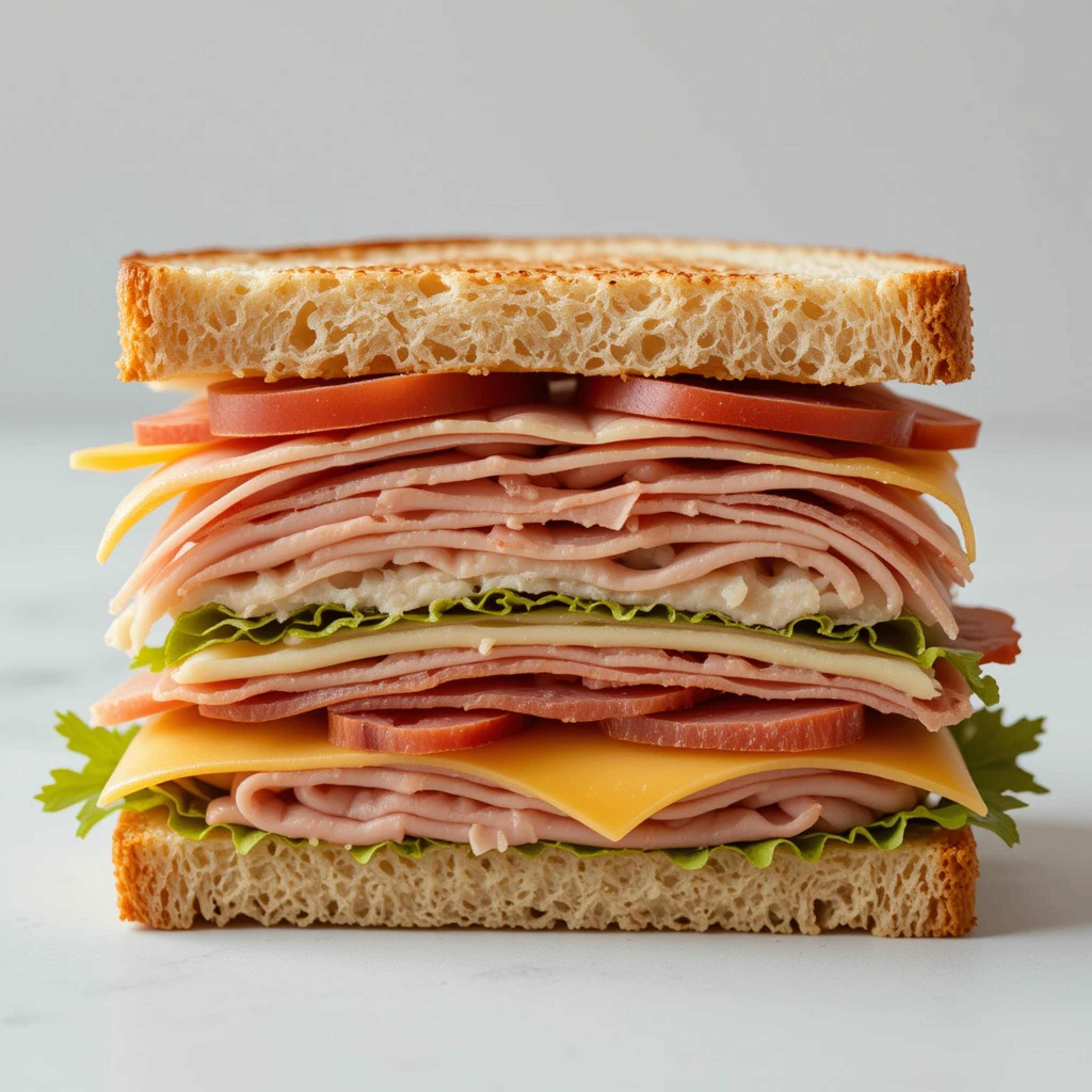
Image by Danish khan from Pixabay